Get Full Government Meeting Transcripts, Videos, & Alerts Forever!
Get email alerts on the Water Infrastructure Lead Service Lines topic
No spam. Unsubscribe anytime.
Committee adopts amendment but fails to pass bill allowing bond funding to replace lead service lines from meter to house
Summary
Lawmakers considered House Bill 14‑62, which would let municipalities and water utilities issue bonds to pay to replace lead service lines from the water meter to private houses to comply with an EPA mandate; members adopted an amendment clarifying ‘meter to house’ language, but the bill failed on a voice vote.
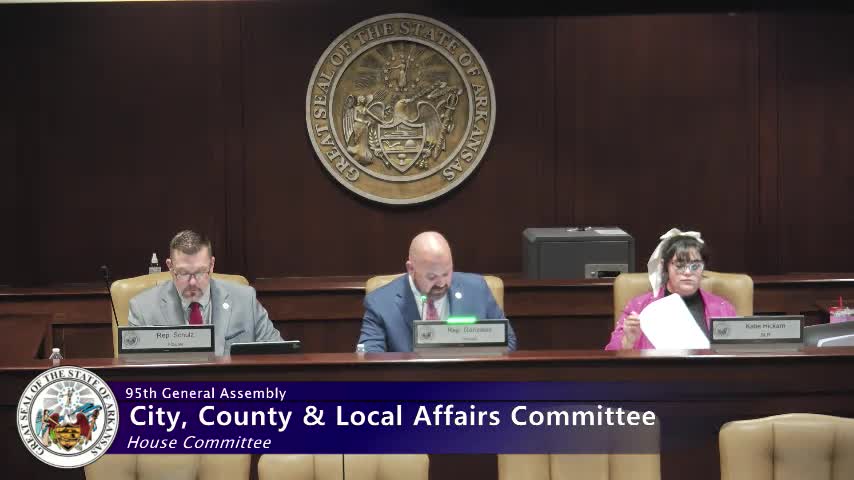
Chair opened consideration of House Bill 14‑62, introduced by Representative Stetson Painter (R‑Dist. 3), telling members a fiscal impact accompanies the bill. Painter said the measure responds to an October 2024 Environmental Protection Agency (EPA) mandate requiring replacement of lead service lines and would authorize water utilities and municipal authorities to issue bonds to pay to replace lead lines that run from the water meter to a private residence.
Painter told the committee he and sponsors had circulated an amendment “just clarifying that lead pipes that it connects the water meter, water main and other things to individual customers,” and later described the amendment as adding explicit “meter to house” language that the original text omitted. The committee adopted the amendment by voice vote after no members rose to speak against it.
Supporters said the measure simply creates an optional financing tool. “All this bill is doing is giving those water utilities and city authorities to issue bonds if they want to,” Painter said. He added the bill does not force utilities to act and that a private homeowner may still decline replacement. Painter and others argued the EPA mandate had changed the practical responsibilities of utilities and that public funding could be used to comply with a federal directive.
Members pressed on legal and financial limits. Representative Scott Richardson asked whether the proposal uses public funds for work that normally is the homeowner’s responsibility; Painter agreed the customer side is usually a homeowner’s obligation but said the federal mandate complicates that division. Committee members asked whether ownership of privately owned service lines would transfer to the utility after replacement; Painter said the bill explicitly does not transfer ownership.
Committee members also raised operational questions: how utilities would know which properties have lead lines, whether bonds would cover long service laterals in very rural properties, and what would happen in the event of a bond default. Painter and a legal adviser in the room said the replacement obligation as described in EPA guidance turns on customer consent and notice requirements and that they had consulted bond counsel on constitutional risk; they did not identify specific legal citations beyond the federal EPA rule.
After closing remarks, Representative Painter moved to pass the bill as amended. The committee conducted a voice vote; the chair announced, “So the noes have it,” and the motion to pass failed.
Ending: The amendment clarifying “meter to house” language was adopted, but House Bill 14‑62 did not pass the committee. Sponsors said they will continue work on compliance options for utilities in light of the EPA rule.