Get Full Government Meeting Transcripts, Videos, & Alerts Forever!
Get email alerts on the Early Childcare Closures topic
No spam. Unsubscribe anytime.
Council hearing spotlights abrupt notices, lease and payment disputes after DOE moves to end five child‑care leases
Summary
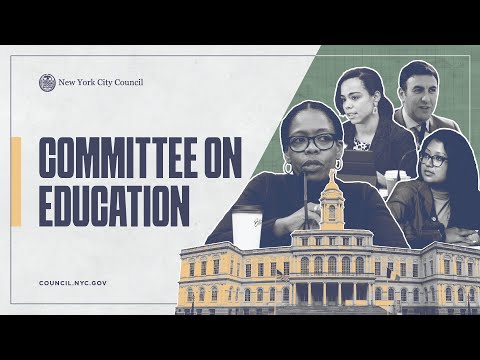
A City Council Committee on Education hearing on Feb. 14, 2025, examined the Department of Education’s decision not to renew leases for five community early‑childhood centers, providers’ claims of abrupt notice and unpaid invoices, and DOE officials’ explanation that lease expirations, underenrollment and oversupply drove the action.
A City Council Committee on Education hearing on Feb. 14, 2025, brought providers, parents, union leaders and New York City Public Schools officials together to examine the department’s decision not to renew leases for five community early‑childhood centers and the fallout for families, workers and neighborhood services.
Chair Rita Joseph, chair of the Committee on Education, opened the session by saying the closures were announced a day after Mayor Adams released his FY 2026 preliminary budget and that the five centers — located in South Jamaica, Bedford‑Stuyvesant, Crown Heights, Bushwick and South Williamsburg — serve nearly 300 children. "The future of early childhood education and early childcare should not be determined behind closed doors," Chair Joseph said.
The providers and parents who testified described being blindsided by the department’s notice, which many said arrived less than 24 hours before the city’s enrollment portal opened, leaving families scrambling for options. Ingrid Matias Chungara, executive director of Nuestros Ninos, said the Williamsburg center has served the neighborhood for more than five decades and that the site serves about 96 children. "No conversations, no due process, no regard for the impact on our children, family and staff," Chungara said, recounting how the program learned of the nonrenewal through the enrollment portal.
Parents and providers also described severe cash‑flow problems tied to delayed contract approvals and slow payments. A Grand Street Settlement representative said staff and families continue to wait for budgets and invoicing to be processed; the organization said one of its sites is fully enrolled with 69 of 70 seats filled. Ryan Ramos, president of Local 205, DC37, said workers and directors repeatedly face delayed payments and in some cases directors have used loans to meet payroll.
New York City Public Schools Deputy Chancellor Simone Hawkins told the committee the department reviewed a portfolio of leased and city‑owned sites inherited from other agencies and judged the five sites in question against three factors: lease expiration dates, multi‑year site utilization (not only a single year), and whether nearby programs could absorb the capacity. "We are committed to serving as responsible stewards of the system," Hawkins said, and she noted the system can serve about 140,000 children while about 30,000 seats currently sit vacant across the portfolio.
Hawkins and other DOE witnesses said lease cost increases, long‑term lease terms and program underenrollment (DOE uses a 95% threshold in its review) drove the decision not to renew certain leases. They said the department is negotiating with landlords and has granted one‑year extensions through June 2026 for the five affected providers while further discussions occur. "We are happy to work with the providers, landlords, and community members to come to a resolution for the next school year to sustain these contracts," Hawkins said.
Committee members pressed DOE on several operational points: how enrollment is recorded in DOE systems, why portal data sometimes differs from providers’ counts, the causes of contract registration delays, and how quickly invoices are processed. DOE officials said enrollment data rely on provider entries to the vendor portal and related systems and that some delays stem from contract registration steps, background checks and fragmented legacy IT systems going back to older platforms such as HHS Accelerator and Passport. Hawkins said the department has reduced average invoice approval time to under two weeks in recent months and plans further IT and staffing investments to speed payments.
Council members and union and provider witnesses urged clearer and earlier communication, greater transparency about when leases will end, and stronger interim financial support for providers pending registration. Several speakers asked DOE to publish lists of leases set to expire over the coming years and to share more granular capacity and vacancy data by seat type and neighborhood so community groups and providers can plan.
The hearing surfaced multiple concrete details that remain unresolved or are being negotiated: providers say Nuestros Ninos operates at roughly 80% enrollment with about 96 children; DOE records initially showed far lower numbers in its portal for that site, a discrepancy advocates tied to delayed contract registration and portal entry; DOE said it examines three fiscal years of utilization and that, on that basis, all but one of the five sites were consistently below the 95% threshold used in its review. Committee members also raised longstanding payment backlogs: witnesses described unpaid invoices stretching back to 2020 for at least one provider network and other outstanding reimbursement issues the DOE said it is investigating.
What’s next: DOE agreed to provide the council with additional data requested by members, including lists of leases expiring in the next two years, campus‑level counts of capacity and vacancies by seat type, and the number of FY25 contracts registered versus pending. Providers, unions and council members said they will continue to press for long‑term solutions that stabilize community‑based providers, accelerate payments, and avoid creating child‑care deserts in neighborhoods facing displacement and rising housing costs.
Ending
The committee did not take a vote on legislation at the hearing. Testimony and questions closed with the DOE committing to follow up with the requested data and with providers continuing to negotiate temporary extensions and lease terms with the School Construction Authority and landlords. Chair Rita Joseph closed by reiterating the committee’s goal: to prevent recurring destabilization of early‑childhood providers in New York City.