Get Full Government Meeting Transcripts, Videos, & Alerts Forever!
Get email alerts on the Education Religious Expression topic
No spam. Unsubscribe anytime.
Arkansas Senate approves bill to codify religious-expression rights in public schools
Summary
The Arkansas Senate on Tuesday passed Senate Bill 2 23, the "Religious Rights at Public Schools Act of 2025," a measure that compiles and directs schools to publicize existing protections for religious expression by students, staff and guests at public and open-enrollment charter schools.
The Arkansas Senate on Tuesday passed Senate Bill 2 23, the "Religious Rights at Public Schools Act of 2025," a measure that compiles and directs schools to publicize existing protections for religious expression by students, staff and guests at public and open-enrollment charter schools.
Proponents said the bill merely gathers existing precedent and statute in one place and requires districts to notify parents, students and staff of those rights. Opponents said some language in the bill is broad enough to permit religious materials or guest speakers in classrooms and risks blurring the line between religious instruction and public education.
Senator Mark Johnson, the bill’s sponsor, told the Senate the measure “is not a bill that adds any specific, enumerated rights to those that students, the teachers, administrators, and parents have in our schools.” He said the text is intended to “collect and codify these rights” and to require that the rights be communicated “by electronic means or by placement in a handbook, policy manual, or other resource designed to inform students, employees, or parents.”
Opponents pressed Johnson on several provisions they said could broaden adults’ authority in classrooms. “I think it’s a bill that lends itself to indoctrinating children,” Senator Flowers said during a nearly hourlong speech opposing the bill. She argued that phrases in the measure such as allowing teachers to “post documents of historical significance that are of a religious nature” could be used to present religious material in ways that would influence students.
Other senators sought practical clarifications. Senator Hickey asked who would define “religious leader” if districts invited clergy onto campuses; Johnson said the phrase was meant to be inclusive and not to exclude any ordained faith leader. Senator Irvin asked whether different Bible versions would be treated equally; Johnson answered that academic comparison and discussion of texts would be permissible as part of existing academic-study law.
Senator David Davis, a former school board member who spoke in favor of the bill, said the measure aims to resolve recurring confusion among administrators and parents. “All this does is take everything that is already legal in Arkansas and it puts it in one place so that when teachers, parents, or students have a question… superintendents can reference this and let them know exactly what their rights are,” he said.
The bill includes a provision that districts must notify students, employees and parents of the rights described, by electronic means or by inclusion in a handbook or other resource. It also references existing code allowing an academic study of religious texts; in debate Johnson cited prior case law, including the U.S. Supreme Court’s Tinker v. Des Moines decision, as background on student free-speech rights.
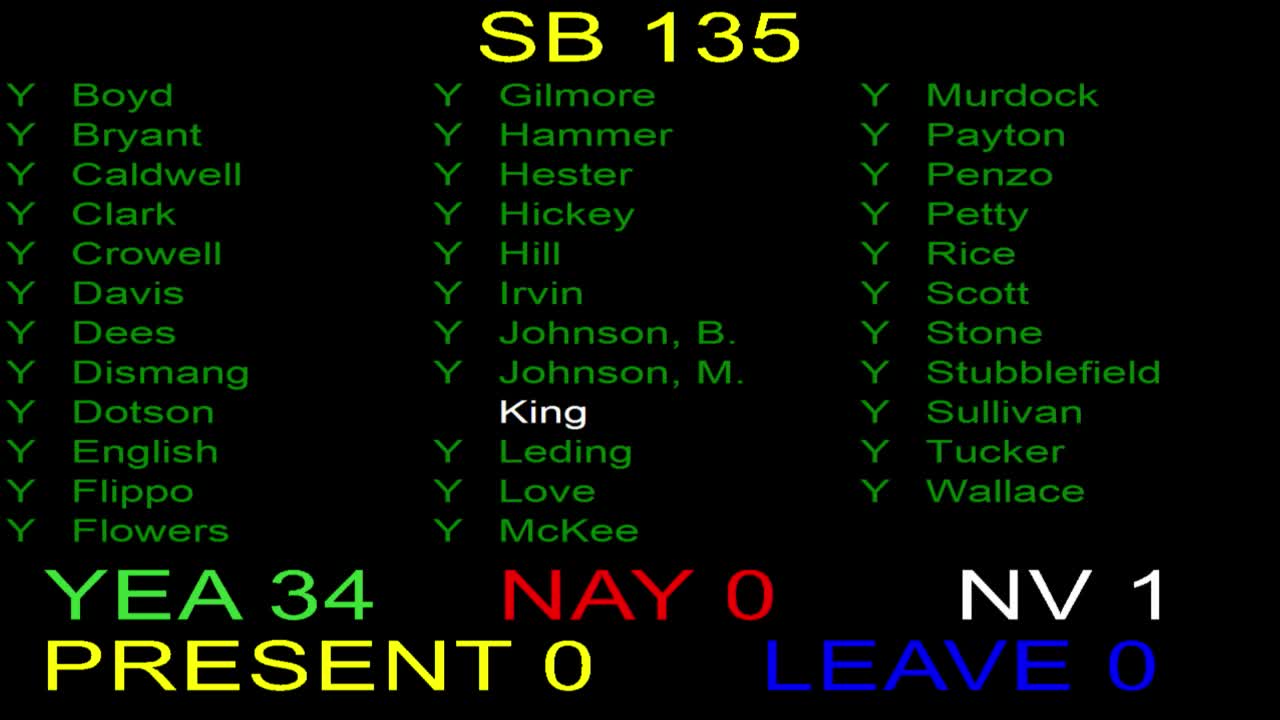
After extended debate, the Senate approved the bill by recorded vote, 25 yeas, 8 nays, 2 not voting. Sponsor Mark Johnson asked members for a “good vote” before the roll call; the Senate president directed the bill’s transmission to the House after passage.
The legislation does not create new enumerated rights, according to supporters, nor does it direct districts to require religious activity. Opponents urged senators to consider the potential classroom impact of the bill’s phrasing and to weigh whether clarification could nevertheless open doors to religious material being posted or promoted in instructional settings.
The measure now moves to the Arkansas House for consideration; the Senate record shows the sponsor may have accepted committee-suggested clarifying language about how districts notify students and staff.
Votes at a glance
- Senate Bill 2 23, "Religious Rights at Public Schools Act of 2025": Passed by the Senate 25–8 (2 not voting). Sponsor: Senator Mark Johnson. Outcome: Approved and transmitted to the House.