Get Full Government Meeting Transcripts, Videos, & Alerts Forever!
Get email alerts on the Special Education topic
No spam. Unsubscribe anytime.
Lawmakers press DEED on rising intensive special-education counts and multiplier impacts
Summary
Committee members raised concerns about a marked increase in students qualifying for intensive special-education (low-incidence) services and the budgetary effects of the special-education multiplier; DEED confirmed a statewide upward trend and pledged to provide historical data and consider reporting/regulatory changes.
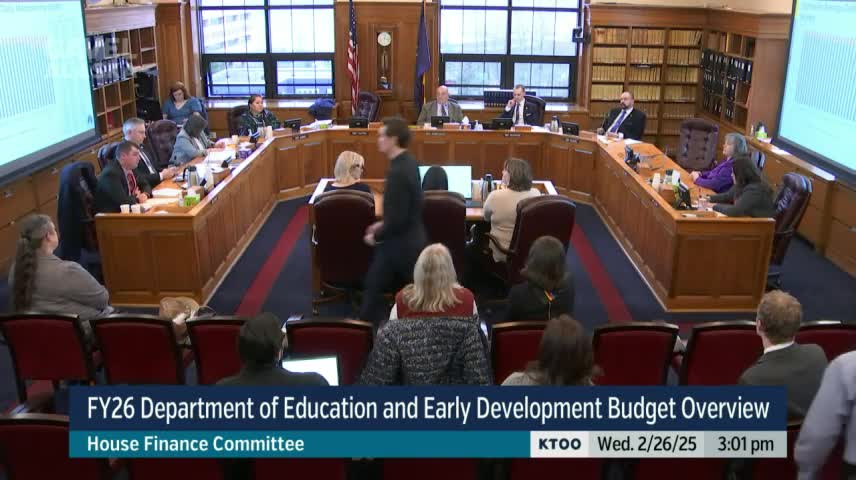
Lawmakers at the House Finance Committee asked the Department of Education and Early Development about rising counts of students receiving intensive special-education services and the effect of the special-education multiplier on district budgets.
Representative Bynum and others noted that changes to the multiplier over the past 15–20 years have shifted how much state funding flows to districts for intensive special-education costs. Deputy Commissioner Karen Morrison acknowledged a statewide upward trend in intensive special-education counts and said the department will provide historical trend data and consider regulatory clarifications to improve understanding of how funds are used after initial allocations.
Morrison described intensive special education as services for students with low-incidence or complex medical and cognitive needs, sometimes identified near birth, which can require added staff, supervision, transportation accommodations, medication administration and other supports. She told the committee that districts report and budget for those students’ needs and that the department is examining whether reporting and auditing practices should be strengthened so the state can better track how intensive special-education funds are spent over time.
Why it matters: committee members said that in some districts the share of budget devoted to intensive special education has grown substantially and asked whether diagnostic, identification and reporting changes — or real increases in need — explain the trend. Lawmakers requested a trend history of intensive special-education counts and an analysis of how the multiplier growth has changed district-level resource distributions.
Ending: DEED acknowledged the increase and committed to provide a historical trend of intensive special-education counts, district-level shares of special-education spending and recommendations on whether regulation or reporting changes are needed.