Get Full Government Meeting Transcripts, Videos, & Alerts Forever!
Get email alerts on the Education Budget topic
No spam. Unsubscribe anytime.
House Finance hears Alaska Department of Education FY26 budget overview; foundation program projected at $1.13 billion
Summary
The House Finance Committee received an FY26 overview from the Department of Education and Early Development showing a $1.6 billion departmental budget, with the foundation program projected at $1.13 billion and continued questions from lawmakers about authority, program staffing and how funds flow to districts.
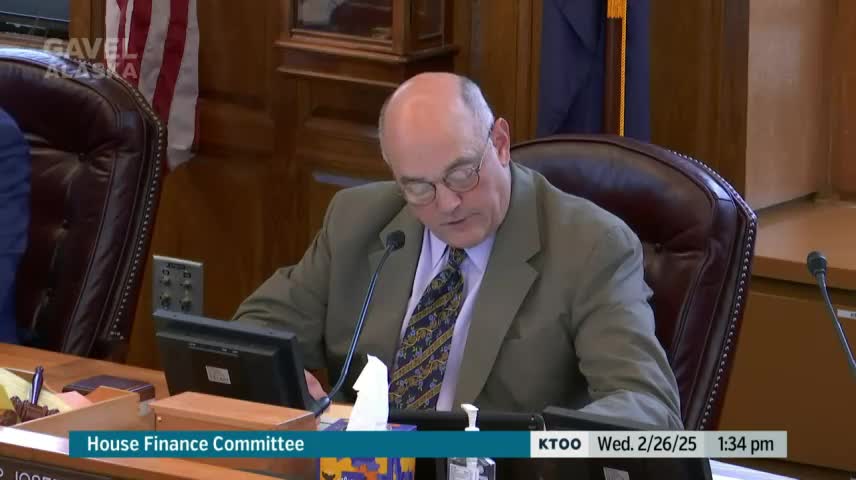
The House Finance Committee on Feb. 26 heard a presentation from the Department of Education and Early Development on the governor’s FY26 budget, with Commissioner Dina Bishop and administrative services staff outlining major spending lines and program responsibilities.
The presentation, the department said, covers the governor’s FY26 proposal. “This is the FY 26 governor's budget,” Commissioner Dina Bishop told the committee. Acting Administrative Services Director Monique Silberly gave the department-level total: “the departmental budget as a whole at 1,600,000,000.0.”
Why it matters: the department’s operating and pass-through funds underlie public education across Alaska’s 53 districts; most K–12 instruction occurs at the district level, and lawmakers pressed department officials about how requested authority and program dollars translate into services in rural and urban districts.
Key budget figures presented include a projected foundation program of $1,130,000,000 for FY26, a pupil transportation allocation of $67,800,000, and a student-based allocation figure cited as $5,960. Silberly and Deputy Commissioner Karen Morrison described which divisions hold programmatic funding and which dollars move directly to districts (for example, child nutrition and some grants). The department said the pie-chart breakdown shows that a large share of department-related dollars ultimately flows out to districts to support schools.
Committee members pressed the department on several recurring issues: why “other funds” authority rose between FY24 actuals and the FY25 management plan, whether the department is on track to use authorized authority, and where departmental operating cuts might be made if the legislature required reductions. Silberly repeatedly offered to supply detailed follow-up memos on authority usage, personnel classifications and program-level spending.
Lawmakers asked for additional data the department agreed to provide later: the staffing counts in Juneau versus prior years, a breakdown of FY25 to FY26 authority by fund source, and inflation-adjusted trend graphics for state aid over time. Commissioner Bishop and Deputy Commissioner Morrison said they would send requested memos and clarified that statutory counts and district-submitted projections drive some line items (for example, pupil counts used in the foundation calculation are based on district projections and the October count will determine final BSA totals).
The committee closed with scheduling notes: the department’s presentation ran about 90 minutes, and the next House Finance meeting will consider governor’s amendments and retirement system legislation.
Ending: committee members asked for a series of follow-up documents — staffing lists, justification for authority increases and inflation-adjusted trend analyses — and the department committed to delivering those items to the committee.