Get Full Government Meeting Transcripts, Videos, & Alerts Forever!
Get email alerts on the Animal Welfare And Nonprofit Transparency topic
No spam. Unsubscribe anytime.
Flagler Humane Society draws council scrutiny on capacity, finances and governance after public comments
Summary
At a Feb. 25 Palm Coast workshop, Flagler Humane Society executive director Amy Caritenuto presented shelter operations and outcomes while residents raised allegations about care and governance. Council members asked for bylaws, financials and a capital plan ahead of contract negotiations.
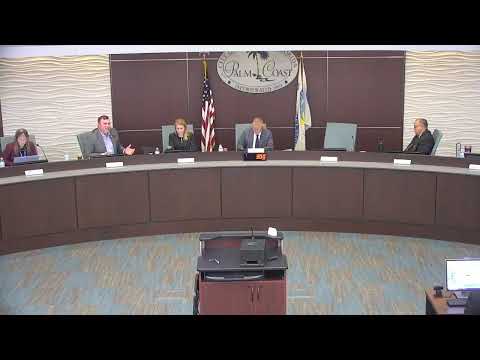
Flagler Humane Society’s executive director presented the nonprofit’s operations, programs and outcomes to the Palm Coast City Council on Tuesday while a large number of residents used the council workshop to raise concerns about animal care, governance and transparency.
Amy Caritenuto told the council FHS is an open-admission, full-service shelter founded in 1980 that operates a 15,000-square-foot facility built in 2004 and serves Flagler County. “Of the 67 counties in Florida, we are 1 of only 13 counties that are deemed no kill,” Caritenuto said, citing the no-kill benchmark used in shelter medicine.
Why it matters: the city’s contract with Flagler Humane Society that pays the nonprofit for sheltering municipal animals expires at the end of the fiscal year. Council members said they will seek more documentation before negotiating or approving future funding because residents raised allegations that require review and because the city’s per-animal payment appears well below the shelter’s reported per-animal cost.
Key figures and finance questions: Caritenuto told the council the shelter’s “hard costs” average about $500 per dog or puppy when animals require no illness treatment; the nonprofit receives roughly one-quarter of that amount from local government contracts, she said. Caritenuto said the city of Palm Coast pays $95 per dog or cat intake; she said Flagler County pays $132 per animal. Council members pressed for the basis of the $95 payment and for the shelter’s financial records and capital plan.
Public comments and allegations: more than a dozen residents spoke. Several former volunteers and other speakers alleged animals had been euthanized unnecessarily, cited specific cases and asked for an independent investigation; one speaker said a puppy left overnight at the shelter by a deputy was euthanized. Other residents and volunteers defended the shelter, described positive adoption outcomes and urged cooperation among community providers.
Board governance and bylaws: multiple council members said they were concerned by the shelter’s refusal — at least initially — to provide its bylaws when requested late the night before the workshop. City leaders noted that best practice for nonprofits is to be transparent about governance documents when public funds are involved. The shelter’s legal representative said the request arrived late and advised the organization to review the request before release; the shelter indicated it would provide access for council or the city attorney to review the bylaws.
Programs and services described: Caritenuto outlined FHS programs that include low-cost spay/neuter, wellness and vaccine clinics, microchipping, lost-and-found outreach, trap-neuter-vaccinate-return (TNVR) for community cats and emergency evacuation support as Flagler County’s coordinator for ESF-17 (pet-friendly emergency evacuation shelters). She said the shelter sends periodic assistance requests to national partners and sometimes accepts animals from other jurisdictions for placement and adoption.
Council reaction and next steps: Vice Mayor Panieri and Council member Miller emphasized the need for financial transparency, a capital-plan for expansion and clearer documentation about intake and euthanasia practices. The city attorney said the council can require bylaws and financials as part of the partnership and contract negotiation. Council members asked staff and the humane society to provide bylaws, financial records, the shelter’s strategic/capital plan and adoption/euthanasia records for review before any contract renewal.
Ending: No formal contract decision was made at the Feb. 25 workshop. Council members and shelter representatives agreed to follow up: the shelter will make documents available for review and the council will consider that information as the city approaches contract renewal later this fiscal year.