Interior tribal leaders warn of youth behavioral‑health crisis and urge funding amid grant cuts
Loading...
Summary
The Tanana Chiefs Conference and Interior tribal leaders told senators they are seeing sharp increases in suicidal ideation and youth behavioral‑health needs, and cautioned that a proposed 7% cut to behavioral‑health treatment and recovery grants would worsen an ongoing crisis.
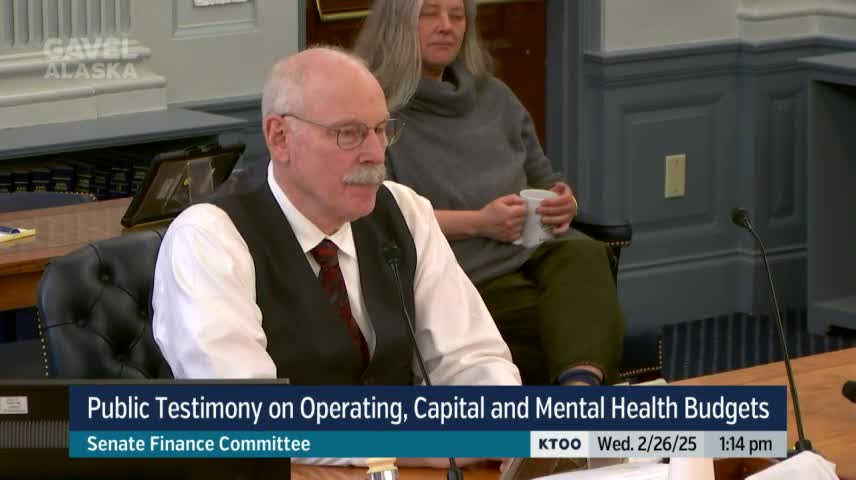
The Tanana Chiefs Conference told the Senate Finance Committee on Feb. 26 that Interior Alaska is experiencing a youth behavioral‑health crisis and asked lawmakers to prioritize education and behavioral health funding in the FY26 budget.
Brian Ridley, chief chairman of the Tanana Chiefs Conference, said his organization represents 37 federally recognized tribes and about 20,000 tribal members in Interior Alaska. Ridley told senators the number of youth reporting suicidal ideation has risen as much as 90% in the past three years and that the number of youth served for behavioral‑health issues at local hospitals increased 58%.
“We come to Juneau every year advocating for school funding,” Ridley said, and linked education funding to the ability to provide behavioral‑health supports in schools and communities. He said the proposed FY26 budget shows a 7% decrease to the behavioral health treatment and recovery grants line item and warned that the current behavioral‑health reimbursement model and underfunded grants make operating intensive adolescent treatment programs financially unsustainable.
Ridley said the Tanana Chiefs Conference recently reopened the doors to Grama — a youth behavioral‑health facility previously operated by Fairbanks Native Association — and described the lack of in‑state intensive treatment options for adolescents.
Why it matters: witnesses described rapid increases in youth mental‑health indicators and fewer in‑state treatment options; they said grant reductions and the reimbursement model threaten the continuity of critical services for vulnerable youth.