Get Full Government Meeting Transcripts, Videos, & Alerts Forever!
Get email alerts on the Public Asset Ownership topic
No spam. Unsubscribe anytime.
House committee advances bill saying assets acquired by state entities remain state property
Summary
The House Public Utilities and Energy Standing Committee unanimously recommended favorably forwarding HB 411 (Substitute 1), which clarifies that assets acquired by state public entities — including incidental items and carbon credits associated with projects — belong to the state.
The House Public Utilities and Energy Standing Committee advanced HB 411, Substitute 1, with a favorable recommendation after the bill’s sponsor described the measure as a clarification that assets acquired by state public entities belong to the state.
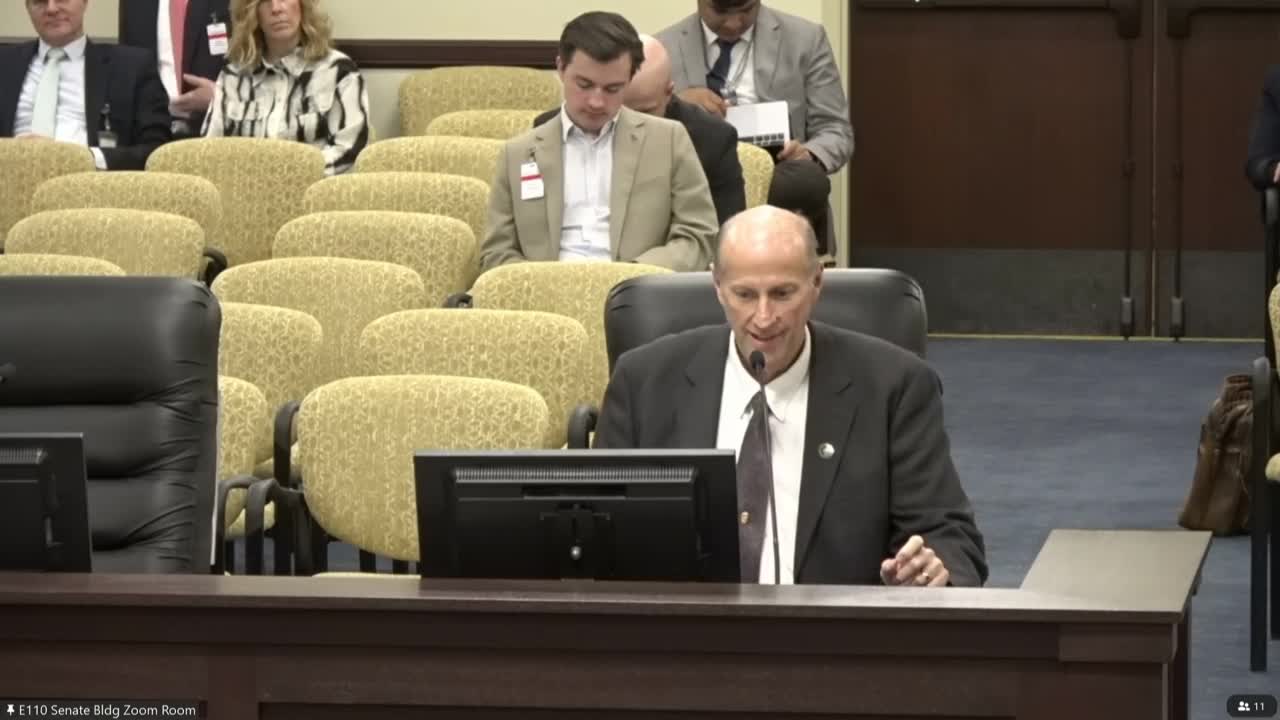
The bill’s sponsor, Representative Shelley, told the committee the measure is intended to prevent private parties from claiming incidental assets tied to state acquisitions. “If someone buys a piece of land and there's an old tractor on that land, the person who negotiated that purchase cannot take the tractor, that tractor belongs to the state,” Representative Shelley said. He also cited carbon credits generated by state-participating projects as an example: “If the state entity participates in a project that generates carbon credits, those carbon credits also belong to the state.”
The nut graf: supporters said the bill is chiefly a clarification of ownership to prevent transfer of assets that the state acquires through transactions or project participation, and it names the Office of Energy Development as the tracking office for carbon credits.
Committee members asked no clarifying questions during the record portion of the meeting, and there were no public commenters for or against the bill at the committee hearing. Representative Watkins moved that the committee forward HB 411 (Substitute 1) with a favorable recommendation; the chair called the question and said the motion passed unanimously.
The action before the committee was procedural and limited to the substitute on the floor; Representative Shelley provided a brief summation before the vote. The committee did not record individual roll-call votes in the transcript available; the chair stated the motion passed unanimously.