Get Full Government Meeting Transcripts, Videos, & Alerts Forever!
Get email alerts on the Public Funds Transparency topic
No spam. Unsubscribe anytime.
Committee advances bill requiring annual statewide report on local cash, cash equivalents and investments
Summary
House Bill 475 would require the state auditor to publish an annual report breaking down cash, cash equivalents and investments held by political subdivisions and certain state entities; the committee passed the bill with a favorable recommendation.
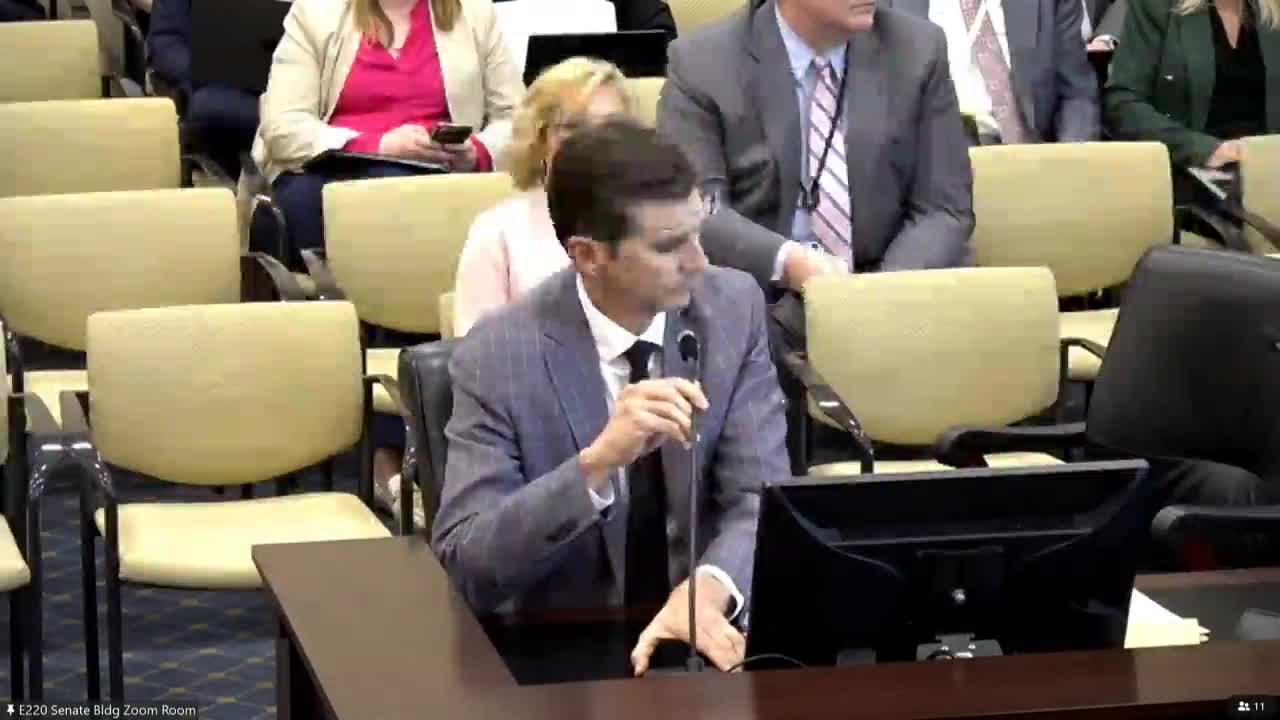
The House Revenue and Taxation Committee on Feb. 26 voted unanimously to pass House Bill 475 (first substitute) with a favorable recommendation. The bill requires the state auditor to prepare an annual report that summarizes cash, cash equivalents and investments held by political subdivisions and some state agencies and to make that report available on Utah’s Transparent Government website.
Representative Walter, sponsor of HB 475, said the measure grew from concern about large growth in balances in the Public Treasurer’s Investment Fund (PTIF). He noted PTIF balances increased from about $14 billion in 2016 to roughly $35 billion in 2024 — an increase he described as a prompt to “understand why” the state and its political subdivisions are holding larger cash and investment balances.
State Auditor (unnamed in transcript) told the committee the data sources exist and the auditor’s office “has everything you could possibly want and more,” but compiling the information in a standardized, public-facing format will take staff time and prioritization. The auditor said higher-education numbers are already posted and that the office plans to release other entity groups incrementally. She urged support for the auditor’s budget request to hire staff to accelerate reporting, but said the office will produce the information with or without bill-specific funding — it will take longer without additional staff.
Representative Miller and other members asked why the information is not already available; staff and the auditor said differences in accounting methods across roughly 1,800 political subdivisions and differing definitions of “restricted” funds make standardized reporting complex. The bill aims to answer first-order questions (how much cash does the state system hold) before tackling more complicated classification work.
Committee action: Representative Ward moved that the committee pass House Bill 475 (first substitute) with a favorable recommendation; the committee approved the motion by voice vote.
Ending note: committee members described the bill as a transparency measure to inform future budget and policy decisions. The auditor said timing depends on available staff and encouraged legislative support for the auditor’s budget request to speed publication.