Get Full Government Meeting Transcripts, Videos, & Alerts Forever!
Get email alerts on the Downtown Development Authority topic
No spam. Unsubscribe anytime.
Lafayette staff outlines intergovernmental agreement to stand up Downtown Development Authority
Summary
City staff presented a proposed intergovernmental agreement Feb. 25 to create a Downtown Development Authority for Lafayette, describing board composition, administrative support, funding tools and cooperative agreements; staff will bring the IGA and board appointments to council in April.
City staff presented a proposed intergovernmental agreement Feb. 25 that would establish a Downtown Development Authority for Lafayette and set a framework for administrative support, funding mechanisms and cooperative agreements.
The agreement matters because it defines how the city and the DDA will share staff and resources, how the DDA will be funded in its early years and what formal approval the council will retain. The presentation detailed board composition, fee structures and options for loans and cooperative projects tied to the city’s plan of development.
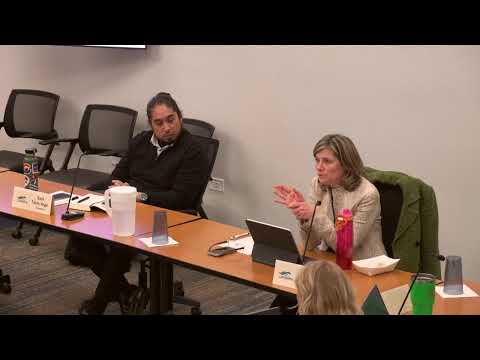
Bridget Keating, economic development director, told council the agreement is meant to “establish a clear framework for how the city and the DDA can collaborate on shared initiatives, funding, and, projects.” She said the DDA board will be seven members: one council member, four property owners or residents and two business owners, noting the state requirement that a majority of the board be land owners or residents.
Under the proposed administrative support model the city would assign one or more employees, as determined by the city manager, to perform the functions of the DDA executive director rather than the DDA hiring a full-time exclusive director. Keating said the city will provide administrative services (facilities, finance, contracting and audit inclusion) and that “the DDA shall remit an annual administrative fee to the city as determined by the city’s cost allocation study.” Staff proposed a phased approach: a reduced fee during the DDA’s first five years with the intention of ramping to the full assessed fee by year five, and seed funding to cover initial shortfalls.
Keating reviewed funding options the IGA would recognize, including property- and sales-tax TIF revenues, grants and private financing. She said the IGA would expressly allow the city to provide loans to the DDA for projects or property acquisition repayable from future TIF revenues, but that any loan would require a separate agreement specifying repayment schedules and terms. Keating emphasized cooperative agreements as the vehicle for implementing the DDA plan of development and said the city manager would be authorized to sign cooperative agreements when the city’s staff time or funding are within the manager’s purchasing authority.
Council members asked about oversight and conflict-of-interest risks when one staff person serves dual roles. Keating and councilors said the plan of development and existing city plans (comp plan, multimodal transportation plan, historic preservation plan) are intended to align priorities, and that council approval will be required for DDA budgets and board reappointments. Keating said the DDA board will be seated April 14 and the IGA plus appointments will be brought to council for review and approval in April.
Staff described two common DDA organizational models from other Colorado cities: a separate quasi-municipal corporation that hires its own executive director (examples cited: Loveland and Longmont) and a shared-resources model where the city provides staff and services (examples cited: Golden and Castle Rock). Lafayette staff recommended the shared-resources model because of the DDA’s smaller geographic area and the desire to use existing city administrative capacity.
Next steps include formal review of the IGA by the city and the DDA, council consideration of appointments in April and further refinements to the IGA as the authority becomes operational. The presentation and discussion did not include a formal council vote; staff reported they will return with the IGA and appointment recommendations in April.
For context, staff said the DDA is intended to support Old Town priorities such as business support, placemaking and coordinated transportation improvements and to align with city plans rather than supplant them.