Get Full Government Meeting Transcripts, Videos, & Alerts Forever!
Get email alerts on the State Of County topic
No spam. Unsubscribe anytime.
Hamilton County president highlights budget stability, housing and addiction response in State of the County
Summary
Denise Dreehouse said Hamilton County has a balanced budget with reserves, is investing in housing and public safety, and is continuing addiction-response efforts that have cut overdose deaths since 2017.
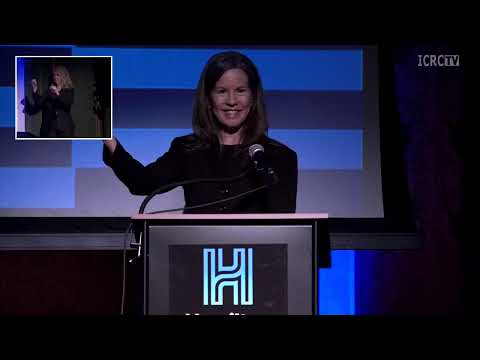
Denise Dreehouse, president of the Hamilton County Board of County Commissioners, used a State of the County address at Memorial Hall to outline priorities including a balanced budget, investments in housing and public safety, and continued work on addiction response and recovery programs.
Dreehouse framed the county’s focus around collaboration and fiscal stability, saying the county "is required by law to balance our budget" and noting the county has maintained reserves to protect its credit and save taxpayer dollars.
She said the county will relocate many employees to a central campus after purchasing the former Mercy Health site in the Bond Hill neighborhood, a move she said will "save millions of dollars" while bringing Jobs and Family Services, environmental services and developmental-disability services together on one campus. The commissioners also agreed to rename streets leading to the new building after Pat McCollum, a longtime foster parent whom Dreehouse said cared for more than 70 children.
Dreehouse highlighted economic-development efforts including a joint city-county redevelopment of the Convention Center District and a headquarters hotel, and said the county is one of three finalists in a competitive bid related to that work. She said more than 23% of spending on the convention center project has gone to minority-owned firms so far, and that the county is pursuing stronger minority and union inclusion on county-funded projects after a disparity study led by Robert Bell, director of economic inclusion and equity.
On riverfront development, Dreehouse said Lot 24 "is one of the few lots that remain to be developed" and described ongoing urban-design review work with the city. She also noted ongoing negotiations with the Cincinnati Bengals on a stadium lease that expires next year.
The county is continuing a program of grants for large community events, which Dreehouse said has supported festivals that boost hotel room nights and local spending. She credited partnerships with the private sector and nonprofit intermediaries such as Alloy for small-business assistance; Dreehouse said the Office of Small Business helped 456 businesses in 2024 and highlighted Alloy-supported clients that secured a Department of Defense contract and expanded operations using Alloy loans.
On housing, Dreehouse said the county has invested $50,000,000 in housing initiatives, $36,000,000 of which flowed through the Cincinnati Development Fund. She said commissioners have asked the county administrator to identify a recurring revenue source to continue affordable-housing investments and that the county has asked CDF and the administration to examine tiny homes as a possible option for veterans.
Public safety and reentry also featured prominently. Dreehouse said the county is investing in sheriff department capital needs and new tools such as drones and AEDs in sheriff vehicles, and she praised the county’s reentry office for helping people returning from incarceration. She said the county is building a new 911/emergency-management facility to ensure operators have modern technology and workspace.
Dreehouse described regional work on a new regional safety complex and credited multiple local, state and federal partners for getting the project to a near ribbon-cutting stage. She also said the county has supported addiction- and mental-health care pods in the jail.
On addiction response, Dreehouse described Hamilton County’s Addiction Response Coalition (HCARC) and programs such as the Quick Response Team (QRT). She said the county has seen a 52 percent reduction in overdose deaths since a 2017 peak, which she said was 570 deaths; she also said there were 270 overdose deaths last year. Family members who addressed the audience were recognized for sharing personal stories of loss and recovery support.
Dreehouse credited the county’s investments in workforce housing, partnerships with LISC and Habitat for Humanity for lead-free homes, and new projects to support people with disabilities living independently. She said three new members were added to the Veterans Services Commission and that the county provided a "historic" budget for veterans services.
Environmental and infrastructure items noted included a five-year solid-waste plan that the Solid Waste Policy Committee recently approved, work on the Mill Creek Trail, electric-vehicle infrastructure funded through grants, the hiring of a full-time sustainability director (Julie Donna) and investments in stormwater projects to reduce local flooding. On sewers, Dreehouse said the county owns the system (in contrast to the city-run MSD in Cincinnati) and that a new phase of a federal consent decree has passed, which she described as beginning a new chapter of collaboration to keep rates as low as possible.
On gender-equity work, Dreehouse spoke about the Commission on Women and Girls’ achievements including a county pay-equity pledge and efforts to expand access to period products; she also said the commission is seeking to address domestic-violence response and asked the county to "explore funding services to ensure that victims advocates are available 24/7 to be dispatched to scenes of domestic violence." She credited the commission’s members and staff for policy recommendations that the board has adopted.
Dreehouse closed the address with a call for continued collaboration and action, saying, "This is the time to get big things done."