Get Full Government Meeting Transcripts, Videos, & Alerts Forever!
Get email alerts on the Work Zone Safety topic
No spam. Unsubscribe anytime.
Families, DOT and unions press committee for stronger work-zone protections after two road-worker deaths
Summary
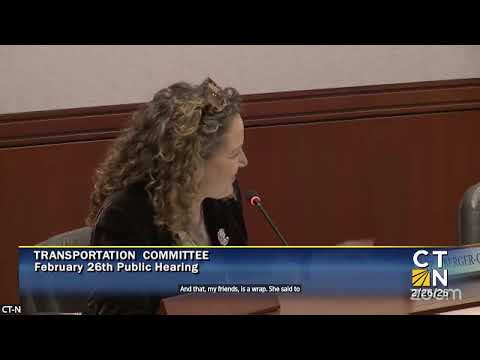
Families of highway workers killed on the job, state DOT officials and union leaders urged the Transportation Committee to approve HB7060, a package of measures intended to reduce roadside worker deaths and near-misses by expanding driver education, increasing penalties and funding for enforcement technologies including work-zone speed cameras.
Family members of two highway workers who died while on duty told the committee they support HB7060 and described personal loss in emotional testimony. Sherry Di Domenico and family members said their son Andrew, a Connecticut Department of Transportation employee, was struck and killed while conducting roadside work on June 28, 2024. They asked lawmakers to pass changes they said would protect other workers doing the same job.
DOT Commissioner Gary Iucolito and labor representatives urged the committee to adopt a suite of measures. DOT testified that the bill would require a roadway and roadside safety course for driver-license applicants and for people convicted of violating the state's slow-down/move-over law; expand penalties for endangering highway workers; make certain mobile-device use on limited access highways a form of reckless driving; and authorize wider signage, public education and the expansion of work-zone speed-camera programs. Commissioner Iucolito described DOT's practical priorities, including repairing decaying noise-barrier infrastructure, clarifying left-lane passing law and improving crosswalk and pedestrian safety equipment statewide.
Union representatives and DOT employees emphasized the daily risks of roadside work, including near-miss incidents and repeated strikes of departmental safety vehicles. The Connecticut Employees Union urged passage of the bill and said its members want to return home safely each shift; union leaders noted work-zone speed cameras and improving enforcement were priorities. Witnesses and legislators also discussed related measures: upgrading vehicle edge lines to 6 inches on certain highways, deploying speed governors on municipal or fleet vehicles, and pursuing in-vehicle impairment detection technology.
Committee members asked for details about funding, enforcement, and timelines for any permanent camera program. DOT said limited federal funds and ongoing studies affect how quickly the agency can scale programs; DOT officials asked the legislature for specific capital allocations to accelerate installation and outreach. The committee asked DOT to return with cost estimates for cameras, education campaigns, and the new roadside safety course, and to provide a schedule for the permanent work-zone speed-camera program.