Get Full Government Meeting Transcripts, Videos, & Alerts Forever!
Get email alerts on the Community Priorities topic
No spam. Unsubscribe anytime.
Housing, public safety and community health top staff and community priorities; officials flag funding, communication and technology limits
Summary
Lane County staff and community respondents ranked affordable housing, homelessness and public safety among the highest priorities for the next three years; participants at the Feb. 26 work session also raised concerns about prioritization, internal communication, outdated or underused technology and constrained funding.
County consultants presented results from the SWOT analysis and surveys and asked participants to react to draft goals. Both staff and community respondents ranked housing and homelessness, public safety and community health near the top of priorities to address over the next three years, facilitators said. Consultants emphasized that the plan must be concise and actionable rather than a long list of every possible initiative.
The consultants summarized strengths as a committed workforce, strong community partnerships and proactive financial stewardship; weaknesses included manual processes, inconsistent technology adoption and limits on staff capacity. Participants flagged three recurring operational constraints: (1) prioritization across many needs, (2) gaps in internal communication and structured opportunities for cross‑department collaboration, and (3) the costs and human‑resource effort required to adopt new technologies. Several department leaders said that while some county units operate with state‑of‑the‑art systems, others rely on legacy tools and manual spreadsheets, creating inefficiencies and uneven capabilities across departments.
Participants also discussed external threats and opportunities cited in the SWOT: rising housing costs, demographic change, natural disasters and shifting state and federal funding. Commissioners and department leaders raised partnerships and financial resilience as cross‑cutting enablers: several speakers urged clearer approaches to policy advocacy, intergovernmental coordination and targeted investment to support priority goals. The session closed with consultants committing to combine the day's input into draft goals and metrics for the board's next review.
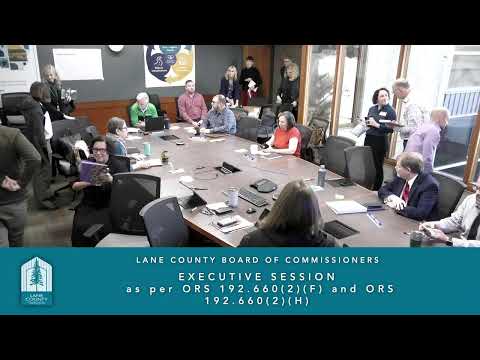
Ending: No formal votes or final actions were taken; an executive session to discuss real property negotiations was announced under ORS 192.660(2)(e).