Get Full Government Meeting Transcripts, Videos, & Alerts Forever!
Get email alerts on the Workers Compensation Overview topic
No spam. Unsubscribe anytime.
Bureau of Workers’ Compensation gives subcommittee overview of reforms, caseload and programs
Summary
Troy Haley, administrator of the Tennessee Bureau of Workers’ Compensation, briefed the Banking & Consumer Affairs Subcommittee on the agency’s operations, reforms since 2013, caseload trends and programs such as the Next Step tuition assistance and certified physician program.
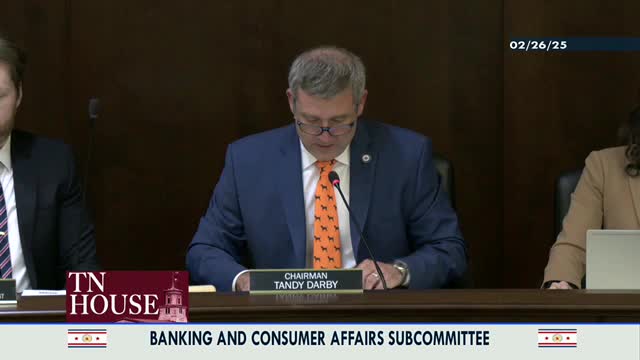
Troy Haley, administrator of the Tennessee Bureau of Workers’ Compensation, and Amanda Terry, the bureau’s legislative liaison and director of legal services, presented an overview of the bureau’s functions, caseload and post‑2013 reforms to the Banking & Consumer Affairs Subcommittee.
Haley explained workers’ compensation covers on-the-job injuries and provides medical care and wage replacement funded by insurers or self-insured employers; workers who accept benefits generally give up the right to sue their employer for tort damages. He said Tennessee established an administrative workers’ compensation court system in 2013 and described performance metrics the bureau tracks, including faster case resolution and higher return-to-work rates since reform.
Haley told the committee the bureau operates seven offices across Tennessee and has 12 trial judges. He highlighted that mediators resolve roughly 60–80% of disputes before trial, that ombudsmen handled almost 15,000 inquiries last year and that about 2,400 of roughly 3,500 petitions for benefit determinations were resolved in mediation. He said the number of work-related fatalities in the prior year was 79 and that average durations from injury to the end of medical treatment and from maximum medical improvement to claim conclusion had fallen since the 2013 reforms.
The administrator described the Next Step tuition program for workers who cannot return to their prior jobs and noted the bureau has certified about 100 physicians in workers’ compensation best practices. Haley told members the bureau is state-funded (supported in part by a workers’ compensation insurance premium tax) and receives no regular federal funding. Committee members asked about program counts, per-capita comparisons with neighboring states, funding and whether reforms reduced plaintiff lawyers’ involvement; Haley answered with program totals and said the bureau will provide an annual report with 2024 numbers in April.
The subcommittee did not take action on any bill during the presentation; members thanked Haley and Terry and adjourned.