Get Full Government Meeting Transcripts, Videos, & Alerts Forever!
Get email alerts on the Dph Package topic
No spam. Unsubscribe anytime.
Public Health Commissioner outlines five-bill package on fluoride, ED diversion, drinking water, statute revisions and physician recruitment
Summary
Commissioner Jutani briefed the Public Health Committee on five DPH proposals that would codify current fluoride and food‑safety references, require ED diversion notification, allow interim drinking‑water policies during a regulatory transfer from DEEP, authorize limited internal data‑sharing and grant acceptance, and create a retired‑physician license and loan‑repayment statute.
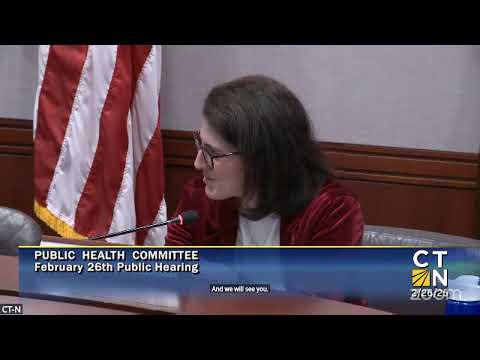
Commissioner Jutani of the Connecticut Department of Public Health told the Public Health Committee on Feb. 26 that the department has submitted five separate proposals intended to preserve current public-health practices and expand certain operational authorities.
The package includes: a food safety and oral‑health provision that would codify existing federal guidance on community water fluoridation; a hospital emergency‑department (ED) diversion bill to require hospitals to notify DPH when an ED is taken offline; a drinking‑water measure to complete a transfer of some subsurface sewage rulemaking from DEEP to DPH and to authorize interim policies and procedures if formal regulations are delayed; a set of statutory revisions to clarify internal data sharing and to allow advisory councils to accept grants and donations; and a physician‑recruitment bill that would create a retired‑physician license and restore authority to operate a student loan‑repayment platform if funds become available.
Why it matters: The five proposals are aimed at stabilizing operations that DPH said are already working and adding limited authorities so the agency can respond when standards or federal guidance change, when hospitals seek diversion, or when regulatory transfers require continuity. Committee members pressed for specifics on timing for drinking‑water regulations and on whether DPH seeks permission or notice for ED diversion. Jutani repeatedly said the bills are intended to preserve the status quo where appropriate and to give DPH visibility and limited authority, not to change clinical practice.
Fluoride and food safety: Jutani said the bill on food safety and oral health does not change policy or add new cost and that the intent is to maintain the state’s existing approach to water fluoridation and retain the 2017 model food code already implemented in state regulations. She told the committee that federal guidance recommends an optimal community water level of 0.7 milligrams per liter (mg/L) with an allowable variance of 0.15 mg/L and that DPH is not proposing any increase; the proposal would refer to the existing federal guidance in state statute so local systems serving populations above 20,000 continue to operate under the same standard.
Emergency‑department diversion reporting: On hospital diversion, Jutani said DPH currently has no reliable way to know when a hospital emergency department is offline and that a proposed bill would require hospitals to inform DPH when they go on diversion so the department could provide information to legislators, providers or the public when surges or other system‑level events occur. She emphasized DPH would only seek notification, not permission to divert, and said the aim is transparency and to create an agreed standard that all hospitals may weigh in on.
Drinking water and subsurface sewage: DPH described an ongoing rules transfer from the Department of Energy and Environmental Protection (DEEP) for regulation of some subsurface sewage systems, raising the regulatory threshold from 7,500 to 10,000 gallons for DPH oversight. Commissioner Jutani told the committee a public comment period is open, that staff aim to have rules in effect by July 1, and that the bill would let DPH promulgate interim policies and procedures if the regs are delayed so there is no enforcement gap.
Statutory revisions: The “various revisions” item would authorize limited internal data sharing (for example maternal‑death information within DPH), allow advisory bodies such as the Rare Disease Advisory Council to accept grants and donations, and authorize DPH to waive duplicative inspections when federal inspections are already meeting public‑safety needs. Committee members asked for detail on the inspection waivers; Jutani said waivers would be targeted to entities performing well and would enable DPH to direct resources where problems are documented.
Physician recruitment: The final bill would establish a retired‑physician license aimed principally at facilitating pro‑bono work by experienced physicians in primary and behavioral care settings and would reestablish the statutory authority for a student loan‑repayment program DPH has previously operated (but for which funds are not included in the current budget). Jutani said retired physicians working pro bono could be covered for malpractice by the hiring nonprofit and that the intent is to expand the pool of available primary‑care and behavioral‑health providers in underserved areas.
What the committee asked: Members pressed DPH on several points: (1) whether the drinking‑water rules will be in place by July 1 (Jutani said that is the goal but the regs review committee could delay or reject them); (2) whether ED diversion reporting would create operational burdens during large‑scale catastrophes (Jutani said hospitals already submit continuity‑of‑operations plans to DPH and the goal is notification, not permission); and (3) whether codifying fluoride guidance means an increase in allowed fluoride (Jutani said no).
Next steps: The committee continued questioning and requested additional follow‑up on implementation details for the drinking‑water transfer and on DPH’s plans for outreach to hospitals about diversion reporting.
Ending: Commissioner Jutani turned the hearing back to co‑chairs after summarizing the five bills and opening the session for questions.