Get Full Government Meeting Transcripts, Videos, & Alerts Forever!
Get email alerts on the Criminal Justice Unlawful Photography topic
No spam. Unsubscribe anytime.
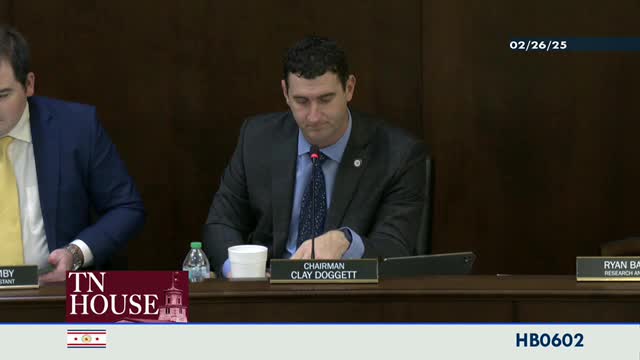
Tennessee panel moves two bills to strengthen unlawful-photography penalties and toll statute of limitations
Summary
The House Criminal Justice Subcommittee voted to advance two bills aimed at tightening penalties for unlawful photography and extending the time victims have to bring criminal charges; victims gave testimony describing gaps in current law.
Representative Freeman pushed a bill to clarify and expand the unlawful-photography statute and toll the statute of limitations to the date of discovery, and the committee advanced a separate bill that raises penalties for certain unlawful photography to a felony level.
The measures matter because some victims of hidden-camera crimes discover recordings long after they were made, and current law can bar criminal charges filed after short statutory periods. Sponsors and victim witnesses said the bills close a gap in practice and give police and prosecutors a clearer path to charge offenders.
Representative Freeman, sponsor of House Bill 602, told the committee the bill “adds a definition of ‘disseminate’ to the unlawful-photography statute” and “tolls the statute of limitations to the date of discovery.” He also said HB 602 would allow courts to issue orders of protection for people unlawfully photographed. Victim testimony preceded Freeman’s remarks: Emily Benavides, who identified herself as a victim, described finding explicit videos of herself on a former partner’s computer and said a detective told her the recordings were outside the one-year statute of limitations. “I was told I could possibly pursue a civil remedy,” Benavides said, and added that the short statutory period “denied me justice.”
Chairman Crawford presented House Bill 403, which the sponsor described as increasing the penalty for unlawful photography involving surreptitious recording: the amendment in committee would move the offense from a Class A misdemeanor to a Class D felony with a possible fine of up to $5,000 and a prison term “no less than two years, no more than 12 years,” according to the sponsor’s explanation. Leader Lambert spoke in support and said the higher classification would make it harder for prosecutors to plea the cases down to lesser charges.
The committee adopted amendments on both bills and voted to advance them to the full judiciary committee. For House Bill 602, victims of unlawful photography gave testimony in the hearing room before the sponsor described the bill; Emily Benavides and two other victims — identified in the record as Brooke Farrell and Erica Thomas (the latter available to answer technical questions) — spoke about the personal impacts and the statute-of-limitations issue. Freeman said the proposal “gives them a little bit of power back” by permitting criminal charges tied to the date of discovery and by adding dissemination and access provisions to the statutory definition.
Representatives on the panel asked questions about how the discovery tolling would work and whether the bill overlaps with related proposals; a TBI witness was available earlier in the hearing to clarify data protection and proper forensic limits for another bill, and committee members referenced that earlier discussion when seeking assurance HB 602 would not permit unrelated uses of DNA or other evidence.
The measures now go to the full judiciary committee for further consideration.
Ending: The committee record shows strong victim testimony in support of the changes and bipartisan backing in the subcommittee. The bills’ next step is a hearing before the full House Judiciary Committee, where sponsors said they will press for final passage.