Get Full Government Meeting Transcripts, Videos, & Alerts Forever!
Get email alerts on the Policing Contracts topic
No spam. Unsubscribe anytime.
Central committee debates sheriff contract versus building full-time police department
Summary
Committee members and staff debated whether the City of Central should sign a contract with the East Baton Rouge Parish sheriff's office or continue toward a standalone Central Police Department, reviewing staffing maps, short- and long-term costs, and contract terms.
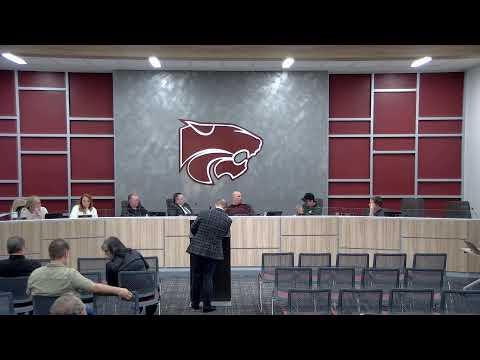
At a City of Central committee meeting, committee members and staff spent the session weighing whether to sign a contract with the East Baton Rouge Parish sheriff's office or to build a full-time Central Police Department.
The committee heard that the sheriff's office provided an organization chart showing current coverage and substations; Major Clue, representing the sheriff's office materials, told the committee, “it'll be a 6 month process” to gather full operational data and determine whether the split (a shared car between rotations and a six‑person presence until 10 p.m.) should become a permanent allocation. Councilwoman Wells asked for monthly activity statistics; the sheriff's office representative said similar breakdowns dating to 2019 are available and can be shared.
The debate centered on staffing, timeline and cost. Committee members and staff outlined competing cost estimates: a sheriff's-office proposal discussed during the meeting was described as about $2.5 million a year; proposals for a standalone Central Police Department produced a wide range in the committee's materials — one estimate cited by the mayor was about $10.5 million, others ranged near $8 million, and one participant described an estimate as low as $6.8 million with roughly $13 million in start‑up costs. Committee members and staff framed these as ranges rather than final figures; one committee member summarized the fiscal uncertainty as “low end, 8,000,000. High end, 10 and a half million.”
Officials debated contract length and exit clauses. A committee member who worked in law enforcement warned that a one‑year contract usually leaves the municipality “over a barrel” and recounted New Iberia's decades‑long experience where repeated short contracts eventually raised long‑term costs. Major Clue said the sheriff's initial allocation would cover day and night shifts as presented, but that the city should expect an evaluation period; “it'll be a 6 month process, and then we'll look at it then,” Major Clue said.
Mayor (role title: Mayor) emphasized funding constraints and said a hybrid model would be expensive: “the hybrid model, it today, with today's numbers is 3,700,000 a year,” he said, urging that any recommendation include clear funding sources. Committee members discussed possible funding streams — millage, sales‑tax increases, ticket revenue and grants — and cautioned against relying solely on variable revenue such as court fines. One participant noted that grants are typically time‑limited and could require a permanent funding source at the end of the grant period.
Committee members also discussed timing if the city chose to build its own force; one law‑enforcement speaker said a small department historically can take about 10 years to mature to large staffing levels and that recruiting and retention present persistent challenges. Others countered that Central is an attractive community for recruits and that, under the right conditions, hiring could be faster.
The committee asked the sheriff's office to produce a draft contract or proposed terms for review and asked staff to assemble funding packets showing potential revenue sources and grants. Members also agreed to continue collecting monthly activity statistics from the sheriff's office and to consider field visits to other municipalities before making a formal recommendation to council.
The session closed without a formal vote on a contract or funding measure; committee members asked staff to prepare comparative packets and possible contract language for future meetings.