Get Full Government Meeting Transcripts, Videos, & Alerts Forever!
Get email alerts on the Rapid Dna topic
No spam. Unsubscribe anytime.
Committee recommends establishing state working group to develop Rapid DNA licensing criteria and partnerships
Summary
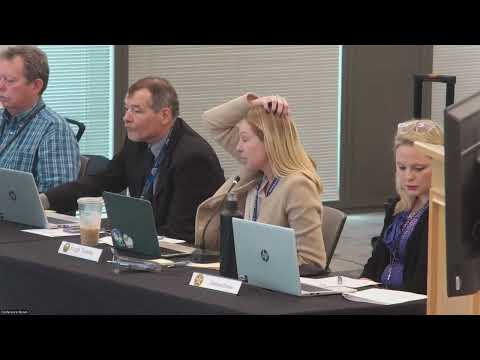
Following an FBI policy change allowing search of CODIS with Rapid DNA results when partnered with an accredited lab, the committee voted to recommend the commission stand up a state working group to develop Rapid DNA criteria and partnerships.
The committee discussed an FBI announcement allowing certain Rapid DNA results from crime‑scene samples to be searched in CODIS if the Rapid DNA deployments partner with an accredited laboratory. Committee members heard that the FBI’s modified approach requires partnership, accreditation scope expansion and careful quality‑management planning.
Staff explained major operational issues: chain‑of‑custody logistics for crime‑scene samples processed in rapid units, scope changes to accreditation (a Rapid DNA scope addition even for already‑accredited labs), operator training and proficiency testing, and how modified Rapid DNA analysis currently requires laboratory review before CODIS submission.
Committee members proposed forming a state working group, as the FBI recommended, to design criteria and to coordinate stakeholders. Proposed members included the Texas Sheriff’s Association, Police Chiefs Association, Texas Rangers, defense and prosecutor representatives (TCDLA and TDCAA), forensic lab directors (TACLD/TAFQAM representatives), ANAB, the laboratory accreditation community, and a Licensing Advisory Committee representative. Staff added DPS crime lab representatives and CODIS administrators to the list.
The committee voted to recommend that the commission establish a state working group with those stakeholders to develop vetting criteria for Rapid DNA licensing partners and operational guidance. Staff said DPS and other stakeholders will continue existing discussions and that the group would clarify responsibilities, accreditation scope and training requirements before broad deployment.