Get Full Government Meeting Transcripts, Videos, & Alerts Forever!
Get email alerts on the Sunshine Law topic
No spam. Unsubscribe anytime.
City attorney reviews Florida Sunshine Law and public-records rules with planning board
Summary
The city attorney reviewed open-meeting and public-records obligations for the board, including the definition of a meeting, prohibited communications, penalties for violations, and public-records exemptions.
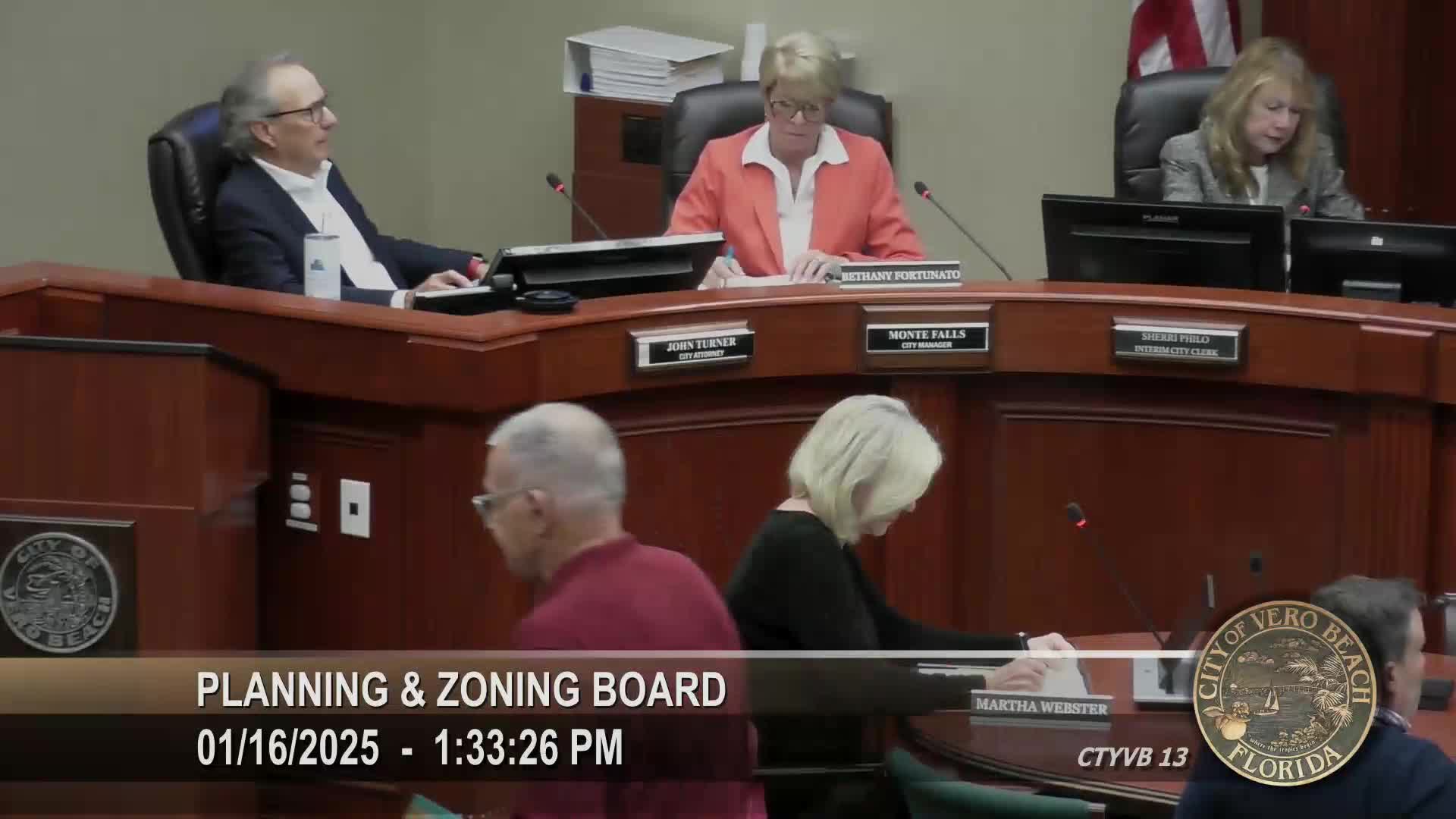
The city attorney briefed the Vero Beach Planning and Zoning Board on Florida’s Sunshine Law and public-records statutes, outlining what constitutes a meeting, prohibited communications, and possible penalties for violations.
“The basis of it is it provides a right of access to governmental proceedings at both state and local levels,” the city attorney said, summarizing the Sunshine Law’s scope. He told members the law applies to gatherings of two or more members of the same board to discuss matters that may foreseeably come before the board. "No resolution, rule, regulation, or formal action shall be considered binding except as taken or made at an open meeting," he said, summarizing a statute-based requirement.
He reviewed that communications between members—by telephone, email, social media, or through a third party—can violate the law if used to deliberate unofficially. The attorney warned that penalties include criminal charges for knowing violations (a second-degree misdemeanor with a fine and up to 60 days’ incarceration), civil fines, attorney fees, removal from office, and that actions taken in violation can be void but may be cured by a subsequent, independent action taken in an open meeting. The presentation also covered public-records law under chapter 119 of the Florida Statutes, noting nearly all records created or received in connection with official business are public records, while certain drafts, personal notes and specific statutory exemptions can limit disclosure.
The attorney advised board members to contact the city clerk or the city attorney’s office with questions, to avoid using staff or third parties as a conduit for member-to-member communications, and to disclose site visits or other ex parte contacts before quasi-judicial hearings so the public and applicants can address any disclosure in the public hearing.
Board members asked questions about site visits and disclosure rules, and the attorney clarified that visiting a site is not automatically disqualifying but should be disclosed at quasi-judicial proceedings so participants may inquire or object if they wish.