Get Full Government Meeting Transcripts, Videos, & Alerts Forever!
Get email alerts on the Residential Parking Restrictions topic
No spam. Unsubscribe anytime.
Planning board reviews draft residential parking rules; residents urge clearer enforcement and longer brief parking windows for RVs
Summary
Planning staff asked the Planning & Zoning Board for feedback on a draft that clarifies rules for storing trailers, boats and recreational vehicles in residential areas, including new definitions and whether storage should be confined to side or rear yards and to improved surfaces.
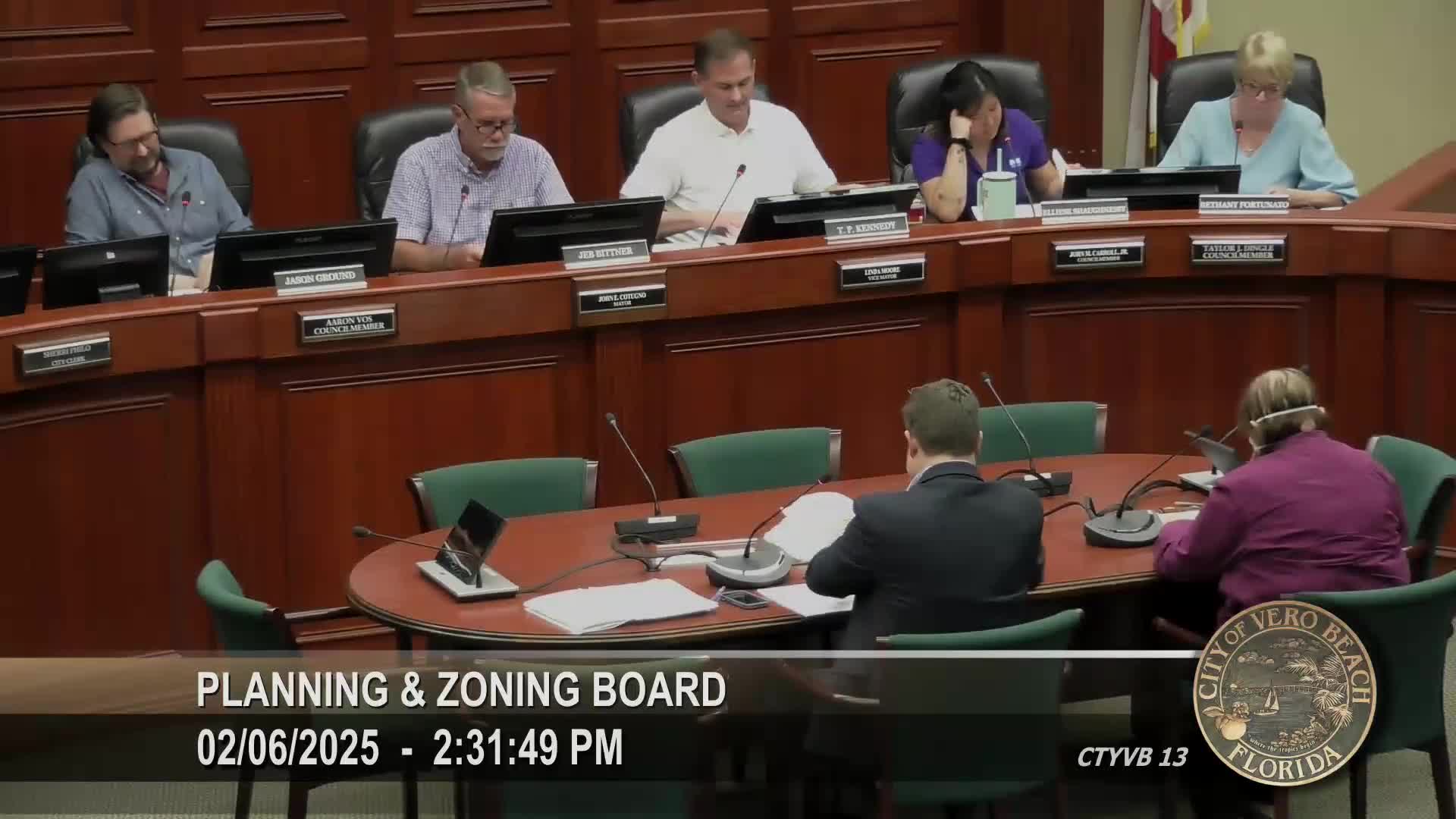
The Planning & Zoning Board held a policy discussion on proposed edits to the city's residential parking rules in Chapter 74 (traffic and vehicles) and Section 70‑482, focusing on definitions and where owners may store recreational vehicles, trailers and boats on residential property.
Planning staff described the draft as largely clarifying existing rules rather than creating new prohibitions: the proposal would add a clear definition of "automobile," tighten the RV definition to parallel state statute language, remove an unenforceable "houseguest" exception for watercraft storage, and move to require that long‑term storage of RVs and watercraft occur in side or rear yards rather than in front yards or within the required front yard setback. "This is just taking what already exists and really just kind of better defining it," the planning director said.
The nut graf: The discussion centered on balancing enforceability and residents' practical needs. Staff sought board feedback about whether to require that stored RVs or boats be located on an improved surface (which triggers land‑development requirements) and whether a short temporary allowance in front driveways should cover realistic loading/unloading and trip‑preparation times.
Public commenters and several board members said a proposed 2‑hour allowance for temporary use is too short for families preparing long trips; residents described multi‑day packing, electrical stabilization of refrigerators and other maintenance that can take 24–48 hours. One resident suggested allowing a longer temporary window or a limited number of longer stays per year. Others said permanent parking of large RVs and deteriorating trailers can become neighborhood eyesores and depress property values and that code enforcement and police often lack clear authority under the present language.
Staff and board members discussed practical enforcement approaches. City Engineer Danessa Chambers noted the city enforces driveway and right‑of‑way standards and suggested requiring an improved surface for side‑yard storage so the land development regulations’ driveway and setback standards apply; that approach would tie storage to standards for impervious surfaces and driveways and help address stormwater and proximity issues. Planning staff also said the draft maintains a prohibition on occupying motor vehicles as living quarters on private property and that hooking RVs or travel trailers to city utilities for permanent occupancy violates code and is subject to enforcement.
Board members expressed mixed views: several urged clearer, enforceable language that prevents year‑round storage and deterioration while allowing reasonable short‑term use for trips and maintenance; others cautioned against turning the city into an HOA‑style regulator of aesthetic preferences. Staff said it will incorporate the board's feedback and bring the revised draft to City Council as a general ordinance amendment (the General Code change does not require a P&Z recommendation but staff wanted P&Z feedback before moving to council). No formal vote was taken; staff said they will incorporate comments and proceed to Council.