Get Full Government Meeting Transcripts, Videos, & Alerts Forever!
Get email alerts on the Hampton High Flood Recovery topic
No spam. Unsubscribe anytime.
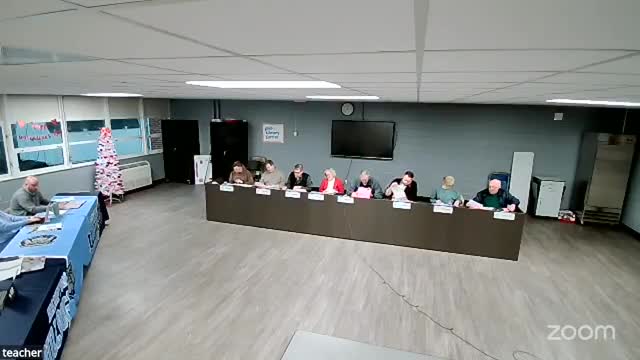
Carter County officials outline Hampton High recovery options as FEMA, flood maps and state rules constrain repairs
Summary
Officials reported progress on FEMA submittals, engineer mitigation estimates and constraints from floodplain mapping and state funding rules. They said state-appropriated funds cannot be used to repair a school in its current location if rules require relocation, and FEMA timelines vary by award size.
At a Carter County workshop, Dr. Carpenter, a Carter County official, provided updates on FEMA submittals and options for Hampton High School after flood damage. County staff reported they had submitted claims for van transport and temporary student movement and expected an engineer’s mitigation estimate soon.
Carpenter said the county submitted documentation for temporary student transport and other costs and expects to hear a dollar estimate within about three weeks. He said the county has an engineer ready to prepare a mitigation plan as soon as the estimate is available; once the mitigation plan is submitted the county expects FEMA to set the possible reimbursement amount or offer a “force account” style allocation for use on approved projects.
Carpenter described uncertainty around floodplain mapping. He said FEMA typically hires an outside firm to reset flood maps, and that process can take about a year: “It will be they come in, and that usually takes 1 year,” he said. He added that a site can be in a flood zone (commonly labeled AE) but not necessarily in a floodway; if a site is later designated in a floodway, the county could be restricted from rebuilding a school at that location.
Carpenter told the board that state legislation limits how some state funds may be used: $20,000,000 appropriated at the state level cannot be used to repair an existing school in a flood zone and must be spent on a new facility at a different location, according to his statement. He said the legislature’s restriction means the county cannot rely on those state funds to repair the current Hampton building.
County staff discussed FEMA timelines and reimbursement turnarounds: Carpenter reported FEMA staff told the county that projects under $1 million typically see a faster turnaround (he cited 30–60 days as possible), while projects exceeding $1 million usually take longer. He said the county is exploring other grants and funding sources to cover gaps and would “keep looking and coming up with things.”
Carpenter and other speakers also addressed septic/sewer options, saying a sewer connection to Hampton would be expensive and the county has not pursued that route because of cost. He said the county has received an installer’s price but has not moved forward on sewer work.
On enrollment, Carpenter said the district had lost about “over a hundred” students since the floods and gave an approximate county-wide enrollment figure he described as “close to 4,200.” He and staff discussed the state voucher bill and its potential effect on budgeting; Carpenter said there has been talk the state may hold districts harmless based on prior-year enrollment or an average, but no definitive clarification had been provided.
Carpenter said the county is preparing a budget and expects a first estimate on repair/relocation costs by mid-March; he said that figure will guide whether the county pursues repair, relocation or other options. No binding decisions were made at the workshop.