Get Full Government Meeting Transcripts, Videos, & Alerts Forever!
Get email alerts on the Committee Assignments topic
No spam. Unsubscribe anytime.
Residents press council to change committee assignment rules after longtime member is kept off key panels
Summary
Dozens of San Anselmo residents used the meeting's public comment period to demand a formal committee-rotation rule and to protest the exclusion of Councilmember Eileen Burke from two safety-related panels. Councilmembers discussed agendizing the issue and town staff said no formal Brown Act violation had been found so far.
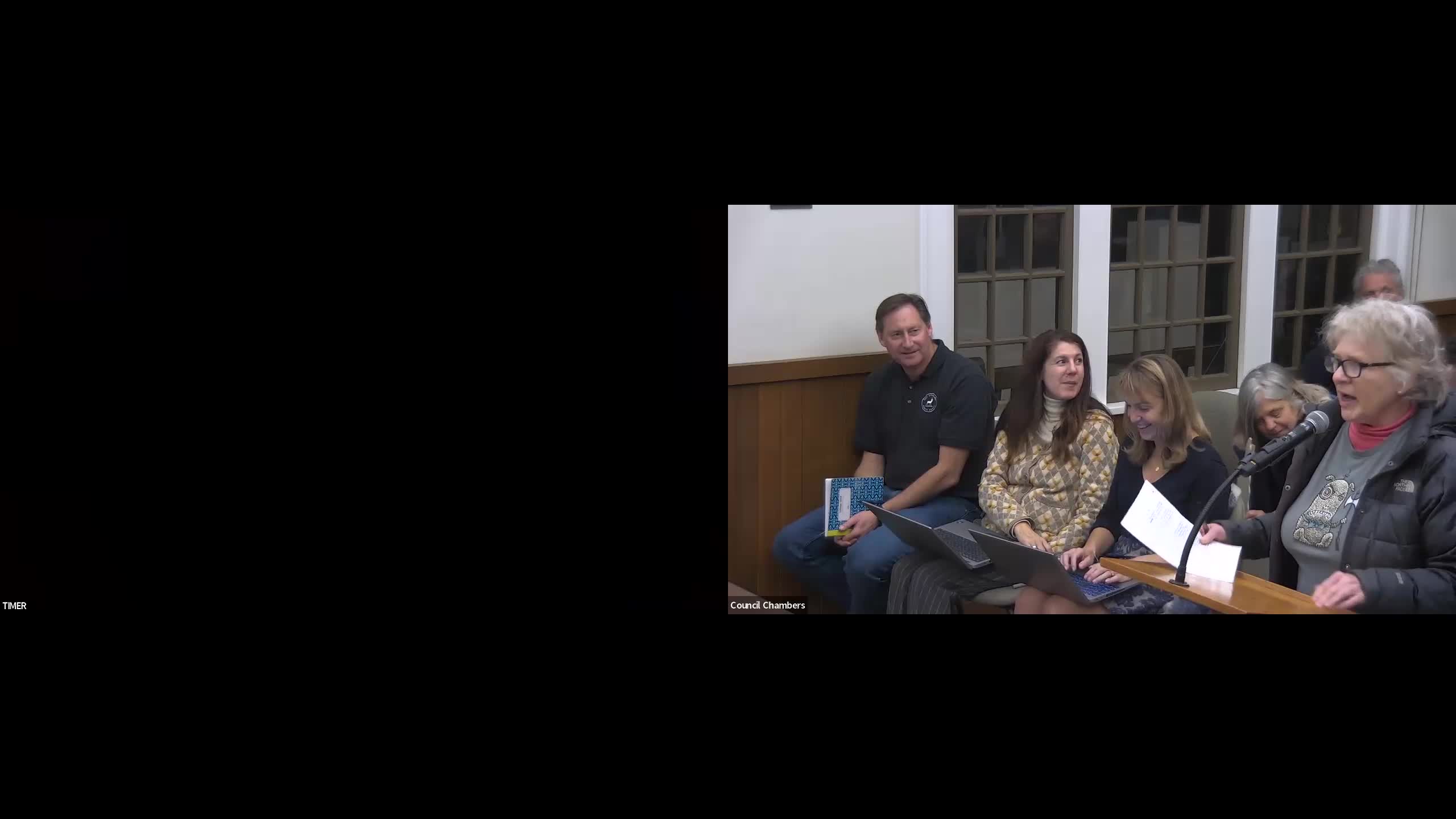
At the Feb. 11 San Anselmo Town Council meeting, more than two dozen residents used the public-comment period to press the council to revisit committee assignments after Councilmember Eileen Burke was not appointed to two panels she has requested for years.
The comments, which stretched across the meeting's first hour and a half, repeatedly asked the council to adopt a codified committee-rotation policy that would limit how long any councillor can remain on the same committee and ensure more predictable, equitable assignment procedures.
Why it matters: Residents said committee posts affect representation on public-safety and interjurisdictional bodies (for example, the Ross Valley Fire and Marin Wildfire protection entities) and that a formal rule would reduce the perception of secret coordination and the chance of repeated exclusion of senior council members.
Speakers at the dais and in the audience described the pattern in personal terms rather than as a narrow personnel dispute. Anne Pollitzer, a Brookside Drive resident, told the council she watched the assignment process and called the coordination that excluded Burke "swinish, swinish." Anna Franzoya said the action was "unrepresentative, unprofessional, and definitely undemocratic," and urged a rotation that limits members to three years on a committee. Dozens of other residents, including small-business owners and former elected officials, echoed the call for a written rotation rule and for the council to revisit assignments.
Council response and immediate next steps: Councilmember Murphy (identified in the meeting as a long-tenured member) said staff had done a preliminary review and "did not find any evidence of a Brown Act violation in this case." He said he had asked Councilmember Burke to provide any evidence she wanted investigated and had not yet received materials. The town manager told the council she would look into any formal complaint if one were filed.
Councilmember Burke asked the council to "agendize that resolution" (a proposed rotation policy she had circulated). A number of council members expressed openness to discussing a rotation policy, though the meeting record shows disagreement about timing: some members said they would support agendizing the rotation policy for later consideration, others said they preferred to put higher-priority items (permitting, public works) on upcoming agendas first. No final, formal council vote adopting a rotation policy was recorded at the Feb. 11 meeting.
Community context: Several speakers tied the dispute to broader complaints about transparency and council conduct over recent years, linking committee assignments to previous contested issues (flood-control projects, rent-control measures and street redesign proposals). Speakers asked the council to adopt a written process to prevent perceived "squatting" on committees by long-serving members and to make assignments "collegial, fair, and representative of the people."
What residents asked for: Multiple callers said they wanted (a) a rotation rule guaranteeing every councillor a chance to serve on committees, (b) a limit (often suggested as three years) on how long any single member may remain on a committee, and (c) an explicit, codified process for committee assignments to be appended to the town code.
Council members who addressed the public said they value the input, and several asked staff to return with options. Town staff said it will evaluate options for agendizing the rotation resolution and will continue to accept evidence if a formal Brown Act complaint is filed.
Ending: The council did not change committee assignments on Feb. 11. The dispute, and residents' repeated requests for a written rotation policy, is expected to return to a future agenda for formal consideration.