Get Full Government Meeting Transcripts, Videos, & Alerts Forever!
Get email alerts on the Middle School Assignment topic
No spam. Unsubscribe anytime.
Kingston urges study to end sixth-grade middle‑school lottery to trim busing costs
Summary
A school committee member proposed eliminating the middle‑school lottery for incoming sixth‑graders to reduce transportation costs; members asked staff for enrollment and geographic breakdowns and discussed equity and capacity tradeoffs.
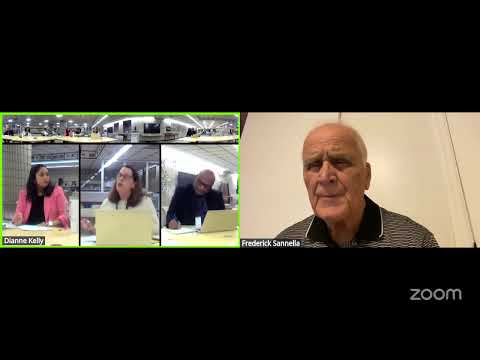
At the Feb. 25 Committee of the Whole meeting, committee member John Kingston proposed ending the middle‑school lottery for incoming sixth‑graders so students would attend the middle school closest to home, a change Kingston and others said could reduce long‑term transportation costs.
Kingston framed the proposal as a multi‑year transition, saying initial savings would be small but larger as cohorts progress: "the first year savings would be minimal... but once that filters through... there could be a tremendous cost savings," he said. He estimated the cohort is about 600 sixth‑grade students.
Opponents and other committee members urged caution and asked for a feasibility study. Committee member Bertie Sunnella noted historical attempts to prioritize neighborhood schools led to concerns about mid‑year transfers and imbalances in incoming student academic preparation. Dr. Kelly said there remains an imbalance in enrollment across the city and that shifting to neighborhood middle schools would not eliminate all transportation, because some students live beyond walking distance and because out‑placed special‑education transportation accounts for the largest share of transportation costs.
Dr. Kelly also warned that if students from particular neighborhoods are concentrated in one school, that school may need additional resources to address learning gaps. "If the committee is gonna go in that direction, you're gonna have to think about giving more resources to the Garfield," she said, noting such shifts historically affected standardized test results when student mixes changed.
The committee did not adopt a policy change on Feb. 25. Instead members agreed to next steps: staff will provide enrollment and geographic breakdowns by neighborhood and simulate how a neighborhood‑based assignment would affect capacity and busing; the committee discussed referring a formal feasibility study to a policy subcommittee and coordinating the timeline with the new high‑school construction schedule.
Committee members also recommended engaging principals and community stakeholders during any study. Kingston and others emphasized that, if adopted, the change should be phased so that only incoming sixth‑graders would be affected initially, with full effect achieved over several years.
The committee instructed staff to return with data and recommended a subcommittee meeting to evaluate feasibility and potential costs before any policy vote.