Get Full Government Meeting Transcripts, Videos, & Alerts Forever!
Get email alerts on the Medicaid Budget topic
No spam. Unsubscribe anytime.
JFAC hears Medicaid budget increases, $190 million hospital assessment and $367 million forecast adjustment
Summary
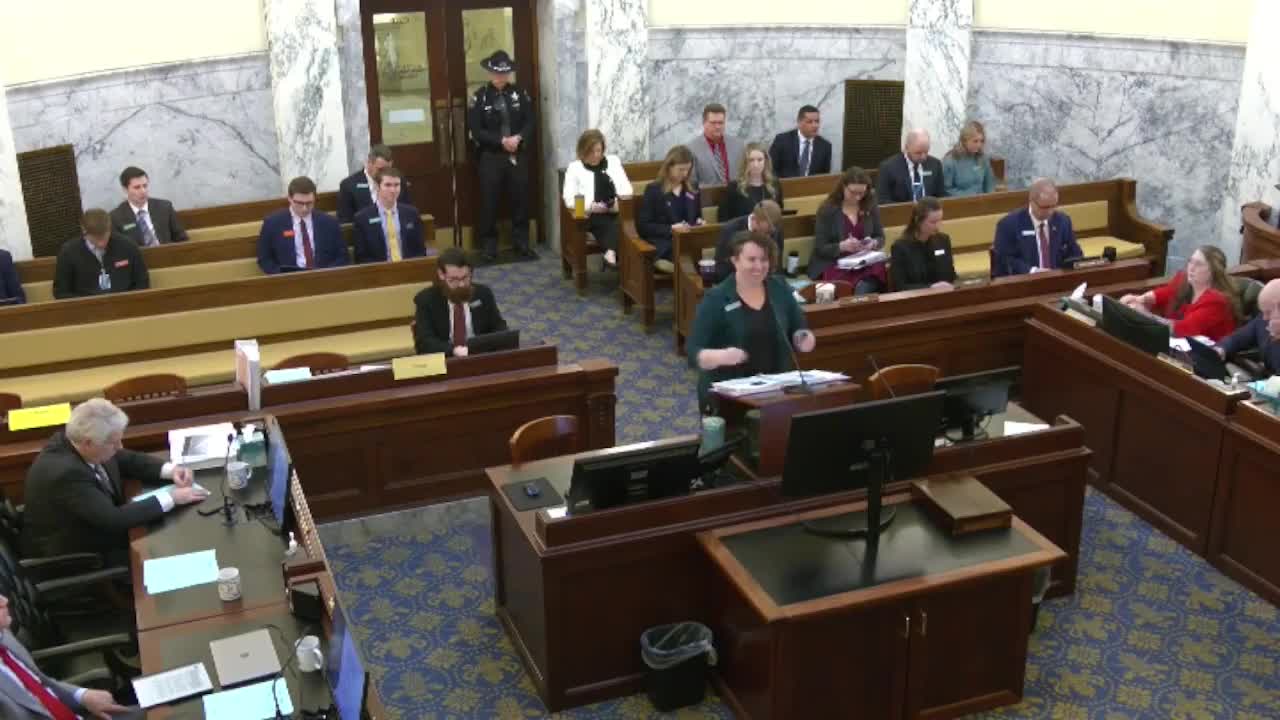
The Joint Finance-Appropriations Committee on Wednesday heard a presentation on the Division of Medicaid’s budget showing multi‑hundred‑million‑dollar adjustments driven by caseload growth, provider rate changes and federal funding calculations.
The Joint Finance-Appropriations Committee on Wednesday heard a presentation on the Division of Medicaid’s budget showing multi‑hundred‑million‑dollar adjustments driven by caseload growth, provider rate changes and federal funding calculations.
Alex Williamson, budget and policy analyst with Legislative Services, told the committee that the division’s fiscal picture includes five budgeted programs — administration, coordinated (seniors and dual eligibles), enhanced (people with disabilities and foster children), basic (pregnant women and children) and expansion (adults up to 138% of the federal poverty level). "The division of Medicaid is responsible for administering plans to finance and deliver health services for people at risk due to low income and other factors," Williamson said.
Why it matters: Medicaid is an entitlement program with a substantial federal funding component; recent changes — including the 2020 Medicaid expansion go‑live, COVID‑era impacts, provider rate increases and adjustments to how upper‑payment‑limits are calculated — have increased the state’s outlays. Director Alex Adams of the Department of Health and Welfare described the department’s submission as “as close to a maintenance budget as I could submit,” noting that even without policy expansions the budget rose because of forecasted caseload, pricing and utilization.
Key figures and requests presented
- Hospital assessment supplemental: A request for $190,000,000 in trust/benefit payments, of which Williamson said $77,000,000 would come from the hospital assessment fund (dedicated funds) and $113,000,000 from federal funds. The request relates to changes following Senate Bill 1350 (2022) and methodology adjustments to the upper payment limit used to access federal matching funds.
- Population forecast adjustment: Williamson identified a population forecast adjustment (often labeled nondiscretionary) that would add about $367,000,000 to the Medicaid base; she said roughly $45,000,000 of that reflects a shift from federal funds to the general fund tied to FMAP changes.
- Capitation and behavioral health items: A capitation rate increase tied to the Idaho Behavioral Health Plan (IBHP) of roughly $108,800,000 (one time, federal funds split across plans as detailed in the budget writeup) and a one‑time/ongoing external quality review (EQR) expense the analyst described as about $1.3–$1.35 million (the department noted an RFP produced no responsive bids and the market price is higher than past payments).
- MMIS: Medicaid Management Information System procurement is in year three of a five‑year process; Williamson said $11,700,000 is the state's portion already set aside in the MMIS dedicated fund, with a larger federal share forecast.
Drivers and context
Williamson summarized drivers over recent years: the 2018 Milliman forecasting report that informed early expansion cost estimates, the timing of the expansion launch in January 2020 (mid‑fiscal year), provider rate increases enacted in 2022, COVID‑related effects on utilization, and changes to upper‑payment‑limit calculations for hospitals and skilled nursing facilities.
Committee members pressed for context on the expansion and forecast accuracy. "The forecasts were based on what we call the Milliman Report," Williamson said, adding that the report could not have foreseen a global pandemic and subsequent care‑seeking patterns. Representative Tanner told the committee, "We have no levers to actually pull," arguing the state lacks tools to constrain costs for the expansion population; Senator Wintrow and others said repealing expansion would shift costs elsewhere and risk leaving people without care.
Operational issues: behavioral health contract and provider payments
Department officials described operational challenges after the IBHP contract went live July 1. Juliette Sharon, deputy director of Health and Welfare, said additional system configurations and interfaces were required to support the contract’s larger scope and to ensure federal reporting and oversight. "These are costs that have already been incurred for system configuration changes made, and completed around the start of the new IBHP contract," Sharon said.
Committee members reported continuing provider payment problems. Director Adams and Sharon said the state has imposed liquidated damages (Adams said more than $100,000) and corrective action plans on the contractor, Magellan, and that payment timeliness has generally improved. Adams said the department is using monthly reports and other oversight to monitor timeliness and denials.
Other program details and legal matters
- Expansion eligibility: Williamson reiterated expansion covers adults with incomes at or below 138% of the federal poverty level and began in January 2020. She gave examples from the 2025 federal poverty guidelines to illustrate eligibility thresholds.
- FMAP and fiscal risk: Adams explained that the federal medical assistance percentage (FMAP) can change with state income measures; a small FMAP decline shifted about $45,000,000 from federal to state dollars in the current forecast. Adams warned that if the 90/10 expansion match were reduced toward the state’s traditional match, it could shift hundreds of millions of dollars to the state.
- Emergency Medicaid: On coverage for noncitizens, Adams said unauthorized immigrants are not eligible for full Medicaid but the state spends roughly $10,000,000 a year on emergency Medicaid services.
- Postpartum coverage and appeal: Adams said the state’s postpartum state plan amendment is operational and that about 2,800 women have used the coverage; he also said a federal decision denying part of Idaho’s plan interpretation had been appealed and the state secured a hearing the first week of April.
No formal votes; next steps
Committee members did not vote on appropriation language during the hearing; the department presented supplementals and enhancements for JFAC consideration. Adams said the department provided policy committees a "menu of cuts" in case lawmakers seek cost‑containment options, but he cautioned that Medicaid is largely governed by federal eligibility and benefit rules. Williamson and department staff said more detailed slide decks and supporting documents are available on the committee SharePoint and the department’s website, and that staff would follow up with legislators on specific data requests (for example, postpartum benefit details and market questions about the EQR procurement).
The hearing produced several follow‑up items the department agreed to provide, including provider payment timeliness metrics, further detail on the hospital assessment methodology and the MMIS procurement schedule. No appropriations were approved during the session; committee members signaled they would review the requests and related policy bills before acting.