Get Full Government Meeting Transcripts, Videos, & Alerts Forever!
Get email alerts on the Higher Education topic
No spam. Unsubscribe anytime.
College of Southern Idaho Seeks Enrollment Workload Adjustment After 20% Spike in New Students
Summary
College of Southern Idaho told the Joint Finance-Appropriations Committee it experienced a 20% enrollment increase in fall 2024, is requesting an FY2026 Enrollment Workload Adjustment of $475,700 to hire five instructors, and is urging support for governor-proposed capacity and one-time infrastructure funding to reduce wait lists in CTE programs.
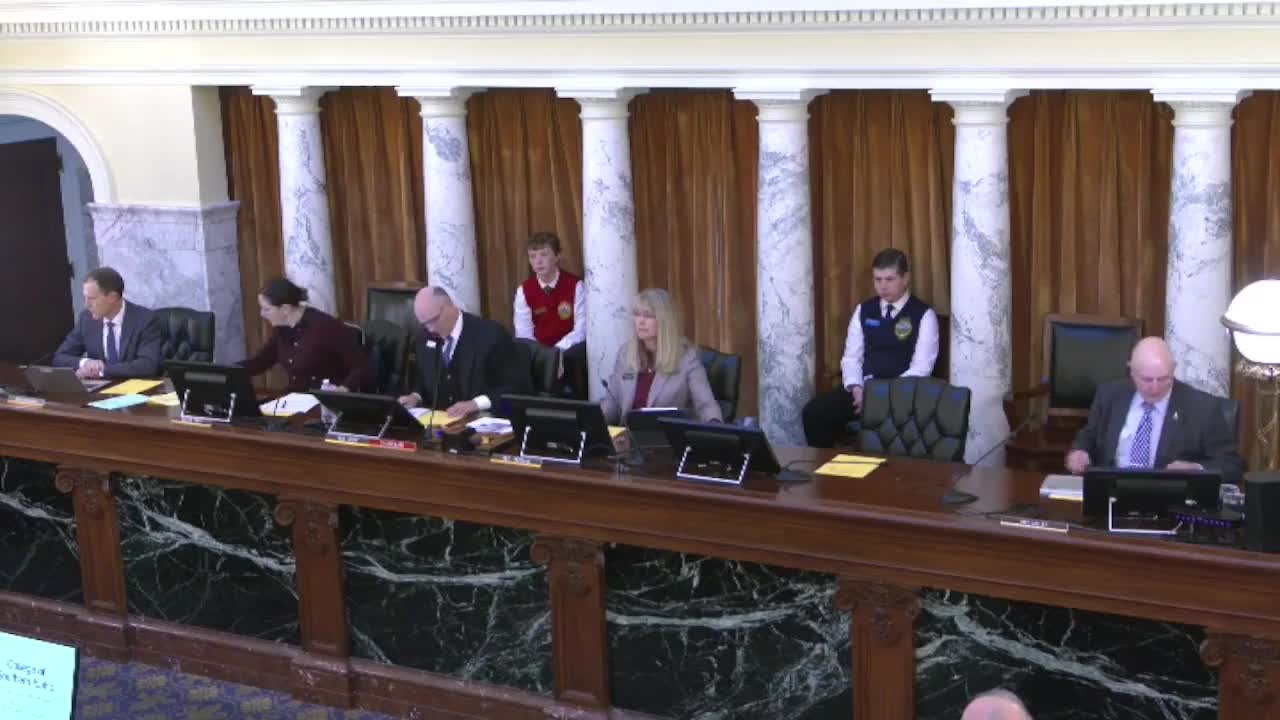
The College of Southern Idaho reported a 20% increase in fall 2024 enrollment and asked the Joint Finance-Appropriations Committee (JFAC) for an Enrollment Workload Adjustment (EWA) and other capacity funds to manage steady growth, President Dr. Aldine Fisher and Legislative Services Office analyst Kevin Campbell said at a JFAC presentation.
Kevin Campbell told the committee that community colleges are established under the Junior College Act and referenced Title 33, Chapter 21 of Idaho Code; he noted appropriations to community colleges are made as a single trustee appropriation rather than by object category. Campbell said CSI typically spends 100% of its state appropriation and that CSI’s FY2026 request includes an EWA request of $475,700.
The request is tied to capacity needs created by recent enrollment growth. "We experienced a 20% growth in my prepared remarks," Dr. Fisher told the committee. Fisher said that growth was outside dual-credit enrollment and that CSI has added roughly 3,800 students since fall 2021. In the 2023–24 academic year CSI enrolled 16,586 unique students in credit-bearing courses, and the college also reported about 7,000 workforce contacts and 561 apprenticeships.
Fisher and other CSI officials described program-level capacity constraints. Examples cited: a radiologic technology program that admits 15 students annually but had a waiting list of 84; nursing programs constrained by clinical space and faculty; and welding cohorts operating across multiple sites and hours to meet demand. Fisher said the college needs more faculty and space to sustain the growth and called for support for the governor’s proposed capacity-building funds and a recommended $15 million in one-time infrastructure money for specialized learning spaces.
On how requested faculty would increase service, Fisher said the college plans to use five general-education instructors (if CTE expansion support is provided separately) and estimated each new faculty member serves about 150 students a year, roughly 750 additional student seats if all five positions are funded. "The students are already there, Senator Cook," Fisher told a committee member during questioning about whether demand was current or prospective.
Fisher also highlighted performance metrics the college sees as strengths and as justifications for investment: an 85% fall-to-spring retention rate above the national average of about 60% and a roughly 50% reduction in textbook costs after implementing more open educational resources. Campbell described recent budget mechanics for community colleges, noting that the EWA was moved into the enhancements budget in FY2025 and that CSI’s FY2024 single trustee appropriation was listed in committee materials.
The presentation closed with a request for JFAC and the legislature to consider ongoing compensation and parity work for community college faculty and staff compared with regional peers and with K–12 and university pay. Fisher recommended continued work on compensation equalization and capacity funding to reduce wait lists and expand CTE and nursing enrollment.
Looking ahead, CSI asked JFAC to consider the EWA request and the governor’s capacity-building proposals so the college can hire instructors, reduce class sizes and wait lists, and add the specialized learning spaces required by trade and health programs.