Lifetime Citizen Portal Access — AI Briefings, Alerts & Unlimited Follows
Texas chief justice urges 30% pay increase for judges, originalist rulings and repeal of Family Code provision
Loading...
Summary
Chief Justice Jimmy Blacklock of the Supreme Court of Texas told a joint session of the Legislature that lawmakers should raise judicial salaries by about 30%, adopt procedural and regulatory changes to lower the cost of legal services, and consider repealing a Family Code provision tied to parental‑rights termination.
Chief Justice Jimmy Blacklock of the Supreme Court of Texas told a joint session of the Legislature that lawmakers should raise judicial salaries by about 30%, adopt procedural and regulatory changes to lower the cost of legal services, and consider repealing a Family Code provision that he said can stack the deck against parents in termination proceedings.
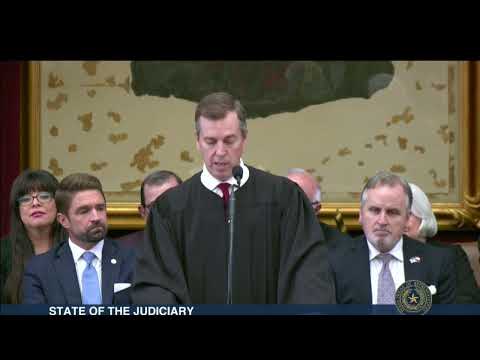
Blacklock, speaking after an introduction by Lieutenant Governor Dan Patrick and before both chambers, said Texas ranks 48th among the states for district judge pay and that the Judicial Compensation Commission has recommended a 30% increase in base pay. “That is what I’m asking you to do,” he said.
The recommendation is part of a broader pitch that, Blacklock said, aims to attract and retain highly qualified judges and to protect the rule of law. He argued that higher pay would improve the quality and longevity of applicants and help ensure consistent, predictable rulings that lower litigation costs for Texans.
Blacklock also urged the court and Legislature to limit judicial policymaking by returning to text‑based constitutional interpretation. “In Texas, under this Supreme Court, the living constitution is dead,” he said, describing originalism as the appropriate approach for the state judiciary.
On court administration and procedure, Blacklock said the Supreme Court is studying changes to reduce the expense of litigation, including eliminating rotating dockets that assign different judges at different hearings and considering whether parties should be required to pay for full merits briefing only after a petition for review is granted. He said he has asked the court’s advisory committee to recommend rules to address these issues.
Blacklock said the Supreme Court will use its authority to collect data to identify problem judges and address poor performance, but cautioned against using single metrics as “blunt instruments.” He cited Article 5, Section 31 of the Texas Constitution as charging the Supreme Court with efficient administration of the judicial branch and Article 15, Section 8 as providing avenues for removal of judges in rare cases.
He also proposed regulatory changes to increase the supply of legal services and lower prices for Texans, saying that government regulation can drive up costs and that the court should work with the Legislature on careful changes to how the legal profession is regulated. “If the opposition comes from a desire to protect lawyers from economic competition, then I’m not interested,” he said. He called on the State Bar of Texas to remain politically neutral.
Turning to family-law litigation, Blacklock urged the Legislature to examine “subsection O” of the Family Code — cited in the address as chapter 161.001(b)(1)(O) — which he said allows termination of parental rights if the parent does not complete a long list of state‑required actions. “Repealing subsection O would be a good start,” he said, and he commended Representative Dutton’s bill that would repeal or alter that provision and related law.
Blacklock also thanked Governor Greg Abbott for appointing him and honored former Chief Justice Nathan Hecht for his decades of service. He praised law enforcement in the chamber and urged support for officers and their families.
No formal legislation or motions were proposed by the court during the address; the items Blacklock raised — judicial pay increases, procedural rule changes, regulation of the legal profession and repeal of subsection (b)(1)(O) of the Family Code — would require legislative or administrative follow-up by lawmakers or the Supreme Court’s rulemaking processes.
Blacklock’s remarks concluded without any immediate legislative action recorded in the joint session minutes.