Get Full Government Meeting Transcripts, Videos, & Alerts Forever!
Get email alerts on the Grading Policy topic
No spam. Unsubscribe anytime.
Board reopens debate over removing the D grade; trustees ask for data, district to report back
Summary
Trustees and community members debated the districtpolicy of not issuing D grades at high school. The board left the matter at information and tasked staff to collect data on credit recovery costs, historical rationale and grade calibration before further action.
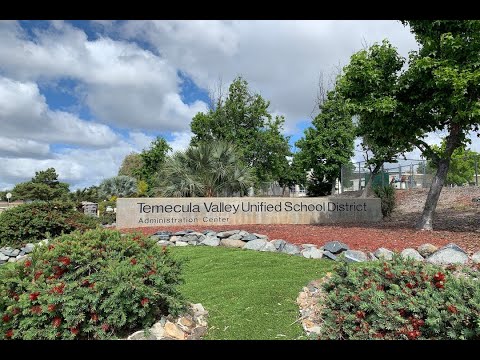
The Temecula Valley Unified School District board heard a sustained and sometimes sharply divided public discussion Feb. 25 about whether to restore a D grade at high schools.
Why it matters: The districtpolicy of not issuing D grades at the high-school level (a policy the board has followed for more than two decades) means students who score below C and above failing are treated differently than in many districts. Supporters of keeping the no-D policy say it helps ensure students reach minimum proficiency levels before progressing; opponents said restoring the D could avoid excessive remediation costs and better reflect student performance for college and scholarship reporting.
What speakers said: Parents and teachers provided multiple perspectives. Christine Massa, a parent who supports the current policy, told the board that a D represents a lack of proficiency and that moving a student with a D into the next course leaves that student at risk of failing the next level without remediation. "If a student receives an F, they're compelled to complete credit recovery," she said. "With a D grade there's no such compulsion."
Teachers and other commenters stressed practical consequences. Dana Portis, a Chaparral High School teacher who spoke for classroom staff, said pandemic learning gaps and behavior challenges have increased remediation needs; she argued that accurate reporting of grades and clear standards matter for both students and state dashboard metrics. A parent, David Sola, asked for district statistics on how many students would be affected, saying policy change should be targeted by data rather than a blanket shift.
District response and next steps: Trustee Dr. Joseph Komrovsky, who brought the item forward, said he had suspended judgment after hearing arguments and requested several data points before the board takes action. Superintendent Gary Woods and Assistant Superintendent Dr. Kimberly Velez said staff will compile: (1) the annual district cost of credit recovery and summer school (including Apex and Edmentum contracts); (2) how many D and F grades have been recorded at each site over recent years; (3) the outcomes for students who retake courses via credit recovery; and (4) any evidence of grade inflation or inconsistent grade calibration across sites. The board asked for data covering the three comprehensive high schools and a summary of middle-school practice (middle schools record D grades in a different manner).
The board also asked staff to return with a summary of why the no-D policy was adopted roughly 25-27 years ago and to provide comparisons with nearby districts. Dr. Velez said TVUSD is currently among very few districts in Riverside County that do not issue D grades at the high-school level.
Decision: Trustees did not change policy at the Feb. 25 meeting. Instead they moved the item to continued review and created a small process: staff will collect the requested data and trustees will consider survey input and grade-calibration work. Trustee Komrovsky said he will ask the board for consensus to send a district-wide survey of teachers and principals; Komrovsky and other trustees also discussed forming a targeted calibration process with departments represented at each high school.
Ending: The item remains at information. Staff committed to deliver the financial figures and grading data ahead of the board's next regular meeting so trustees can consider the evidence and whether to form a standing subcommittee to flush out grading standards and calibration.