Get Full Government Meeting Transcripts, Videos, & Alerts Forever!
Get email alerts on the Benefits Cliffs topic
No spam. Unsubscribe anytime.
Committee backs resolution asking federal flexibility to ease benefit 'cliffs'
Summary
The Senate Economic Development and Workforce Services Standing Committee voted unanimously to send HCR 8 to the Senate floor. Sponsors said the concurrent resolution asks Congress to give states flexibility to reduce benefit cliffs that can discourage work or promotions.
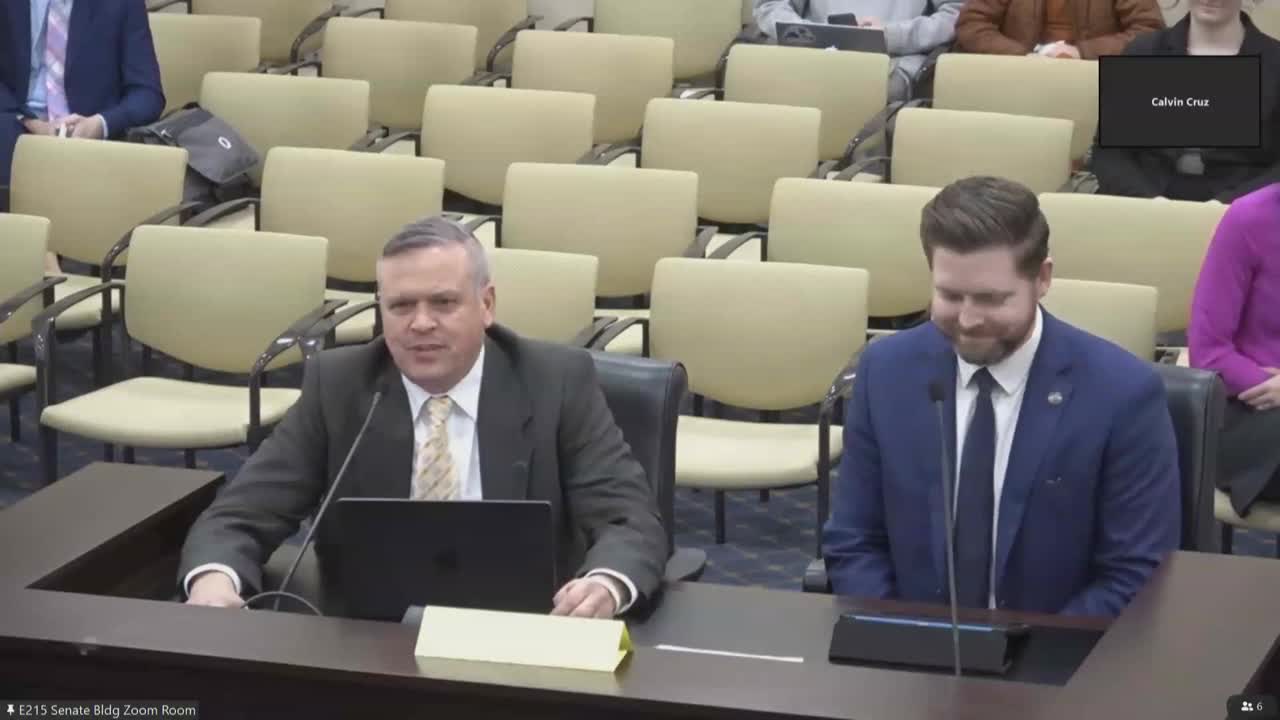
The Senate Economic Development and Workforce Services Standing Committee voted unanimously to send HCR 8, a concurrent resolution urging federal flexibility to reduce benefit “cliffs,” to the Senate floor.
Supporters said the resolution asks Congress to allow Utah to apply federal benefit dollars with fewer strings so state programs can smooth the transition from government assistance to work-based self-reliance. Representative Kevin Strong, sponsor of the resolution, told the committee that some people decline promotions because a small increase in income can reduce benefits by a larger amount.
“We have some situations where people are working and literally if they make one more dollar ... they would lose a percent of the benefits,” Representative Strong said, describing the instance of another legislator’s son who turned down a raise for that reason.
Nick Dunn of the Sutherland Institute told the committee Utah already performs well on upward mobility and that greater federal flexibility would let the state experiment with incentives to encourage employment and career advancement. “Utah has a really strong track record; we have the best upward mobility in the nation,” Dunn said.
Senator Sarah Kwan asked the sponsor to clarify that the resolution does not require people who cannot work to do so. “I want to make sure that it’s not in there, that we are not saying that people who are on these programs must work,” Kwan said. Representative Strong said the resolution is aimed solely at the benefits cliff problem and is not intended to impose work requirements on those unable to work.
Amy Winder Newton, director of the Utah Office of Families, said the office has worked with the Sutherland Institute and the Department of Workforce Services on the proposal and supports seeking waivers or other federal flexibility. “We need this flexibility from the federal government,” she told the committee.
Senator Johnson moved that the committee pass HCR 8 with a favorable recommendation; the motion carried unanimously. Committee members discussed whether the resolution could be placed on consent; the sponsor noted House rules had placed the measure on consent there but said the Senate committee would decide separately. The measure was forwarded to the Senate floor with a favorable recommendation.