Get Full Government Meeting Transcripts, Videos, & Alerts Forever!
Get email alerts on the Child Welfare topic
No spam. Unsubscribe anytime.
Bill would stop routine child-support orders when DCFS places children in foster care; committee moved on without deciding
Summary
Representative Kathy Watkins introduced House Bill 384 to stop routine child-support orders on parents after DCFS places their children in foster care, arguing the requirement impedes reunification and creates hardship.
Representative Kathy Watkins introduced House Bill 384 on child-support requirements for cases opened by the Division of Child and Family Services (DCFS), saying the bill would stop imposing routine child-support obligations on parents after DCFS removes children from a home.
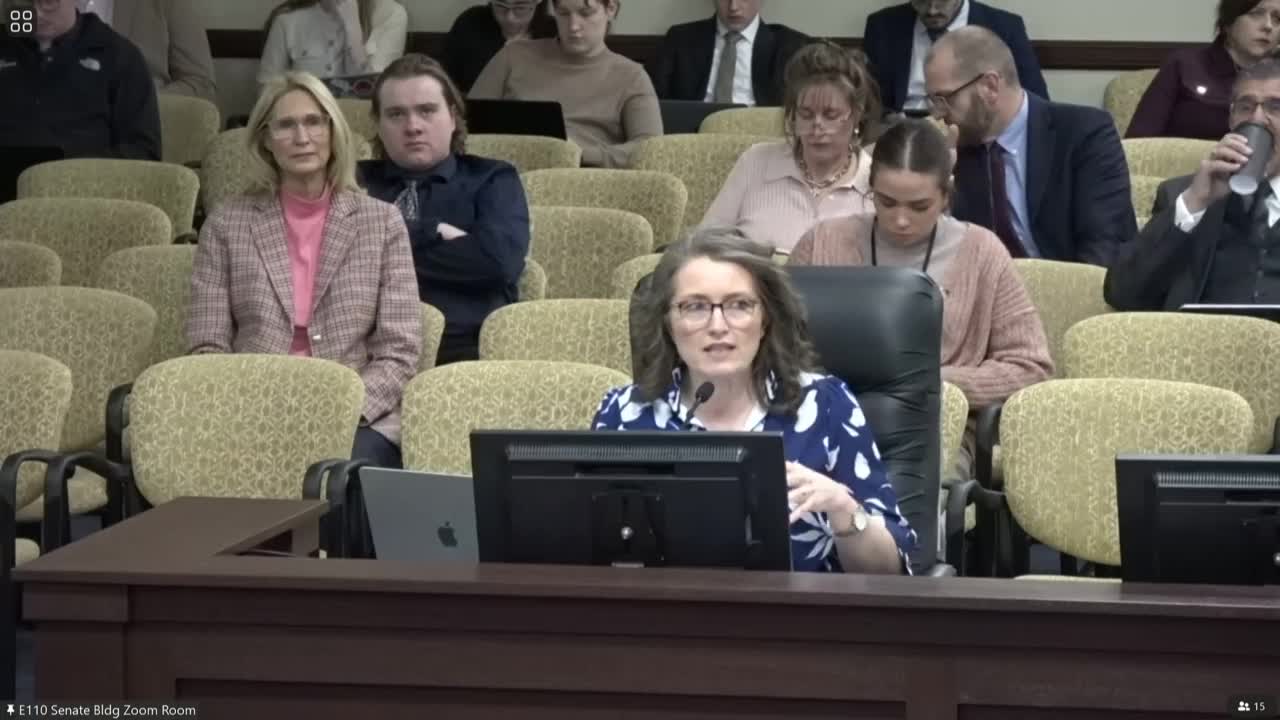
Watkins, the sponsor, told the committee the measure is limited to dependency cases handled by DCFS and does not apply to divorces. She said parents often work multiple jobs and face severe financial strain when support is ordered and wages are garnished, and that those orders can slow or complicate reunification efforts.
The bill would cease collection of child support in DCFS cases, including where support was imposed previously. Watkins said some of the collections are placed in a restricted account that helps fund DCFS staff and operations, which contributes to public suspicion that removal decisions are tied to funding incentives; she described that perception as having "a little bit of truth" because the child-support receipts support program budgets.
David Litvak, deputy director for community health and well-being at the Department of Health and Human Services (DHHS), testified the department is officially neutral on the bill but raised fiscal concerns. He told the committee the fiscal note notes a little over $2,000,000 impact to both Juvenile Justice and Youth Services (JJYS) and DCFS budgets and said the current version of the fiscal note did not reflect that impact in a way DHHS expects. Litvak warned that cuts of that magnitude would affect direct services and said both DCFS and JJYS have authority to waive child-support in individual cases to avoid reunification barriers.
Medical and child-advocacy witnesses supported the bill at public comment. Dr. Chris Campbell, a pediatrician who works with children involved with child welfare, said collections are expensive to administer and cited studies — she summarized testimony that administrative costs can exceed collections and that support orders are associated with longer foster-care stays and lower reunification rates. Martin Muñoz of Voices for Utah Children said the bill would improve economic stability for families and allow agencies to focus more on rehabilitation.
Committee members asked procedural and statutory questions. Representative Gracious asked whether there is a process to waive fees; Watkins and DHHS witnesses said waivers exist for low-income parents and judges can make case-specific determinations. Committee members also discussed when payments begin in the case timeline and whether nonpayment blocks reunification; witnesses said parents sometimes make payments while children remain in care but that repayment is not a precondition to reunification in all cases.
After public testimony and committee discussion the committee did not vote on the bill’s passage. Instead the committee adopted a motion to "move to the next item on the agenda," a procedural step that passed by roll call 9–2 with Representatives Acton and Abbott recorded as voting no. The item remains pending for future committee consideration.
Why it matters: HB 384 addresses the intersection of child-welfare practice, family finances and state program budgets. Supporters say removing child-support requirements will reduce barriers to reunification and lower costs of administration; state agencies warned the change would shift about $2 million in obligations and could reduce services unless budgets are adjusted.
What’s next: The committee took testimony and then advanced its agenda without taking a final vote on HB 384; the bill is still before the committee.