Get Full Government Meeting Transcripts, Videos, & Alerts Forever!
Get email alerts on the Quality Of Life topic
No spam. Unsubscribe anytime.
Residents press council on dog waste, train horns; borough outlines education, enforcement limits and quiet-zone process
Summary
Residents raised complaints about dog waste and late-night train horns. Borough officials said enforcement relies on resident reports and video evidence; they described a multi‑year, county- and federal-level quiet‑zone application that could remove horn blasts but requires safety upgrades and significant cost.
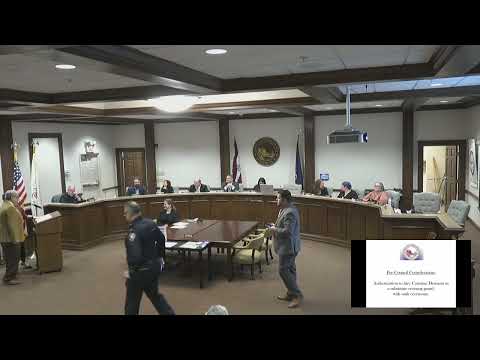
Residents at the Feb. 25 Bridgeport Borough Council meeting urged action on persistent dog waste and loud train horns at night; borough officials outlined what the municipality can and cannot do and described steps being pursued.
Imran Majid, a resident, told council that negligent dog owners are leaving waste in public areas and asked what residents can do. “Is it known? Like, is there anything we can do? ... Is there any way to limit the horn, like, at the wee hours of the night or the early morning?” Majid said.
Borough manager Mr. Truman said the borough uses public education and enforcement when possible but needs identifiable witnesses or video evidence for effective enforcement. “For the police to be able to effectively write a ticket, you need somebody to witness that transpire and be able to positively ID that person,” Truman said, and he encouraged neighbors to document recurring problems, collect video where possible and report incidents to the police.
On the train horns, Truman explained a municipality cannot unilaterally prevent trains from sounding horns at grade crossings because federal rules require horn sounding absent an approved quiet zone. “There is not anything that a municipality can do to compel a train operator to reduce or soften or eliminate the blaring of the horn,” he said. Truman described the borough’s work on a quiet-zone application: it is a multiyear process that requires installation of additional safety equipment at each at‑grade crossing and can carry significant cost. He said the borough had applied (late 2023 or early 2024) and had not yet received a decision from the overseeing agencies.
Truman noted quiet-zone precedent is limited in the region and cited one nearby municipality that had obtained a quiet zone but was later abandoning it; he urged residents to temper expectations about how quickly horn nuisance can be resolved.
Councilmembers and staff recommended neighborhood-led approaches — talking to neighbors and using HOA rules where appropriate — as the first step. Police representatives encouraged residents to submit video evidence to support enforcement or to prompt a neighborly discussion.
Council did not adopt new ordinances at the meeting. Mr. Truman said the borough would continue pursuing the quiet‑zone application with county and federal partners and will rely on resident reports and evidence to enforce existing animal-control and nuisance rules.