Get Full Government Meeting Transcripts, Videos, & Alerts Forever!
Get email alerts on the Court Administration topic
No spam. Unsubscribe anytime.
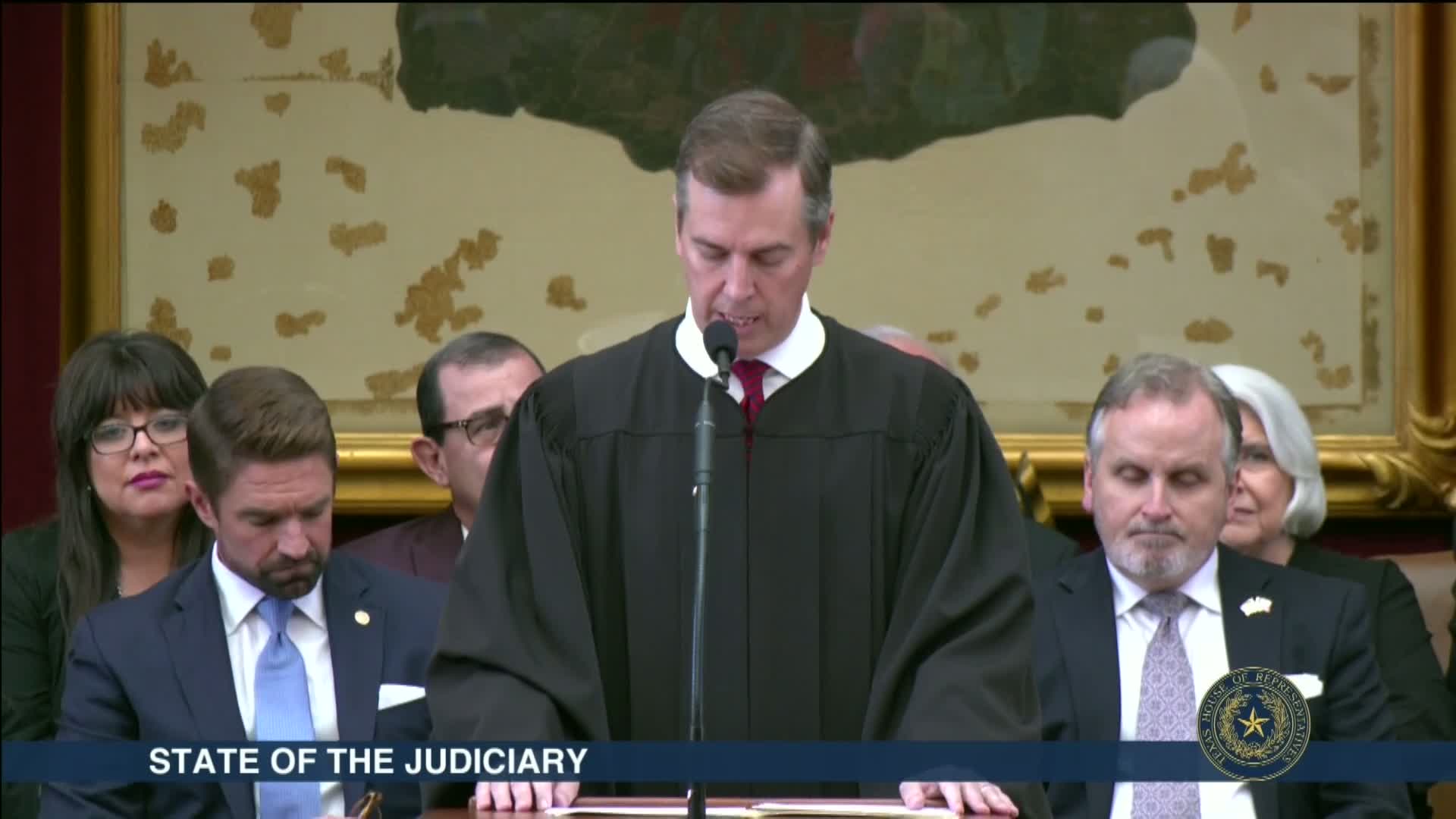
Texas chief justice rejects 'living Constitution,' urges rule changes to streamline courts
Summary
Chief Justice Jimmy Blacklock told a joint session that the Texas Supreme Court will interpret the Constitution by originalist principles and pursue administrative rule changes including ending rotating dockets and considering changes to briefing practices to reduce litigation costs.
Chief Justice Jimmy Blacklock told lawmakers at a joint session that the Texas Supreme Court will follow constitutional originalism and pursue procedural changes intended to make litigation more predictable and less expensive.
“In Texas, under this supreme Court, the living Constitution is dead,” Blacklock said, declaring originalism the court’s guiding approach to constitutional interpretation. He told legislators that judges should apply the text of statutes and constitutions as enacted and not substitute their policy preferences for legislative choices.
Blacklock also addressed court administration. He criticized the practice of assigning a different judge for each hearing in a case — sometimes called a rotating or central docket — and said he has asked the court’s advisory committee to recommend rules that would assign cases to a single judge through disposition. He argued a single-judge assignment promotes “efficient and uniform administration of justice.”
The chief justice said the court is open to opposing arguments but wants to explore rule changes that could reduce the time and expense of discovery and litigation. He also asked the advisory committee to consider waiting to require parties to incur full merits briefing costs until the court grants review of a case.
Blacklock framed these reforms as consistent with Article V, Section 31 of the Texas Constitution, which charges the Supreme Court with rules for the administration of the judicial branch. He invited ideas from legislators and said the court will study whether its own procedures promote efficiency.
No formal rule changes or filings were announced in the joint session; the address placed proposed rule review and advisory‑committee study on the court’s agenda.