Get Full Government Meeting Transcripts, Videos, & Alerts Forever!
Get email alerts on the Judicial Compensation topic
No spam. Unsubscribe anytime.
Texas chief justice urges 30% pay raise for judges to retain talent
Summary
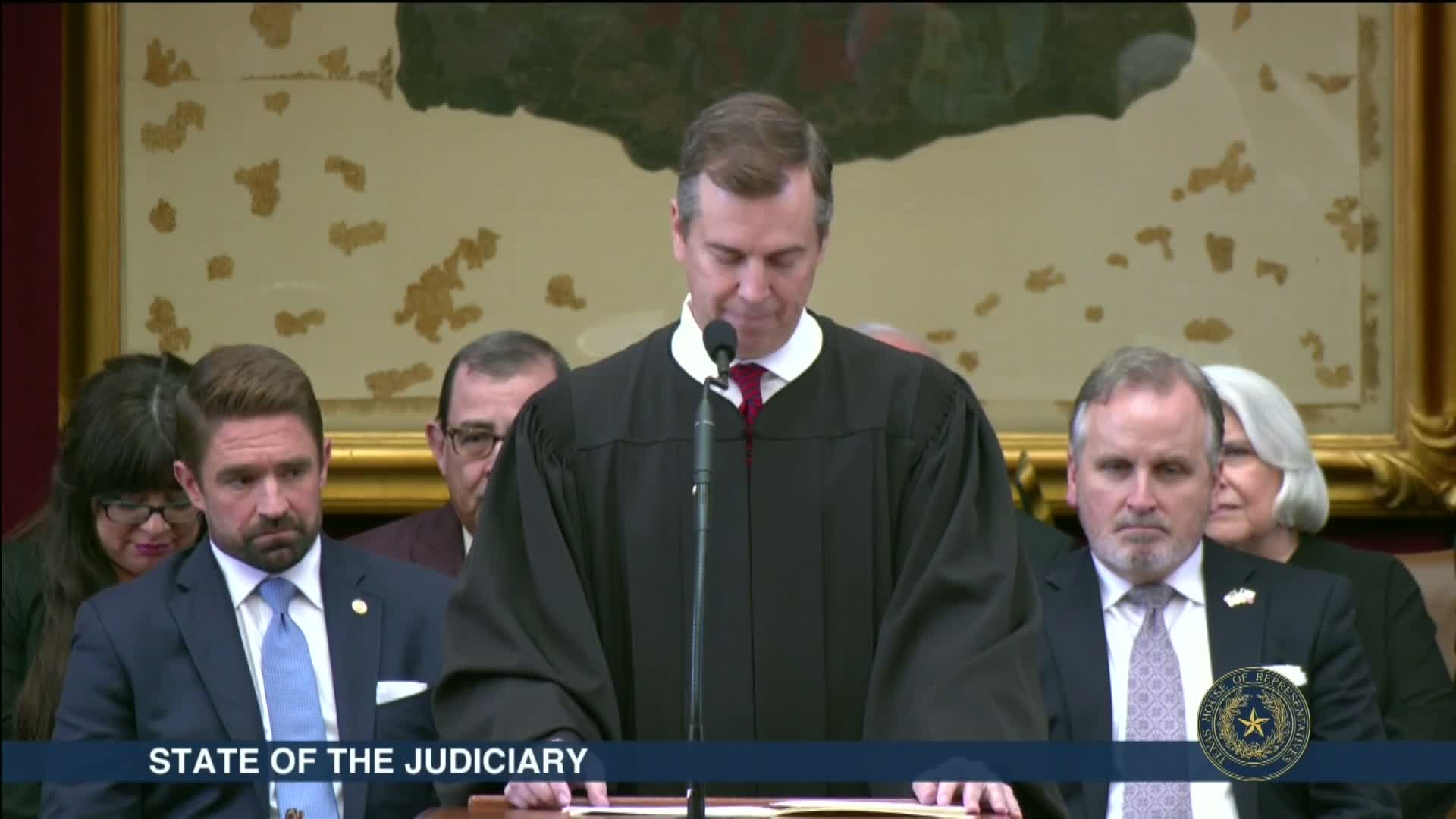
Chief Justice Jimmy Blacklock told a joint session of the Texas Legislature that lawmakers should enact a 30% increase in base judicial pay to attract and keep qualified judges, citing long-unchanged salaries and rising costs of living.
At a joint session of the Texas House and Senate in Austin, Chief Justice Jimmy Blacklock of the Supreme Court of Texas asked lawmakers to approve a 30% across‑the‑board increase in base pay for state judges this legislative session.
Blacklock argued higher pay is needed to recruit and retain “smart and serious and hardworking people of high integrity” for judicial offices and said the Judicial Compensation Commission has recommended a 30% raise. “And that is what I am asking you to do. 30% across the board,” he told legislators.
The chief justice said the legislature has not raised the base pay for district judges since 2013 and noted total inflation since 2013 is about 34.5%, figures he used to argue that judicial salaries have fallen behind private and public sector market rates. Blacklock said the requested increase would move Texas from roughly 48th to 31st among states in judicial pay.
Blacklock framed the request as a public‑interest measure: because judges are ethically limited in outside earnings, he urged lawmakers to consider raises “not for the judges” but “for your constituents, who have to appear before the judges, who have the power [to] take their money and their house and their children.”
He also said the state should avoid penalizing the majority of judges for the failings of a few, noting the constitution contains tools to address underperforming judges. He said the Supreme Court is gathering data to identify problem judges but warned against blunt, burdensome metrics that would encumber well‑performing judicial officers.
Blacklock did not propose specific statutory language or a funding source; the request was framed as a legislative priority that would require action by the Legislature. No formal motion or vote on judicial compensation was recorded in the joint session.