Get Full Government Meeting Transcripts, Videos, & Alerts Forever!
Get email alerts on the Veterans Banners And Memorials topic
No spam. Unsubscribe anytime.
Miami Lakes committee debates tighter rules for veterans banners, moves ahead on monument plans
Summary
Members discussed narrowing eligibility for veterans banners, creating a digital registry and QR-code monument, and funding design and permitting work estimated at about $36,000.
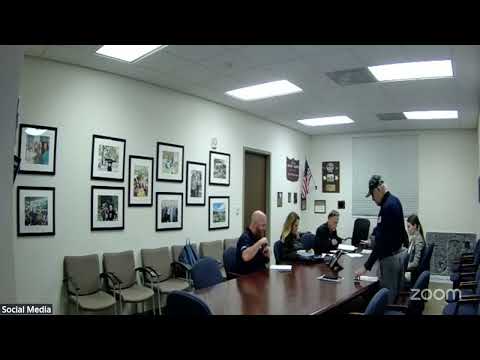
The Town of Miami Lakes Beautification Advisory Board debated new eligibility rules for its veterans banner program and heard updates on a proposed Veterans Monument during its regular meeting.
Board members said the town currently accepts banner requests for a broad group — veterans, current residents, business owners, town employees, members of veteran organizations that meet in Miami Lakes, and relatives of residents. Several members proposed narrowing that list to prioritize veterans who are current residents, local business owners, town employees or members of veteran organizations based in Miami Lakes.
That narrower eligibility, supporters said, would free banner space that now includes people with limited or no ongoing ties to Miami Lakes and allow the town to move out-of-qualifying banners to a permanent memorial. “I recommend that we limit banners to the first four categories,” said a committee member, summarizing the change under consideration. Committee members also proposed a rollover process and annual renewal so banners are replaced when owners move or die.
The board discussed creating a digital registry and QR-code “living wall” for names moved off the street banners. Under that plan, names removed from banner poles would be preserved in a searchable online database and eventually engraved or listed on a Veterans Monument with QR codes linking to bios and photos. One member suggested using a Girl Scouts volunteer to help build the registry.
Committee members reviewed fundraising and contract details for the monument. Staff reported the town received a bid to prepare design, engineering and permitting documents for the monument that totaled roughly $36,000; the contractor requires design work and permitting before construction budgeting can proceed. The board said it had already contributed an initial payment (about $10,000 was referenced as previously provided) and that the town would cover any overage in the design contract if needed. Fundraising by local groups — including an American Legion pledge of about $300 so far and commitments of additional fundraising — would supplement town funds.
Members emphasized the monument should be developed with active input from the veterans committee. “They have to be meeting with the veterans committee so they don't make something that we all sit back and go, ‘what the heck is this thing?’” one member said. The board also said it wants the monument to be interactive — modeled after a “swooping wall” seen in Wichita, Kansas — with QR codes that provide biographical details for each person listed.
On banner administration, members discussed practical steps to narrow eligibility fairly: store copies of applicants’ DD Form 214s, require periodic renewal (a one- to two-year reapplication window was proposed), maintain an email list to send automated reminders, and keep an administrative database to track status. The board asked staff to confirm whether the town’s CRM/web tools could send automated renewal reminders.
No formal rule change was adopted at the meeting; members asked staff to draft a revised banner-eligibility proposal and to return it for a vote at a future meeting. Meanwhile, the board directed staff to continue collecting names and building a QR-code registry that could be used immediately and later transferred to a physical monument when built.
The board also requested that monument contractors meet with the veterans committee during design and that fundraising be coordinated so the monument can be “paid for by veterans” as much as possible.
The committee agreed to return the banner-eligibility policy, the monument plan and the digital registry concept for formal consideration and vote at a future meeting.