Get Full Government Meeting Transcripts, Videos, & Alerts Forever!
Get email alerts on the School Meals topic
No spam. Unsubscribe anytime.
Saucon Valley rolls out more scratch-cooked school meals, aims for 50% next year
Summary
The Saucon Valley School District food service coordinator described a shift toward scratch cooking, new menu items and a tasting for board members and attendees; staff said costs have fallen in some cases and participation has increased.
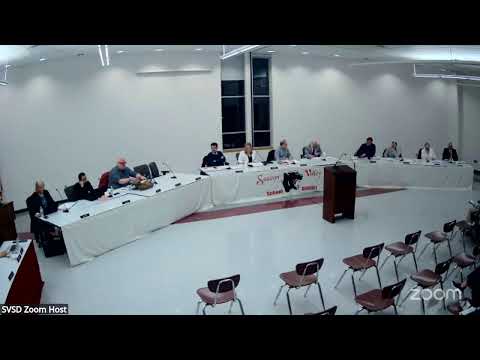
Nikisha Downer, the Saucon Valley School District’s new food service coordinator, told the school board on Feb. 25 that the district has started bringing more “scratch” cooking into cafeterias and aims to have about 50% of meals prepared from scratch next school year.
Downer said the district has begun serving items made on-site, including homemade meat sauce, slow-roasted pulled pork for a taco/burrito bar, chicken noodle soup and a freshly made chicken Alfredo. She presented several new menu items at the meeting and offered a tasting for trustees and attendees.
The shift is intended to reduce processed foods and sodium while increasing fresh fruit and vegetables. “We are gradually starting to put more scratch cooking into the cafeteria, less processed foods, being able to bring down the low sodium, bringing in more fresh fruit and vegetables,” Downer said. She told the board the district has used grants that support unprocessed product purchases and that raw proteins can cost less than processed, prepackaged equivalents.
Downer described specific menu changes: Gold Crisp chicken patties to replace a thinner product previously used; bone-in barbecue chicken marinated overnight and oven-roasted; an improved grilled cheese on garlic toast; and three alternative elementary meal options to replace cereal bowls — a hot option (mini whole-wheat, low-sodium pizza), a build-your-own parfait and a “Pinto box” with pretzels, apple slices, sun butter and carrots.
Board members and parents praised the changes in public remarks at the meeting, saying students have responded positively. A parent said a child has been bringing money to school to buy meals after the menu changes; other attendees thanked Downer and staff for improving meal quality and said they hoped the program would be sustainable.
Board President Cedric Detmer recessed the meeting so trustees and attendees could sample the food, calling the tasting a brief “recess.”
Why it matters: school-meal quality, costs and participation affect student nutrition and household budgets. The district’s move toward scratch cooking could change procurement, staffing and meal-preparation routines over the coming school year.
What the board heard next: Downer told the board she expects staff pride and speed to increase with more on-site cooking and said grants and buying raw product have helped contain costs. She also said the cafeteria team surveyed students and found that many asked for more home-cooked meals and less processed food.
The board did not take a formal vote on nutrition policy or funding during the presentation; trustees instead paused the meeting to sample the new items and returned to the regular agenda.