Get Full Government Meeting Transcripts, Videos, & Alerts Forever!
Get email alerts on the Housing topic
No spam. Unsubscribe anytime.
House clears bill to clarify property-tax exemption for Section 8 housing; CRIM and mayors back measure
Summary
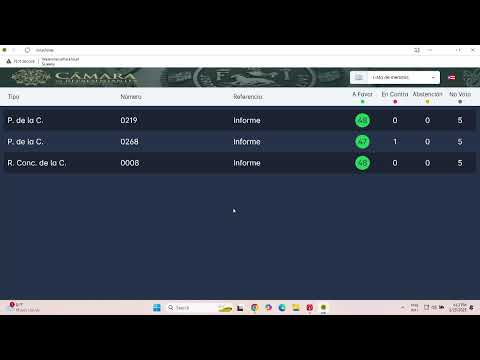
Proyecto de la Cámara 219 passed unanimously (49–0). The bill clarifies a retroactive property-tax exemption for properties used in the Section 8 rental program, aiming to avoid municipal refunds for taxes collected between Aug. 13, 2020 and Jan. 18, 2024; CRIM and the Federation of Mayors submitted supportive memorials to the committee.
San Juan — The House approved Proyecto de la Cámara 219 on Feb. 25 to clarify the tax-exemption status of properties participating in the federal Section 8 rental program and prevent a requirement that municipalities return property-tax revenue collected during a disputed retroactive period. The final electronic vote was 49–0.
The bill was presented to the chamber by the president of the Comisión de Asuntos Municipales, who said the measure corrects an omission that occurred when the Código Municipal (Ley 107-2020) replaced earlier municipal tax provisions. The sponsor said the intent is to avoid forcing municipalities to refund taxes already collected while preserving the exemption that encourages private participation in affordable rental housing.
Why it matters: lawmakers said the change protects municipal finances while supporting incentives for owners to participate in federally assisted housing. Committee testimony and memorials from CRIM (Centro de Recaudación de Ingresos Municipales) and the Federación de Alcaldes supported the clarification.
Committee presentation and stakeholder positions The bill’s sponsor explained that Law 37 of Jan. 18, 2024 (Ley treinta y siete, 2024) restored an exemption for properties used in Section 8 programs that existed under a prior statute. Because the Code Municipal (Ley 107-2020) had not carried that exemption forward, tax collections taken between Aug. 13, 2020, and Jan. 18, 2024, could be interpreted as subject to refund. The CRIM’s director, Reinaldo J. Paniagua Latimer, filed a memorial to the committee expressing support and noting the agency’s view that the exemption helps increase available rental housing and does not constitute an unjustified municipal revenue loss.
The Federación de Alcaldes also submitted a memorial — filed Feb. 14 and summarized into the record — urging support and warning that obligating refunds would harm municipal budgets because property taxes are a primary source of municipal funding.
Supporters argued the bill protects municipalities while maintaining the public-policy goal of incentivizing private landlords to participate in Section 8. The sponsor told the chamber the law seeks “garantizar estabilidad fiscal a nuestro municipio sin afectar el objetivo de incentivar la vivienda asequible.”
Fiscal and operational notes Committee testimony acknowledged CRIM could not specify the exact amount collected during the disputed period; the transcript records that the agency “no ha podido precisar la cantidad exacta que se ha cobrado en ese periodo.” That uncertainty motivated sponsors to correct the statutory language rather than require municipal refunds that could destabilize local services.
Vote and next steps The final vote on Proyecto de la Cámara 219 was 49–0 in favor. After approval by the House, the bill will follow the usual legislative and gubernatorial processes toward enactment.
Context Floor debate framed the bill as a technical but necessary fix to harmonize recent laws and to protect municipal budgets while promoting affordable housing through existing federal programs. Lawmakers said the measure does not alter the policy’s intent but clarifies its application to avoid fiscal disruption at the municipal level.
— Reporting draws on the committee report and floor debate recorded in the Feb. 25 House session.