Lifetime Citizen Portal Access — AI Briefings, Alerts & Unlimited Follows
House Ways and Means subcommittee hears competing views on trade enforcement, tariffs and agency capacity
Loading...
Summary
A House Ways and Means Trade Subcommittee hearing featured witnesses and members debating an aggressive enforcement agenda focused on China, USMCA and digital trade, while Democrats warned that broad tariff plans risk raising costs for U.S. households and undermining treaty-based enforcement.
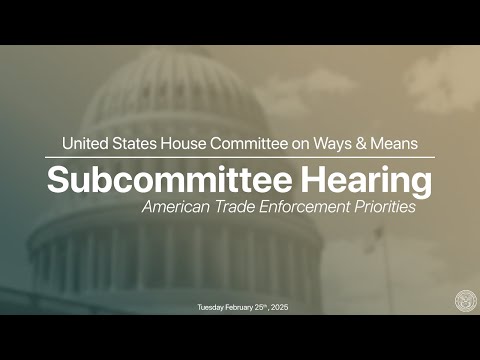
The House Ways and Means Committee's Trade Subcommittee met for a hearing on American trade enforcement priorities, where Republican lawmakers and several witnesses pushed for aggressive use of trade remedies and tariffs while Democrats warned that broad, untargeted tariff plans would raise prices for U.S. households and risk undermining treaty-based dispute mechanisms.
The hearing opened with Chairman Smith calling for a swift, "America First" enforcement agenda and praising the Trump administration's early trade directives. Ranking Member Rep. Linda Sanchez (D-Calif.) told the panel that tariffs ultimately fall on U.S. families and said enforcement requires funding and staffing for agencies that are already stretched thin.
Why it matters: The exchange highlighted two central tensions in current policy debates: whether to rely more on unilateral tariffs and other executive tools to counter unfair trade practices, or to prioritize negotiated, agreement-based remedies and increased agency capacity to sustain long-term market access for U.S. exporters.
Witnesses including Ambassador Greg Dowd of the National Milk Producers Federation and former deputy USTR Jeffrey Gerrish urged robust enforcement of existing agreements and new statutes to address Chinese subsidies, de minimis evasion and circumvention. Jonathan McHale of the Computer and Communications Industry Association and Kevin Rosenbaum of the International Intellectual Property Alliance emphasized threats from digital-services taxes, data localization and weak IP regimes abroad.
Republican members repeatedly argued that tools such as section 301 of the Trade Act of 1974 and new tariffs are effective levers. "Tariffs can serve a significant role in raising revenue for the United States government," Ambassador Gerrish said, noting prior tariff revenues. Democrats cautioned that broad tariff use without congressional consultation could violate the Constitution and cited estimates that tariffs on close trading partners would raise consumer costs materially.
Several members raised immediate, practical concerns about enforcement capacity. Witness Greta Peich, former general counsel at USTR, and others warned that Customs and Border Protection, the International Trade Administration and USTR are already overburdened handling rising antidumping and countervailing duty petitions, forced-labor enforcement and other trade remedy work.
The hearing also surfaced bipartisan support for legislative remedies targeting circumvention and evasion: members and witnesses cited the Leveling the Playing Field Act 2 and the Fighting Trade Cheats Act as bills that would expedite successive investigations, strengthen circumvention rules, and enhance customs enforcement.
The session closed with members pledging further hearings and requests for written follow-ups; no formal committee votes occurred during the hearing.
An ending note: The hearing made clear that enforcement strategy remains contested on both legal and practical grounds'even among members who agree that unfair foreign practices threaten U.S. producers. Lawmakers signaled plans for additional oversight of agency staffing, targeted legislation to address circumvention and continued scrutiny of administration tariff actions.