Get Full Government Meeting Transcripts, Videos, & Alerts Forever!
Get email alerts on the Hotel Occupancy Tax topic
No spam. Unsubscribe anytime.
Texas hotel-lodging counsel outlines limits on use of local hotel occupancy taxes for Odessa projects
Summary
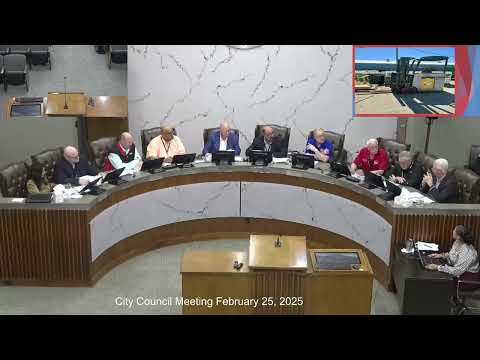
A Texas hotel-industry attorney told Odessa council on Feb. 25 that local hotel-occupancy taxes must both promote tourism and fall into a statutory category, and he outlined permissible uses and methods for documenting visitor room nights and short-term rentals.
Justin Braggle, general counsel and legislative director for the Texas Hotel and Lodging Association, briefed the Odessa City Council and staff on state rules governing local hotel occupancy taxes (HOT) and answered council questions about allowable uses and how to document room-night impacts.
Braggle summarized the two-part legal test under Texas Tax Code Chapter 351: every expenditure of local hotel tax revenue must (1) directly promote and enhance tourism and the hotel and convention industry and (2) fall into one of the statutorily enumerated categories (convention centers/visitor centers; registering delegates/servicing conventions; advertising and promotion; funding the arts; historical restoration and preservation; sponsoring sporting events; improving or operating sports facilities under certain brackets; wayfinding signage; and tourist transportation systems that start/end at a hotel).
He said common lawful uses include funding destination marketing organizations (DMOs), advertising campaigns, arts programming likely to attract visitors, historic restoration attractive to tourists, and youth or collegiate sporting events that demonstrably generate out-of-town participants and hotel stays. Braggle warned that the statute requires a nexus to tourism and that jurisdictions should be prepared to document economic impact and room-night generation when awarding HOT grants.
On short-term rentals (STRs), Braggle said STRs are legally subject to hotel occupancy tax; enforcement and collection are local responsibilities because local governments collect and spend HOT revenue. He recommended STR registration with the city and discussed third-party tools and legislative avenues for improving compliance. He also described mechanisms to track event-generated room nights: ticketing data, hotel room-block tracking, vendor housing counts, hotel coordination and follow-up attendee surveys or post-event forms.
Council members asked for help designing application and follow-up forms and for guidance on sports-facility funding. Braggle said some cities pursue ballot measures (venue taxes under Local Government Code §334) or request legislative authority for new categories; he offered the association’s assistance on legal questions and legislative options.
The presentation was informational; council did not make a funding decision during the meeting but asked staff to work with local tourism stakeholders in light of Braggle’s guidance.