Get Full Government Meeting Transcripts, Videos, & Alerts Forever!
Get email alerts on the Liquor Liability Insurance topic
No spam. Unsubscribe anytime.
Senate subcommittee advances dram‑shop, tort reforms as insurers, restaurants debate insurance access and costs
Summary
A South Carolina Senate subcommittee on Jan. 30 advanced two bills addressing dram‑shop liability and broader tort changes while hearing business groups and the state insurance director describe sharply higher liquor‑liability premiums, limited market capacity and uncertainty that insurers say drives rates up.
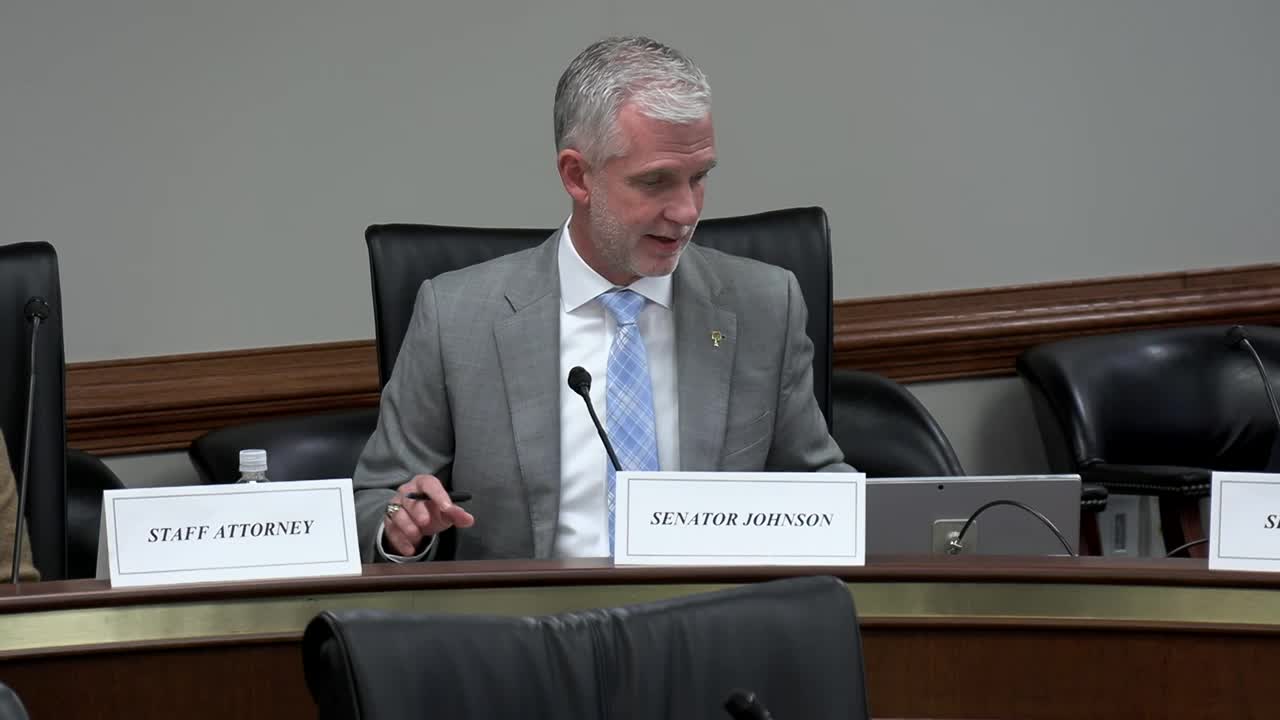
Senator Sharon Johnson, chair of the Senate Judiciary subcommittee, on Jan. 30 led a session that advanced two related bills — S.184, a dram‑shop bill, and S.244, a broader tort and insurance measure — after extended testimony from restaurant industry representatives, committee members and Michael Wise, director of the South Carolina Department of Insurance.
The measures are intended to change how alcohol‑related civil liability is handled and to address insurers’ cited concerns about unpredictability in the liquor‑liability market. S.184 would codify elements of dram‑shop law and narrow the circumstances under which a licensee could be held liable; S.244 is broader and would change joint and several liability, server‑training requirements and other liability rules. Both bills were reported favorably out of the subcommittee for consideration by the full committee, with members saying they expect substantial floor amendments.
Why it matters: restaurant and hospitality groups say rising premiums and shrinking insurer participation threaten access to liquor‑liability coverage for many operators; insurers and actuaries say the market faces higher claim severity and uncertainty that make underwriting the line difficult. The bills aim to reduce the legal exposure that businesses say is driving rate increases; opponents and committee members pressed for data showing whether legal changes will actually restore market capacity or lower premiums.
Most important facts
- Susan Cohen, representing the restaurant/hospitality association, said the industry lacks guarantees that legal changes will curb premium increases. “I don't know that anybody feels at this point whether we have an assurance that we're going to see a wholesale change,” Cohen said during testimony.
- Michael Wise, director of the South Carolina Department of Insurance, told the committee the department has seen sharp premium increases and growing market stress: for establishments with more than 30% alcohol sales the department’s 2021–2023 data show average premiums rose about 180%; for establishments with 30% or less alcohol sales average premiums rose about 24% over a related comparison period. Wise said the department is collecting more detailed data and that insurers identify joint‑and‑several exposure, the statutory million‑dollar minimum and uncertainty about payouts as drivers of market contraction.
- The Department of Revenue in 2023 issued guidance interpreted by many market participants as treating the mandated $1 million liquor‑liability requirement as an aggregate, not a per‑occurrence, limit; witnesses told the committee that administrative guidance alone did not restore affordable capacity.
- Committee members and witnesses described different theories for the market stress: higher claim frequency and severity, litigation trends, and difficulty insurers have predicting exposure. Several senators and witnesses said tort‑law changes alone may not be enough without parallel work on insurance market practices or DUI reductions.
Key discussion points and context
Witnesses from the restaurant industry described operators who have seen large premium increases or trouble finding renewals. Cohen told the panel that some brokers reported sending dozens of requests for quotes and receiving only a small number of bids. She also described umbrella and excess coverage that previously blended alcohol risk with other lines and said that portion of the market has partly “gone away.”
Insurance director Michael Wise said liquor‑liability is a small but poorly performing slice of the property‑and‑casualty market. He summarized insurer feedback that they want (1) limits on joint and several liability, (2) clearer dram‑shop standards, (3) damage caps, and (4) other clarifying doctrines addressed, so that companies can better price and underwrite the line. Wise cautioned that changes to law do not guarantee immediate premium reductions: insurers typically need to collect data and observe resulting claim trends before altering pricing.
Several senators pressed both sides for hard data. The subcommittee chair and other members repeatedly encouraged insurers, the Department of Revenue and the Department of Insurance to provide clearer, timely data on the number of active policies, new‑business writing, and renewals so legislators can evaluate whether statutory change will restore market capacity and affordability.
Formal action recorded
The subcommittee reported both S.184 and S.244 favorably to the full committee without amendments from subcommittee. Members noted they expect floor amendments and more negotiation among stakeholders before a final vote.
What the bills would change (as discussed at the hearing)
- S.184: described by the chair as a dram‑shop bill that would codify a visible‑intoxication defense and narrow the circumstances under which an on‑premise licensee could be found liable, with exceptions for servers who knowingly serve a patron to intoxication.
- S.244: a broader measure that incorporates dram‑shop language plus provisions changing joint and several liability, limiting certain damages and claims against insurers, adjusting statute‑of‑repose exceptions, and adding insurer‑notification and server‑training requirements.
Quotes
"I don't know that anybody feels at this point whether we have an assurance that we're going to see a wholesale change," Susan Cohen told the committee describing the restaurant industry's uncertainty about whether legal changes would cut premiums.
"I think I would frame it as insurance companies came to us and said, how do we interpret this? And we said, it's not us who would be interpreting it," Michael Wise said, describing how insurers sought Department of Revenue guidance about the $1 million requirement.
Next steps
Senator Johnson said the subcommittee expects extensive floor debate and amendments and that Director Wise had been invited to answer further questions; she moved for a favorable report to the full committee for both bills. Committee members indicated they will continue to press for more granular insurer and regulator data and to explore complementary measures, including DUI policy changes and targeted insurance regulatory options.
Ending
The committee recessed with the bills on track for full‑committee consideration and with members and witnesses agreeing to continue talks. Lawmakers stressed that any change should protect victims while narrowing unwarranted exposure for businesses that demonstrably comply with responsible service practices.