Get Full Government Meeting Transcripts, Videos, & Alerts Forever!
Get email alerts on the Liquor Liability topic
No spam. Unsubscribe anytime.
Public witnesses, senators press for clearer dram‑shop rules and stronger server training
Summary
Public commenters and senators discussed dram‑shop liability, penalties for overserving, a proposed percentage test for 'primarily and substantially' food service, and mandatory server training. Witnesses urged tougher penalties for repeat offenders; some senators recommended compromise language and local enforcement options.
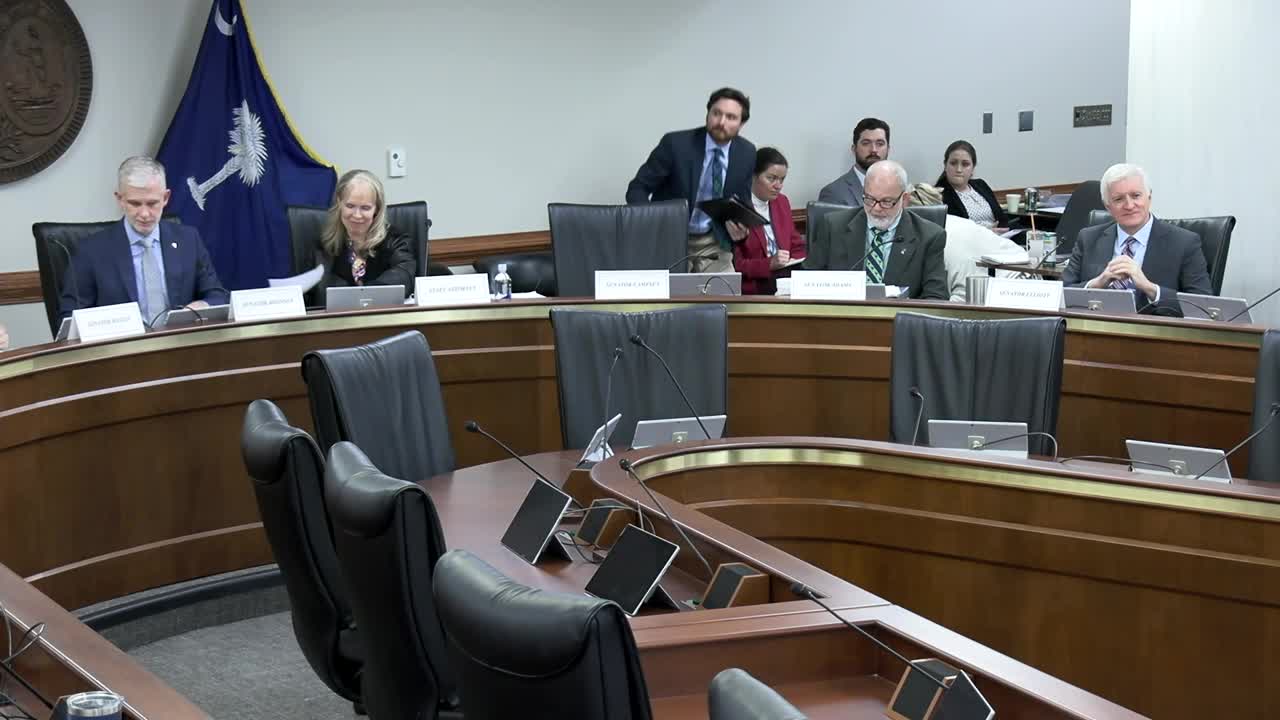
Public witnesses and committee members debated changes to liquor liability—commonly called dram‑shop—provisions, server training and how to define a restaurant that primarily and substantially serves food.
Laura Hudson, who testified during the public comment period, criticized current enforcement and urged stronger, mandatory administrative penalties for licensees that overserve or sell to underage customers. "Penalties need to be mandatory," Hudson said, contrasting mandatory suspensions with what she described as inconsistent enforcement by the Department of Revenue.
Randall Smith, founder of Boating Safety South Carolina and a longtime advocate for boating safety, tied alcohol sales to traffic and boating fatalities in his testimony. Smith recounted the 1997 fatal boating crash in which his 11‑year‑old son died and described gaps in related liability and interlock laws: "If someone is found guilty of driving under the influence, they can simply hop in their boat and drive to the bar. This loophole must be addressed immediately," he told the subcommittee.
Hudson suggested a bright‑line test to implement the constitutional language limiting saloons: measure food sales by receipts and require a threshold she recommended at about 40 percent of receipts from food to qualify as a restaurant. She said the current statutory phrasing — "bona fide engaged primarily and substantially in the preparation and serving of meals" — is difficult to enforce as written.
Members discussed server‑training provisions in the bill. The draft includes a mandatory server training requirement and an administrative penalty provision that a first offense could carry a suspension (the draft referenced a six‑month suspension for certain violations). Several senators and witnesses suggested allowing initial corrective measures for first offenses and stiffer penalties for repeat or egregious conduct. One legislator noted local pilot programs in Charleston using ID‑scanning technology (Intellicheck) that detected thousands of fake IDs and said technology could reduce underage sales.
Committee members also discussed how to coordinate enforcement with local governments. A senator suggested using city and town licensing and nuisance authority to help identify and sanction establishments with repeated problems.
Next steps: Senators instructed interested stakeholders — restaurateurs, liquor licensees, law enforcement, and insurance representatives — to continue drafting agreed language on how to define a restaurant, scale penalties for first and subsequent violations, and align server‑training requirements with insurer expectations.