Get Full Government Meeting Transcripts, Videos, & Alerts Forever!
Get email alerts on the Public Safety Retail Crime topic
No spam. Unsubscribe anytime.
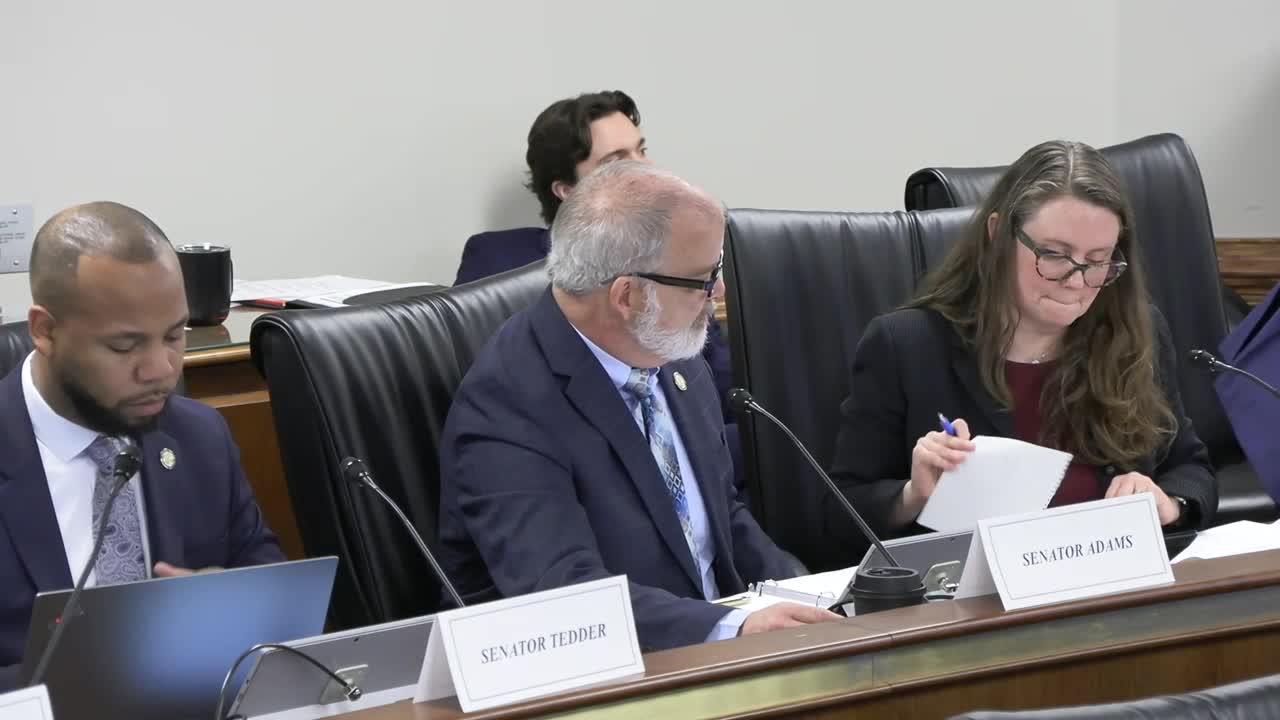
Senate panel backs bill increasing penalties for organized retail theft after retailers, attorney general support
Summary
Senate Bill 159, which would create a graduated penalty structure for organized retail crime and add an aggravated organized‑retail offense, won a favorable committee report after retailers and the attorney general’s office urged stiffer penalties for large‑scale theft rings.
The South Carolina Senate Judiciary Subcommittee gave a favorable report to Senate Bill 159 after testimony from retail industry representatives and the attorney general's office that the state’s current retail‑theft statute lacks tools to prosecute large, organized theft rings.
Krista Henson, executive director of the South Carolina Retail Association, said the group represents retailers that employ one in four people in the state and that retail theft incidents have risen sharply. “Organized retail crime differs from traditional shoplifting,” she told the committee, saying those offenses are “large scale, event and operation[s] with the intent to resell these items for financial gain.”
Henson summarized the bill’s changes: a new definition of organized retail crime, a graduated punishment scheme tied to the value of stolen merchandise, and an aggravated organized‑retail crime that elevates penalties when conduct includes property destruction or bodily injury. Under the draft presented to the panel, theft above $10,000 would be a felony and there are higher penalties, including for values over $50,000.
Deputy Attorney General Matthew Gates spoke for Attorney General Alan Wilson's office, expressing support and noting the state office can assist when cases cross jurisdictions. Gates said the attorney general's office looks forward to working with local law enforcement to prosecute cross‑jurisdictional organized retail crime.
Why this matters: witnesses said retail theft has become more organized and violent, and current state law treats most retail theft as a misdemeanor regardless of value or conspiracy. Business representatives argued that a higher threshold for felony prosecution would make cases more viable for law enforcement and prosecutors.
Committee action
The subcommittee voted to report the bill favorably to the full committee by voice vote with no recorded opposition.
Discussion vs. decision
Testimony focused on the need to target fences and organizers who recruit boosters to steal merchandise for resale; lawmakers said the bill is not intended to criminalize someone stealing low‑value items to feed their family and noted the bill retains a misdemeanor tier for lower values.
Next steps
SB159 will move to full committee for further consideration; senators indicated support but also signaled staff and prosecutors would continue to work on definitions and thresholds.