Get Full Government Meeting Transcripts, Videos, & Alerts Forever!
Get email alerts on the Insurance Bad Faith topic
No spam. Unsubscribe anytime.
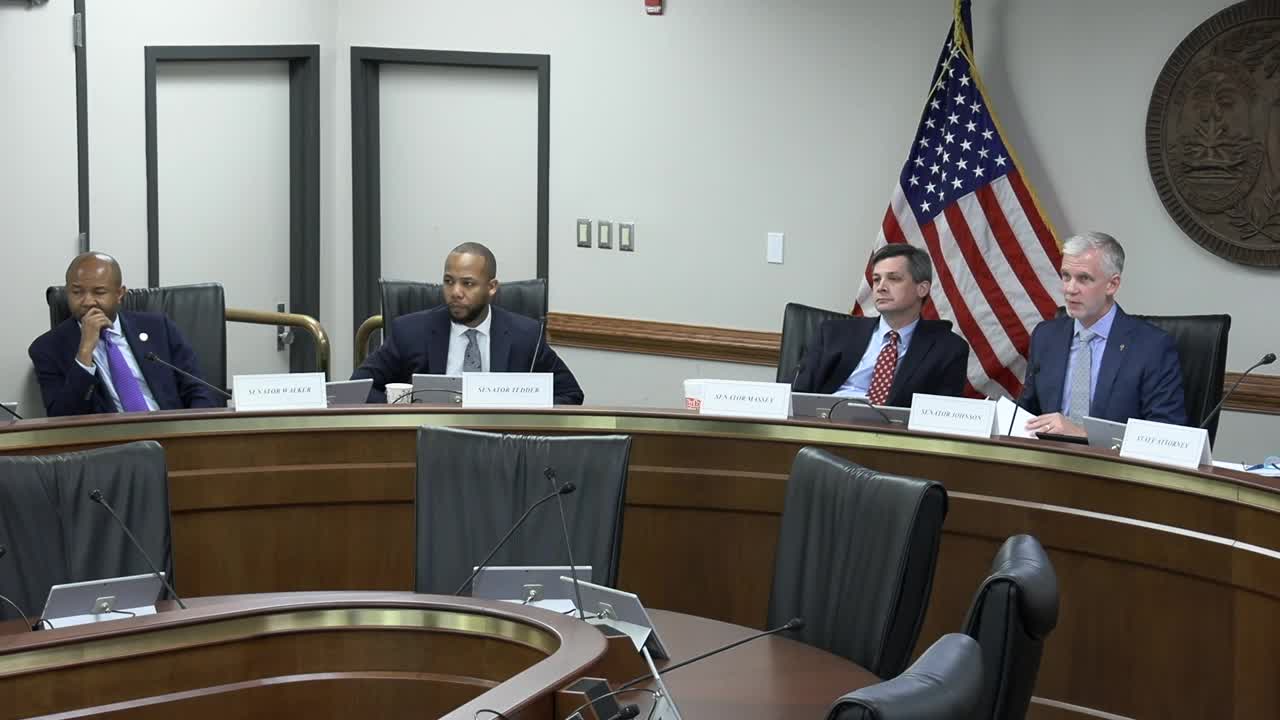
Senate subcommittee debates timeline changes to bad-faith insurance claims; members seek compromise
Summary
A Senate Judiciary subcommittee debated proposed changes to bad-faith insurance law that would create statutory time windows for insurers to respond to pre-suit demands and post‑suit bad‑faith claims. Witnesses and members disagreed on fixed deadlines; lawmakers directed stakeholders to negotiate narrower timeframes before the bill advances.
A Senate Judiciary subcommittee heard competing testimony on proposed changes to South Carolina bad‑faith insurance law that would set statutory deadlines for insurers to respond to pre‑suit demands and to post‑suit bad‑faith claims.
The changes under discussion would create a mandatory delay period before an insured or claimant may file a bad‑faith suit — provisions that witnesses warned could force small businesses and owner‑operators into bankruptcy if insurers withheld payment for months. Lee Cope, a witness who identified himself to the subcommittee, said, "This 3 to 13 month time period ... makes 0 sense to me" and argued the change would give insurers a built‑in financial incentive to delay payments. "If I can hold on to that claim by this bill for 13 months, I'm gonna pay less," Cope told the panel.
Rob Moseley, another witness who described practical problems his clients face, agreed there is a problem with pressure tactics from demand letters but urged the committee to adopt a reasonable statutory time allowing insurers enough time to gather information. "When it hits my desk, the clock starts. And I've got to go do in maybe under even under the bill 30 in 30, what the other lawyer had 6, 8 months to do," Moseley said, describing the operational burden on defense counsel and carriers.
Senators pressed both witnesses about an appropriate fixed timeframe. Senator Massey said in open exchange that "90 days is too long" for pre‑suit deadlines but also cautioned that two weeks is insufficient. Several committee members said they would prefer statutory clarity rather than relying solely on case law, while others said existing common law and recent court opinions already provide guardrails against abusive claims. One committee member summarized the split: "We agree on so much... 90 days is too long. 2 weeks isn't enough."
Witnesses and senators flagged specific consequences for certain sectors if a long statutory delay is adopted. Cope described owner‑operators and small family businesses for whom a three‑month delay on a property damage claim could be catastrophic: "If they have a property damage claim that keeps their truck off the road, 3 months bankrupts them. Absolutely." Moseley and others noted that policy provisions such as loss‑of‑use coverage may mitigate some losses but will not make small operations whole during lengthy delays.
Committee discussion repeatedly returned to the balance between protecting insureds from abusive insurer conduct and avoiding statutory windows that create predictable profit from holding claims. Cope cited recent case law and the state Supreme Court’s admonitions to lawyers as evidence that the courts already discourage frivolous or abusive bad‑faith litigation; Moseley and others said sanctions and doctrine do not fully prevent pressure tactics that leave insureds or claimants without timely remedies.
Votes at a glance: At the end of the hearing the subcommittee voted by voice to give favorable reports to two bills under consideration: S.184 (as presented to the subcommittee) and S.244 (as presented to the subcommittee). The vote was taken by voice; no roll‑call tally was recorded in the transcript.
Next steps: Committee members asked witnesses and stakeholders to meet immediately to negotiate narrower, workable timeframes. Several senators said they were willing to continue discussions over the coming days and to propose amendments at the full‑committee stage rather than advancing the disputed sections unchanged.