Get Full Government Meeting Transcripts, Videos, & Alerts Forever!
Get email alerts on the Medical Malpractice topic
No spam. Unsubscribe anytime.
Senate subcommittee debates narrowing 'occurrence' definition and tightening non-economic damage exception in medical-malpractice bill
Summary
At a Senate Judiciary subcommittee hearing, lawmakers heard more than three hours of testimony over proposed changes in S.244 that would narrow the legal definition of an "occurrence" in medical-malpractice cases and raise the threshold for removing the statutory cap on non-economic damages.
At a Senate Judiciary subcommittee hearing, lawmakers heard more than three hours of testimony over proposed changes in S.244 that would narrow the legal definition of an "occurrence" in medical-malpractice cases and raise the threshold for removing the statutory cap on non-economic damages.
The debate matters because the two provisions affect who pays for catastrophic medical injuries, the predictability of malpractice exposure for hospitals and doctors, and whether some families can recover full compensation for pain and suffering. Proponents say clearer definitions would help insurers and providers estimate risk; opponents say the changes would leave seriously injured South Carolinians with less recourse.
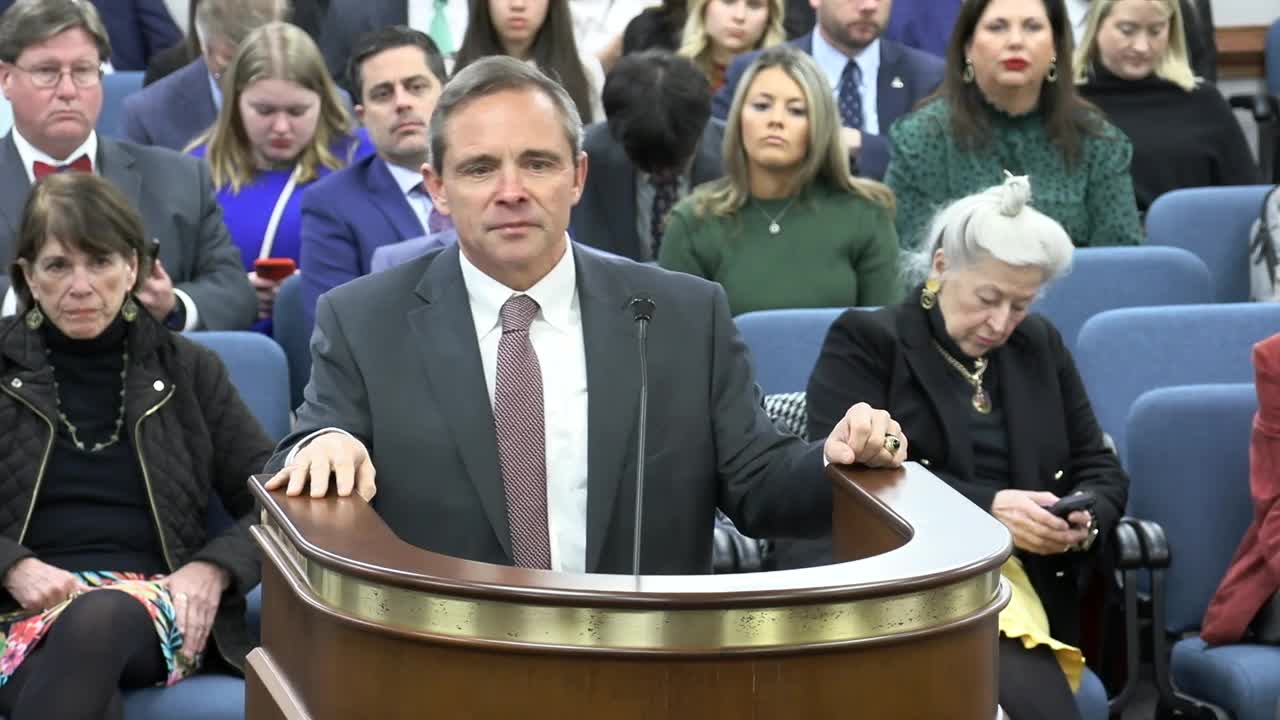
Scott Evans, an attorney testifying in favor of preserving the current standard, said the draft language would overturn decades of settled law and undermine juries' role. "This body is being asked to bargain away the Seventh Amendment rights of our citizens for the benefit of two insurance companies whose bad faith has created an inconvenience," Evans said, citing long-running appeals and high-profile cases that returned large verdicts under the current rule.
Sunny Barnes, speaking for nonprofit and governmental health-care providers, told the panel he supports the bill’s stated goal of predictability but urged clearer, narrower drafting. "If all the factors, all the acts of negligence lead to the same damage, then it should be considered one occurrence," Barnes said, arguing that expansive occurrence findings can nullify statutory caps and leave hospitals exposed beyond insurance limits.
Barnes and other provider witnesses described three separate health-care sectors in South Carolina—nonprofit systems, governmental providers and private for-profit physicians—and said the proposed changes would not affect those groups equally. Barnes asked the committee to consider parallel changes to the Solicitation of Charitable Funds Act so individual providers are not left exposed after large unfavorable verdicts.
Evans replied with a list of cases and victims he said illustrated the risk of changing the law now, including child and sexual-abuse survivors and a student who lost his chance to serve in the Army after a permanent brain injury. He said insurers such as MagMutual have resisted alternative dispute resolution in some recent cases, worsening conflicts and prompting the legislative effort.
Senators on the panel repeatedly asked whether the parties could draft a narrower, consensus definition linking "occurrence" to a break in the causal chain or other objective standards. Several witnesses, including Barnes and Lee Cope (a plaintiff attorney who spoke later), said they would be willing to sit down and try to craft language, but voiced different views on how much the statute should change.
No formal action or vote occurred in the hearing. Senators and witnesses asked for additional data, and several members urged stakeholders from all sides to negotiate language that preserves predictability without eliminating meaningful remedies for victims.
The subcommittee will take additional testimony and accept amendments before considering S.244 for a vote.