Get Full Government Meeting Transcripts, Videos, & Alerts Forever!
Get email alerts on the Gun Legislation Expungement topic
No spam. Unsubscribe anytime.
Senate panel advances bill to dismiss pending unlawful-handgun charges nullified by constitutional-carry law
Summary
S.B. 136 would require dismissal of pending charges for unlawful possession of a handgun that were nullified by the 2024 constitutional-carry law; sponsors said the bill levels the legal playing field for defendants and contains amendments limiting civil actions against law enforcement and excluding dismissal from supporting other charges.
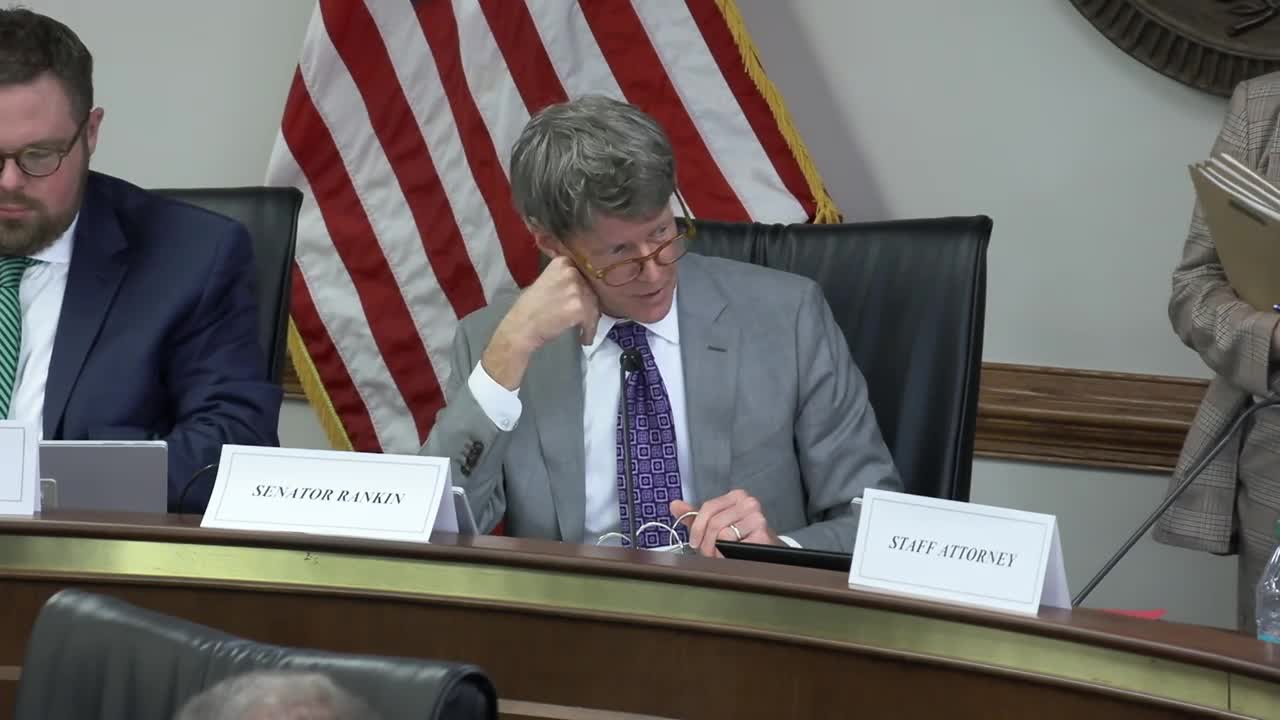
A Senate bill requiring the state to dismiss pending charges for unlawful possession of a handgun that were nullified by the South Carolina constitutional carry law of 2024 advanced in committee.
The bill, described in committee as S.B. 136, directs dismissal of pending prosecutions under section 16‑23‑20 that were nullified by the constitutional‑carry statute. Committee staff explained the measure would not require dismissal of associated charges that are not directly nullified and would bar the dismissed unlawful‑possession charge from serving as a basis for civil litigation against law‑enforcement officers or prosecutors.
Miss Baker, committee staff, summarized the bill and noted that existing law (section 17‑165) already allows expungement for convictions that predate constitutional carry but left a gap for cases that were pending at the time the law changed. Sponsor remarks said the measure “levels the playing field” for defendants whose cases were pending when the new law took effect.
Senators asked how many pending cases would be affected; the sponsor replied the exact number was not known but that “there are still several…a lot pending,” and that testimony in subcommittee suggested none of those currently were in custody. Senators also discussed whether the dismissal could have downstream effects on other charges and noted amendments adopted in earlier action to prevent dismissal from nullifying related prosecutions and to protect law‑enforcement officers from civil liability.
Committee members also raised practical questions about expungement and the burden on individuals: one senator asked who would pay application fees for expungement or dismissal processes; staff said dismissal requires no fee for the defendant, while the expungement process under the constitutional‑carry measure for past convictions requires an application and fees and would be handled under that separate statute.
A motion for a favorable report was made and the committee recorded a voice vote in favor during the meeting.