Get Full Government Meeting Transcripts, Videos, & Alerts Forever!
Get email alerts on the Traffic Safety Reckless Driving topic
No spam. Unsubscribe anytime.
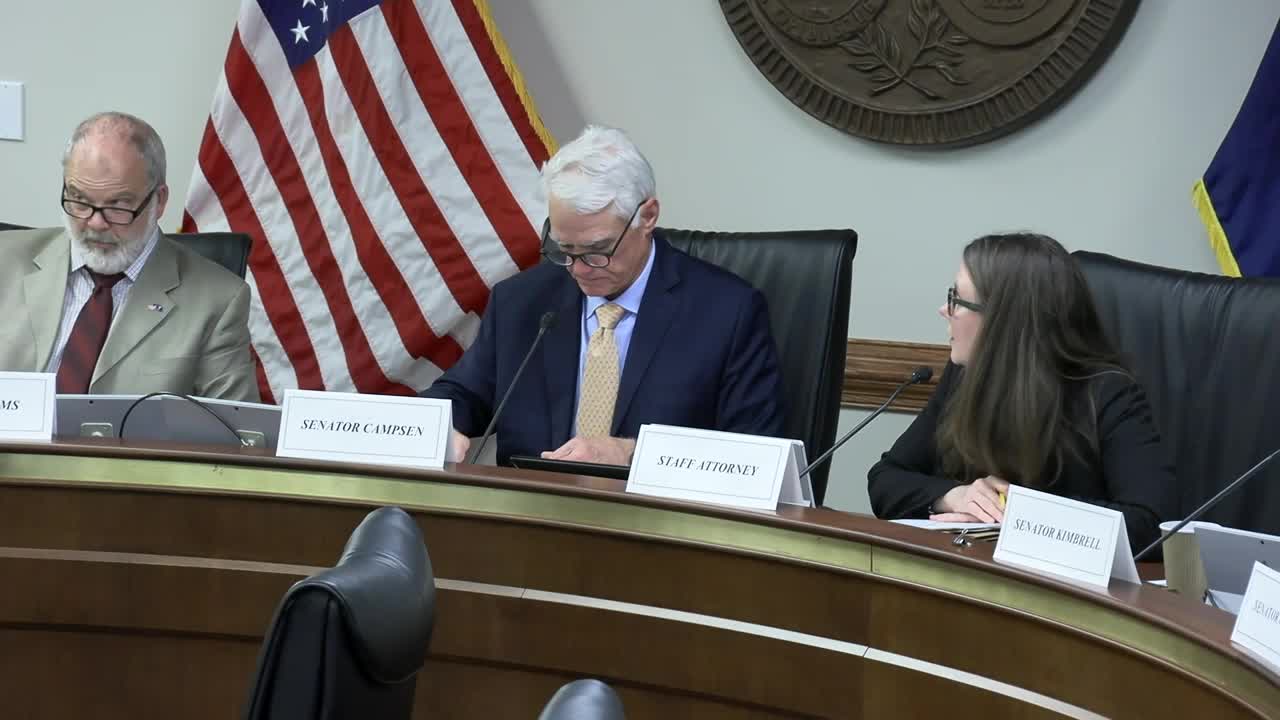
Subcommittee hears proposal to create felony reckless-driving offense; committee agrees to draft clarifying amendment
Summary
Senate bill S.208 would add a felony reckless-driving offense and raise penalties for reckless vehicular homicide. Witnesses and senators discussed mens rea standards, enumerated factors (speed, passengers, distracted driving) and implementation details; committee voted to carry the bill over to allow drafting of an amendment.
A Senate Judiciary subcommittee heard testimony on S.208, a proposal to add a felony reckless-driving offense and to increase penalties for reckless vehicular homicide.
Sponsor Senator Massey told the panel the bill would raise the maximum fine for reckless vehicular homicide to $15,000 and increase the maximum prison term to 15 years. The proposed new felony reckless-driving offense would apply where an incident caused great bodily injury to the driver or others and the driver “drove in a manner that was in reckless disregard to other safety,” with a proposed penalty of a $1,000–$10,000 fine and up to 10 years in prison.
A witness who described himself as a former prosecutor of vehicular crimes and a member of Scaptel urged the committee to add enumerated, fact-based factors to the statutory definition of recklessness. He said the current mens rea standard — “reckless disregard of the safety of others” or “willful and wanton disregard” as used in existing case law — leaves prosecutors and law enforcement unsure how to apply the law in practice. He recommended adding nonexclusive factors such as speed, driving conditions, presence of passengers, distracted driving and the driver’s condition to guide investigations and prosecutions.
Senators raised concerns about overlap with felony DUI statutes, plea bargains, and how enumerated factors should account for speed relative to conditions (for example, 85 mph in a 70-mph zone versus 85 mph in a 45-mph zone, or dry vs. icy roads). A senator asked whether the bill would allow plea reductions from felony DUI to felony reckless driving; the witness said the statute, as drafted, could permit plea bargaining to the new offense.
Peter Adamowski, deputy director for government affairs at the South Carolina Department of Motor Vehicles, asked that any statutory requirement for courts to send orders to DMV be implemented electronically and requested 12 months to make necessary coding changes to DMV systems.
After discussion, the committee voted to carry the bill over while staff and legislators draft an amendment that would enumerate factors and align the text with relevant case law. The motion to carry the bill passed by voice vote; the chair announced “the ayes have it.”