Get Full Government Meeting Transcripts, Videos, & Alerts Forever!
Get email alerts on the Unemployment Insurance topic
No spam. Unsubscribe anytime.
Senators press DEW on $1.7 billion unemployment trust fund and $15 million negative solvency surcharge
Summary
Committee members questioned why the state returned $15 million to employers under a negative solvency surcharge when the unemployment trust fund balance stood at about $1.7 billion, well above statutory minimums and projections. DEW officials cited projections, economic uncertainty and new regulatory tools as reasons for a cautious approach.
Senators on the Labor, Commerce and Industry Committee questioned Department of Employment and Workforce officials about the size of South Carolina’s unemployment insurance (UI) trust fund and the department’s decision to implement a $15 million negative solvency surcharge that reduces employer tax collections.
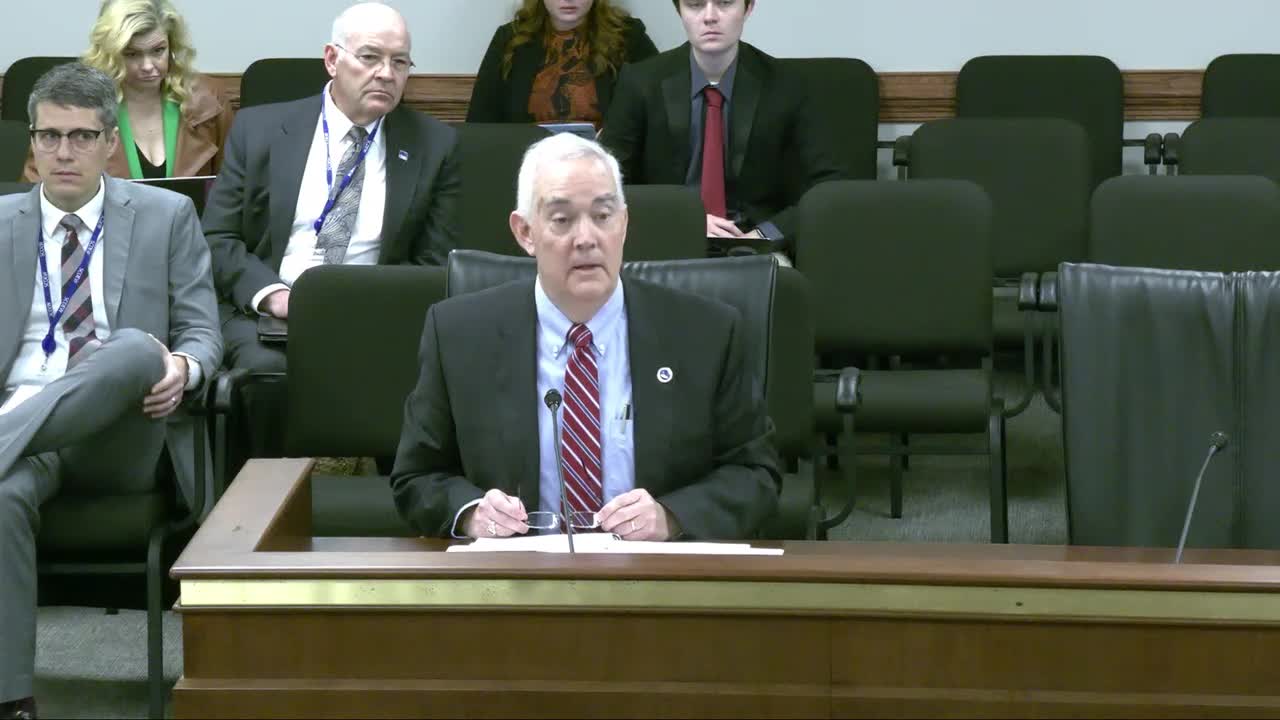
Mr. Floyd, DEW executive director, told the committee the department tracks the trust fund daily and provided approximate figures: a trust fund balance of about $1.7 billion, calendar-year payouts for January and February of $23,283,319.04, and a current inflow figure (tax collections for a recent reporting period) cited at $2,871,345.04. Floyd said the fund ended fiscal 2024 at about $1.696 billion, roughly $350 million above the statutory formula requirement for that year.
Several senators pressed the department on whether the state was collecting more than needed. One senator said the department was "overly conservative" and that "you're keeping too much money, money that businesses are paying when they shouldn't pay." The senator argued that, by the senator's math, the state could have returned far more than $15 million to employers — suggesting $50 million to $100 million might have been feasible — and urged the department to be less cautious.
DEW staff explained the department’s approach is driven by statutory formulas, federal guidelines, and year-ahead projections of payouts. Floyd and DEW personnel said the statutory minimum is a floor that triggers automatic tax increases if the trust fund drops below it; it is not the department’s operational target. DEW staff said they factor in projected payouts, economic risks such as industry shutdowns or episodic events (for example, a port strike in 2024) and federal guidance when recommending tax adjustments.
Floyd described the negative solvency surcharge as a newly available regulatory tool that the department and governor used cautiously: "Just going down this path was a unique first time thing." He said the governor was fully briefed and supported returning $15 million in the form of a negative solvency surcharge.
Committee members also reviewed longer-term projections cited by DEW staff. Floyd said that, under the department’s projections, the trust fund would need about $1.575 billion by 2027; with the current balance, the department is ahead of that projection. Senators noted the state did not borrow to pay UI claims during the COVID-19 recession, and DEW staff referenced the CARES Act as one source of pandemic-era assistance. DEW staff said annual rate decisions are made in the fall so new rates can take effect on Jan. 1.
No formal vote or legislative action was taken during the hearing; senators said they expected continued oversight and further conversation about the department’s tax-setting decisions.