Get Full Government Meeting Transcripts, Videos, & Alerts Forever!
Get email alerts on the Anesthesiology Supervision Ratio topic
No spam. Unsubscribe anytime.
Senate panel advances bill to raise anesthesiologist‑assistant supervision ratio from 2:1 to 4:1
Summary
The Senate Medical Affairs Subcommittee voted to give a favorable report to Senate Bill 236, which would permit supervising anesthesiologists to oversee up to four anesthesiologist assistants (AAs) at one time and would remove a statutory requirement that AA license applicants appear in person before a board member.
The Senate Medical Affairs Subcommittee voted to give a favorable report to Senate Bill 236, which would permit supervising anesthesiologists to oversee up to four anesthesiologist assistants (AAs) at one time and would remove a statutory requirement that AA license applicants appear in person before a board member.
The bill drew support from hospital associations, educators and anesthesiology assistants who said the 2:1 supervision limit in current South Carolina law constrains workforce growth, training and the state’s ability to retain clinicians. Opponents, including representatives of certified registered nurse anesthetists (CRNAs), said the change would not increase access to care in rural areas and could leave some clinical settings with less immediate expert backup.
Supporters told the committee that South Carolina is one of the few states with a 2:1 AA supervision limit. Cody Price, identified as a member of the Academy of Anesthesiologist Assistants and a practicing AA in Myrtle Beach, said, “AAs have been practicing in South Carolina for over 24 years and the passing of Senate bill 236 would result in more AAs coming to South Carolina by allowing hospitals to follow the national standard for supervision ratios, which is 1 to 4 rather than this 1 to 2 limitation.” Price said the national billing standard set by the Centers for Medicare & Medicaid Services supports a 4:1 ratio and argued the change would reduce procedural backlogs and increase the state’s anesthesia workforce.
Medical educators described program growth and training pipelines that could send more AAs to the state if the statutory ratio aligned with what most states allow. Mike Nichols, dean of anesthesiology assistant programs at VCOM, said his Spartanburg campus will enroll an inaugural class and warned that without the ratio change South Carolina could become “an exporter of anesthesia talent.” He provided enrollment projections and said about 13 of 41 incoming students to VCOM’s inaugural class are from South Carolina.
Hospitals also backed the bill as a workforce solution. Ryan Bernal of the South Carolina Hospital Association said the change “is a workforce issue” and asked the committee to advance the bill without coupling it to broader scope‑of‑practice debates.
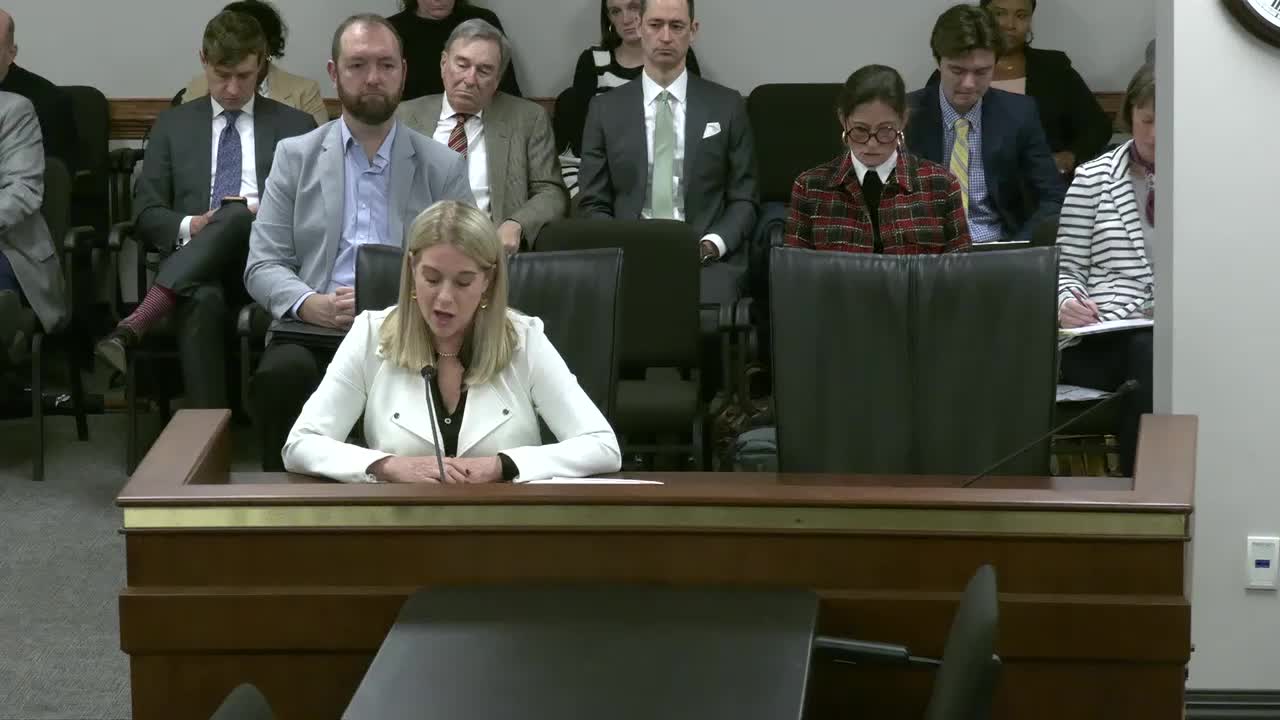
Opponents argued the bill would not address access in rural areas because AAs must be supervised by anesthesiologists and typically practice where anesthesiologists are already present. Jolie Goodmanson, reading testimony for Dr. Angela Munn of the South Carolina Association of Nurse Anesthetists, testified that expanding AA ratios could have “a negative impact for required clinical experiences” for student nurse anesthetists and said CRNAs, who can practice without an on‑site anesthesiologist, better serve isolated communities. Dr. Marcia Izzard, president of the South Carolina Association of Nurse Anesthetists and a practicing CRNA, said, “There is no evidence to support passing this legislation will improve access to care. In fact, there’s reason to believe that access to care may be restricted and cost could be increased.”
Several physician anesthesiologists also testified in favor of the bill, saying AAs meet rigorous educational and clinical standards and that physician‑led care in an anesthesia care team remains central to patient safety. Chris Yackel, a physician and past president of a state medical organization, described the anesthesia care team model and said physician leadership contributes to safety.
After public testimony and committee questions, Senator Kimbrell moved a favorable report on Senate Bill 236; Senator Gambrell seconded. The committee chair counted the affirmative voices and stated that Senators Fernandez and Saab would be recorded as abstaining; no recorded negative votes were announced. The chair announced the motion would carry as a favorable report to the full Medical Affairs Committee.
Proponents asked the legislature to move the ratio change on its own and handle any separate scope‑of‑practice proposals in different legislation. Opponents repeated requests that lawmakers instead lift statutory barriers limiting CRNA practice if the goal is immediate expansion of access in rural settings.
If enacted as written, the bill would change the statutory supervisor‑to‑AA ratio and remove the in‑person interview requirement for initial AA licensure applications, allowing remote credential verification under the board’s processes.
The committee’s action advances the measure to the full Medical Affairs Committee for further consideration.