Get Full Government Meeting Transcripts, Videos, & Alerts Forever!
Get email alerts on the Agency Restructuring topic
No spam. Unsubscribe anytime.
Senate committee advances bill to merge three health agencies into cabinet structure, cites Olmstead obligations and collaboration technology
Summary
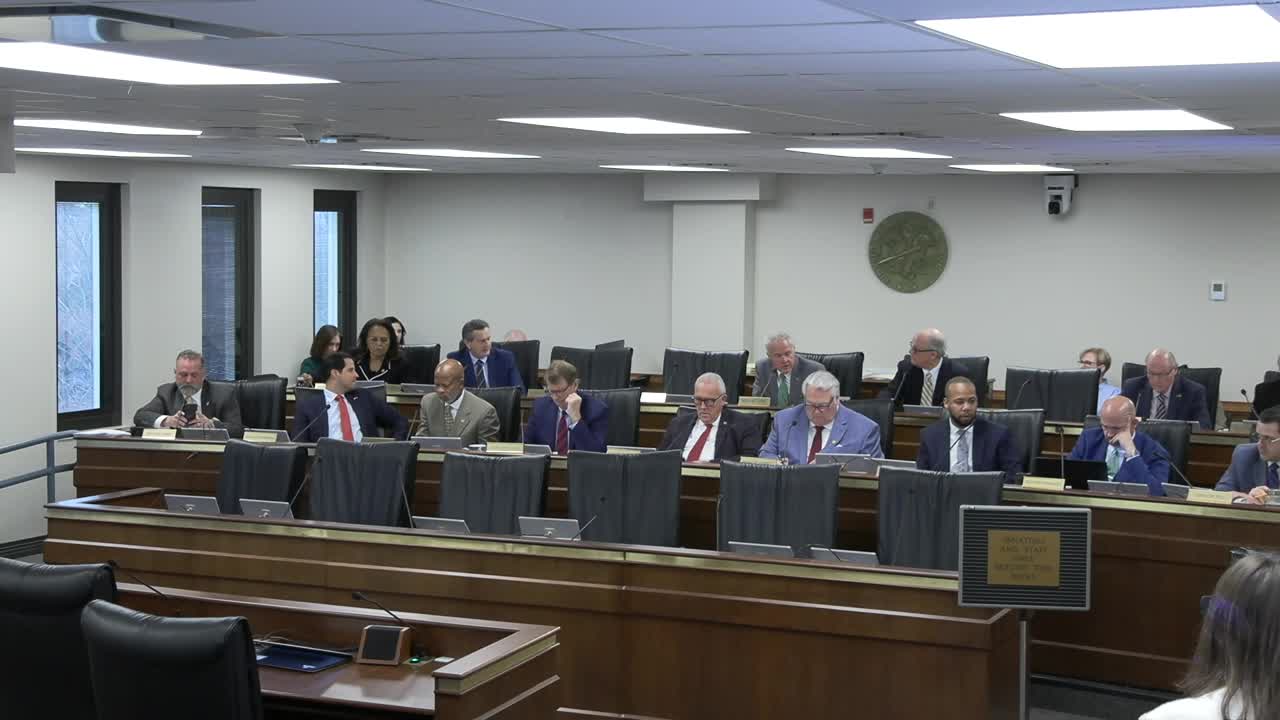
The Senate Medical Affairs Committee voted 12–0 to report S.2 favorably to the full Senate after adopting a composite amendment that consolidates DMH, DAODIS and DDSN into offices under a cabinet-level agency and adds collaboration and Olmstead-related coordination language.
The Senate Medical Affairs Committee gave a favorable report, 12–0, to S.2, a bill that consolidates three state health agencies into subagencies under a cabinet-level structure. The measure focuses on the Department of Mental Health (DMH), the Department of Alcohol and Other Drug (DAODIS) services, and the Department of Disabilities and Special Needs (DDSN), creating successor offices described in the amendment as the Office of Intellectual and Related Disabilities, the Office of Mental Health and the Office of Substance Use Services.
Committee staff summarized a composite amendment incorporating five subcommittee amendments. Key changes adopted at subcommittee and on the floor included renaming the substance-related office to the "Office of Substance Use Services," adding a director duty to implement collaborative communications technology to improve coordination with contracted community providers, and adding language referencing the Olmstead decision to require cross-agency collaboration for services that affect individuals with disabilities. Senators repeatedly framed the bill as a scaled-back successor to an earlier, broader restructuring attempt that sought to fold more agencies under a single umbrella; sponsors said the present version concentrates on three agencies with overlapping client populations.
Sponsors and subcommittee members said the changes aim to improve accountability, coordination and stewardship of taxpayer dollars by making the directors of DMH and DDSN cabinet-level appointees (at-will employees) and by clarifying regulatory promulgation procedures for the reorganized agency. One adopted amendment removes sections addressing "medical freedom" and related emergency-order language from S.2 so those topics can be considered in a separate bill and receive fuller subcommittee testimony.
Committee discussion referenced the state's ongoing federal litigation related to the Olmstead decision; staff noted the Olmstead language in the amendment reaches beyond the three agencies and requires the director to coordinate with other agencies where appropriate. Committee members emphasized implementation will likely require appropriations; sponsors said the bill establishes the legal framework but additional budget requests will follow during the General Assembly's budget process.
The committee adopted additional, technical amendments: updating terminology for developmental-evaluation centers (three regional tertiary centers that diagnose and treat children with neurological needs) and clarifying Title 8 protections so the reorganized director and direct reports are at-will employees, consistent with the goal of executive-branch accountability. After floor debate and amendment votes, the chair announced "12 votes in the affirmative" and recorded a favorable report to the Senate.
Votes and amendments: the committee adopted the composite subcommittee amendment and subsequent technical amendments by voice vote; the committee later recorded a favorable report on the bill as amended with a roll count of 12–0 in favor.