Get Full Government Meeting Transcripts, Videos, & Alerts Forever!
Get email alerts on the Continuum Of Care topic
No spam. Unsubscribe anytime.
Continuum of Care cites Medicaid waiver, budget improvements and internal review to subcommittee
Summary
Director Amanda Whittle told lawmakers the agency worked with DHHS to secure a Palmetto 1915 waiver in 2020 that helped stabilize Continuum of Care reimbursements; she also said the Office of Inspector General conducted an internal assessment amid personnel turnover and declining youth served.
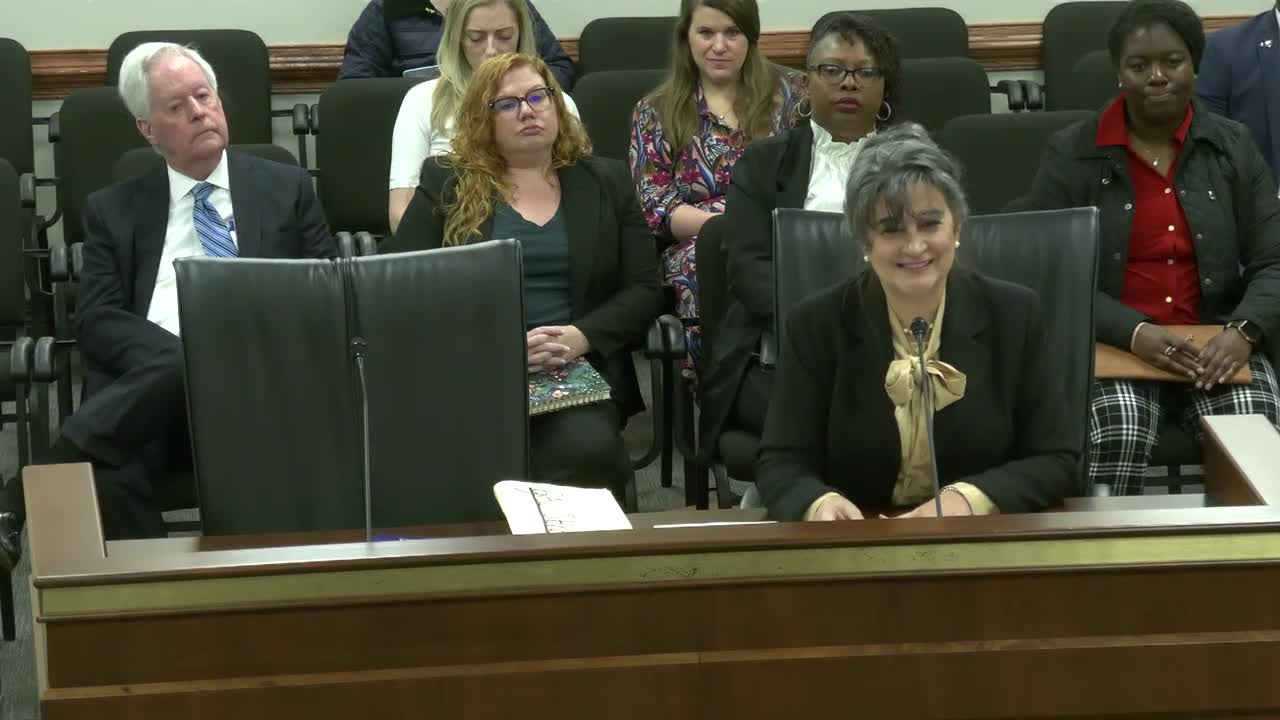
Amanda Whittle, state child advocate and agency director, told the Legislative Oversight Subcommittee the Continuum of Care program faced budget deficits when the Department of Children's Advocacy launched and that a Medicaid waiver substantially affected its financial trajectory.
"On 07/29/2020, we received notice from DHHS that the Palmetto coordinated system of care 1915 waiver had been approved by the Centers for Medicare and Medicaid Services," Whittle said, describing how the waiver enabled a different reimbursement approach for services billed under the evidence-based high-fidelity wraparound model.
Whittle said Continuum of Care previously billed under a targeted case management system with declining Medicaid reimbursement and that the waiver permitted a reimbursement rate that helped address a structural deficit. She told the committee that the division had shown a FY24 year-end deficit but that FY25 projections were in the black.
The director also said the agency asked the Office of Inspector General to conduct an internal assessment of Continuum of Care because of declining youth served, personnel turnover and renewed budget pressure. "We are using the report from the office of inspector general to assess our division's efficiency and efficacy and to inform not only long term planning but immediate operational decision making," Whittle said.
Whittle described program scope: Continuum of Care provides intensive care coordination using a high-fidelity wraparound approach to help children and youth with serious emotional and behavioral needs remain in homes, schools and communities when appropriate. She told the committee the division serves a population in which roughly "2% of the children we serve are in foster care," meaning most participants are in community settings rather than foster placements.
Senators asked whether Continuum of Care might be better placed inside the Department of Social Services (DSS). Whittle said DSS could be "a good fit" in some respects because DSS handles foster-care case management and certain intensive services, but she also said moving the program would require policy and staffing decisions and that ongoing coordination between agencies is already under way.