Get Full Government Meeting Transcripts, Videos, & Alerts Forever!
Get email alerts on the Student Assessment topic
No spam. Unsubscribe anytime.
OKCPS reports winter NWEA gains; several schools earn 'gemstone' growth awards
Summary
Oklahoma City Public Schools presented winter NWEA (MAP) results showing districtwide growth in reading and mathematics; multiple schools earned district 'gemstone' growth awards for above-average progress. Board members praised the data-driven presentations and asked for continued rollout of curriculum and professional development.
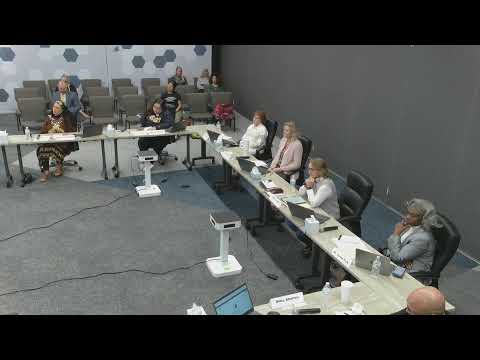
Oklahoma City Public Schools officials presented winter NWEA (MAP) results at the board's Feb. 24 work session, reporting districtwide gains in student growth percentiles in reading and math and spotlighting schools that earned the district’s growth “gemstone” recognitions.
District leaders said the winter assessment shows improvement from last year across elementary, middle and high schools and argued the growth data is an early indicator of stronger achievement moving forward. “Every Oklahoma City Public School Student will graduate ready to fulfill their unique purpose in a healthy and vibrant community,” Jason Galloway, Chief of Staff, said as the presentation opened.
The board was shown both growth and achievement measures from the NWEA MAP screener, a nationally normed, adaptive assessment that produces RIT scores and percentile measures. Presenters emphasized the district’s focus on growth percentiles (where the 50th percentile represents expected one-year growth) and described a system of “gemstones” to recognize accelerated growth: sapphire (50–59), emerald (60–69), ruby (70–79) and diamond (80+).
Districtwide summary data presented by the administration showed steady gains compared with last winter. Elementary reading growth rose from roughly the 29th percentile last year to about the 37th percentile this year; elementary math growth rose into the high 40s (around the 47th percentile). Middle- and high-school results also improved: several middle-school and high-school grade-level growth percentiles increased by roughly 10–15 points in places. At the high school level, presenters described a “hockey stick” trend, with reading and math growth showing sharper recent increases.
Presenters highlighted specific campuses by board district. Among the examples cited: - John Marshall Enterprise Middle School (District 1): reading growth moved from the low 30s to the low 60s percentile (emerald); math growth rose into the 50th percentile (sapphire). Principal Jessica Robinson credited student goal-setting and incentives. - Nichols Hills Enterprise Elementary (District 2): reading and math growth improved, with math growth reaching the sapphire band and corresponding achievement increases. - Mark Twain Elementary (District 3): six grade-level areas posted growth above the 50th percentile through use of data notebooks, CFA-driven instruction and daily flexible grouping. - Wilson Elementary (District 4): reading growth rose from the 40s to the 60s percentile (emerald); the principal credited intentional planning and family engagement. - Belle Isle Enterprise Middle School (District 2): reading and math growth both rose into the 50s percentile, earning sapphire recognition. - Star Spencer High School (District 5): math growth increased by about 14 percentile points after implementing a reading intervention and adjusted schedules. - Esperanza Elementary (District 6): presenters noted marked improvement (reading growth from roughly the 20s to the 30s percentile), moving the campus off an F rating toward D; staff emphasis on Tier 1 instruction and progress monitoring were cited. - Wheeler (District 7): reading and math growth rose substantially, with principals crediting PLCs and low teacher turnover.
District leaders tied growth to recent curricular investments and job-alike professional development. The presentation noted the district adopted new ELA curriculum two years ago and completed a math adoption last year; state textbook-adoption cycles occur on roughly six-year timelines, presenters said. The district also described a job-alike professional development model in which staff receive targeted PD by role (for example, secondary math teachers together) during districtwide PD days.
Board members welcomed the presentation as more transparent and actionable than prior reporting. Several members praised the clear visuals and the gemstone recognition system; questions from trustees focused on textbook adoptions, professional development tied to new curricula and how the district will scale school-level practices that showed strong gains. Laura McGee and Verna Martin, senior executive directors, described how principals and teachers are using NWEA and common formative assessments to set student goals and adjust instruction quickly.
The district noted that the NWEA achievement percentile (separate from growth) links to state tests and ACT scores through NWEA’s linking studies; presenters said proficiency on state measures typically corresponds to higher achievement percentiles (often in the mid-60s to mid-70s depending on grade/subject). Presenters cautioned that a student at the 20th percentile will require multi-year accelerated growth to reach proficiency.
The board asked for continuing transparency and requested access to school-level dashboards. Superintendent Polk said the district can provide board members with school score access and encouraged celebration of campus improvements. Trustees also discussed whether student-performance measures might be incorporated into future personnel evaluation frameworks; district leaders said alignment with talent-management and bargaining partners would be required and that such work is being explored but is not currently implemented for teacher evaluations.
Votes at a glance: the meeting ended with a routine motion to adjourn that passed by voice vote (motion moved by Chair Paula Lewis; seconded by Farrell).