Get Full Government Meeting Transcripts, Videos, & Alerts Forever!
Get email alerts on the Professional Regulation topic
No spam. Unsubscribe anytime.
Mortuary and cemetery board seeks broader disciplinary authority, higher fines and ability to initiate investigations
Summary
Senate Bill 872 would broaden the Oregon Mortuary and Cemetery Board’s disciplinary authority, raise per‑violation fines to $5,000 and authorize the board to assess disciplinary costs.
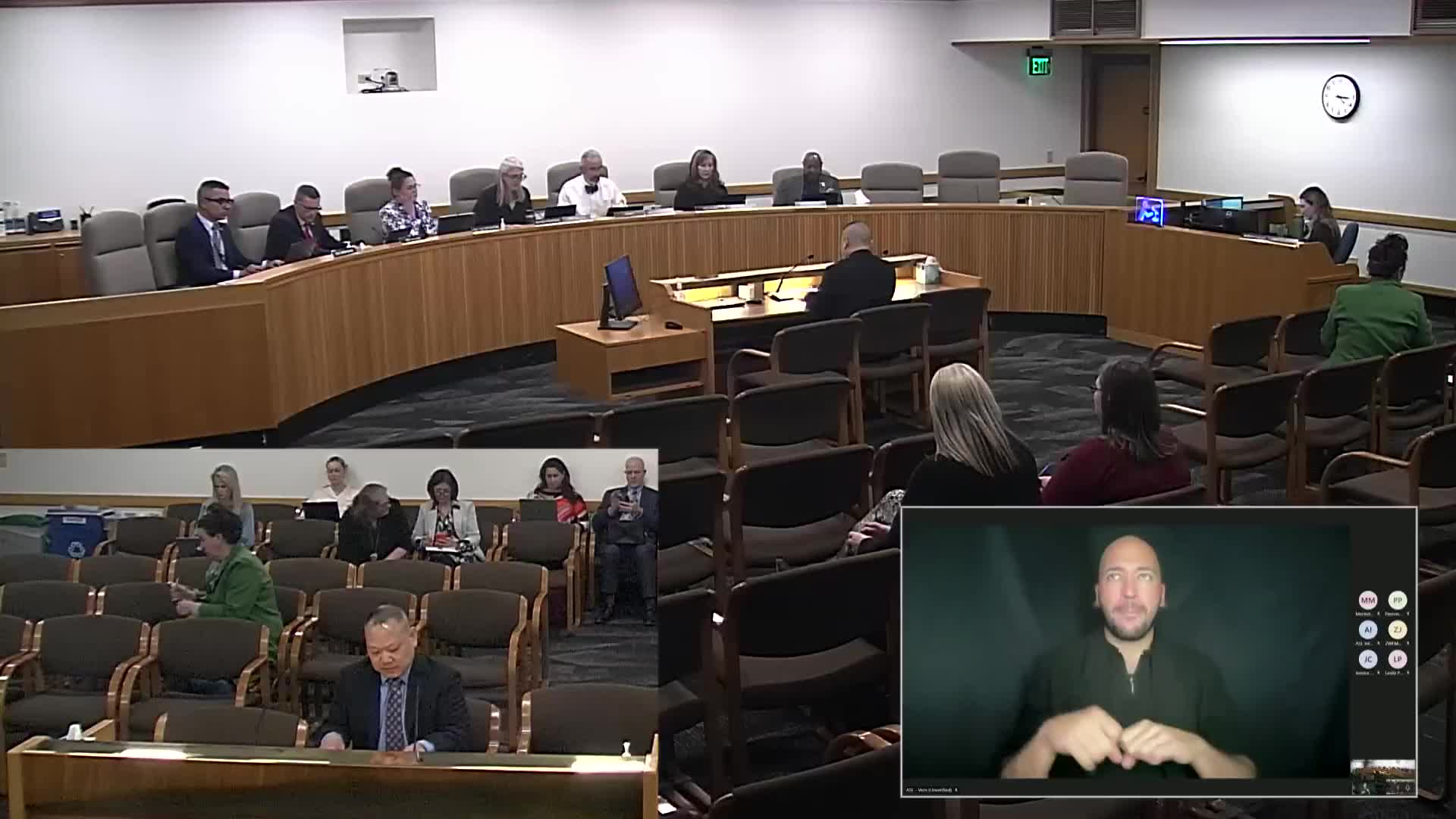
Senate Bill 872 was the subject of a Feb. 25 public hearing in the Senate Committee on Judiciary. The bill would expand the Oregon Mortuary and Cemetery Board’s disciplinary tools to include reprimands, license limitations and conditions, emergency suspensions, contested‑case procedure clarity, and an increase in the per‑violation civil penalty cap from $1,000 to $5,000. The bill would also permit the board to assess the cost of disciplinary proceedings against a licensee.
Chad Dresselhaus, executive director of the Mortuary and Cemetery Board, told the committee the changes are intended to align board authority with other health professional regulatory boards (HPRBs) and to provide the board with additional tools to protect public health and safety. He said a dash‑1 amendment would be filed for the work session to add language authorizing the board to initiate an investigation on its own motion when there is sufficient evidence, and to add that same language for consistency in the bill text.
Senators asked whether disciplinary‑proceeding costs and civil penalties assessed under the proposed authority would be remitted to the board’s operating fund or to the state general fund; Dresselhaus said he believed such funds would typically go to the agency’s operating fund, but the committee noted that unless the statute specifies fund allocation, penalties commonly are deposited into the state general fund. Committee members also asked whether stakeholders had been engaged in drafting the bill; Dresselhaus said the language reflected board direction, review of other HPRB statutes and consultation with the board’s AAG and the governor’s office rather than a broad stakeholder negotiation.
The bill’s proponents framed the changes as regulatory modernization to align disciplinary authority across state boards and to give the Mortuary and Cemetery Board better tools to respond when licensees violate standards. The committee closed the public hearing and signaled it would consider a dash‑1 amendment and potential follow‑up before a work session.